



Inside Look: University at Buffalo Puts First 8 Electric Buses Into Stampede Service
UB, transportation solutions provider WeDriveU, and fleet electrification specialist Zenobē marked the deployment in the presence of students, university administrators, and local officials.

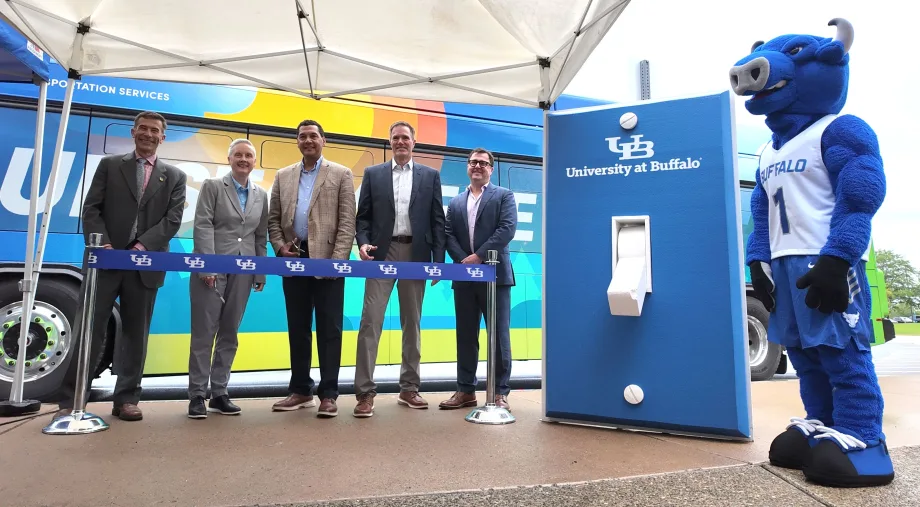
(L-R): Ryan McPherson, Chief Sustainability Officer of UB; Laura Hubbard, Vice President for UB's Finance and Administration; Chris Austin, Director of UB Parking and Transportation Services; Tim Wayland, Chief Commercial Officer at WeDriveU; and Matthew Curwood, Vice President of Business Development at Zenobē took part in a ceremony commemorating the launch.
UB
- The University at Buffalo has introduced eight battery-electric buses into its campus transit service.
- This marks the start of a four-year plan to shift the university’s fleet from diesel to electric vehicles.
- The transition is part of UB's broader sustainability efforts to reduce carbon emissions on campus.
*Summarized by AI
The University at Buffalo (UB) placed eight 40-foot battery-electric buses into service as part of its ongoing transition of the UB Stampede campus transportation fleet to zero-emission vehicles.
UB, transportation solutions provider WeDriveU, and fleet electrification specialist Zenobē marked the deployment in the presence of students, university administrators, and local officials. The buses are the first vehicles in the Stampede fleet to transition from diesel.
Providing Mobility for the UB Population
The UB Stampede carries approximately 16,000 passengers each day. The university plans to continue replacing diesel buses with electric vehicles over the next four years as part of its “10 in 10” roadmap, which calls for a zero-emissions campus by 2030.
The transition is expected to avoid 5,984 metric tons of carbon dioxide equivalent emissions and reduce greenhouse gas emissions from Stampede service by 55.6% compared with diesel-powered buses. The emissions reduction is equivalent to removing approximately 1,395 cars from the road, according to officials.
“As part of our Climate Action Plan, this is an important milestone because it moves our sustainability goals from planning into daily operation,” said Christopher Austin, director of Parking and Transportation Services at UB. “Students and staff can now see and experience that transition every day as they move around campus.”
Austin said the university also focused on maintaining service levels as it introduced the new technology.
“At the same time, we need to continue providing the safe, reliable transportation our campus community depends on while reducing our environmental impact,” he said. “These first eight buses show that those goals can go hand in hand.”
Partnering for Charging and Operations
Ten chargers have been installed at WeDriveU’s Buffalo customer service center to support the Stampede fleet. The charging infrastructure will expand as additional diesel buses are phased out, said officials.
Austin said the transition required planning beyond the replacement of individual vehicles, including charging schedules, available power, and future infrastructure needs.
“Electrification isn't simply a matter of replacing a diesel bus with an electric one,” Austin said. “You have to think about the entire operating system around the vehicle: where and when buses charge, how charging fits around daily service, the power available at the yard, and how the infrastructure will support additional electric buses as the fleet grows.”
The project was designed around the existing Stampede operation, he said.
“We also needed to make sure we were building around the realities of our operation rather than asking the operation to adapt around the technology,” Austin said. “That upfront planning has been an important part of getting these first buses into service successfully.”
Reliability and charging availability were also key considerations due to the volume of daily Stampede service. According to Austin, the charging strategy was developed around the system’s routes and operating requirements.
Zenobē’s system includes real-time monitoring of charger performance and availability, optimized charging schedules, 24/7 monitoring, and dynamic load management, which is designed to match available power with fleet charging needs.
“That gives the operations team greater visibility into charging and helps ensure the buses are ready when they're needed,” Austin said.
Matt Curwood, vice president, business development for Transit, at Zenobē North America, said the charging and operational systems are designed to give fleet operators confidence that electric buses can meet daily service requirements.
“Fleet operators and institutions need confidence that their electric buses will be ready to perform every day,” Curwood said. “Zenobē’s giving that certainty through thoughtful planning, reliable charging infrastructure and long-term operational support.”
The Road to Today
UB announced in June 2024 that it had selected WeDriveU to manage campus transportation. The electric-bus project was delivered on schedule through a partnership among UB, WeDriveU, and Zenobē.
The companies combined their university transportation requirements, day-to-day transit operations, and fleet electrification expertise to plan the deployment.
“A project like this requires different areas of expertise, which is why partnership is so important,” Austin said. “The University at Buffalo understands the needs of our campus community and where we're trying to go from a sustainability perspective. WeDriveU brings the day-to-day operational knowledge of running the Stampede system, while Zenobē brings specialized fleet electrification and charging expertise.”
Tim Wayland, chief commercial officer at WeDriveU, said the project demonstrates the role of partnerships in transitioning transit fleets to zero-emission vehicles.
“We're proud to provide the University at Buffalo community with safe, dependable and innovative transportation solutions and congratulate UB on this incredible achievement,” Wayland said. “Together with UB, Zenobē, and WeDriveU’s local operations team, we're showing the impact on campuses and communities by transitioning to zero-emission fleets.”
Wayland also highlighted the role of the Stampede workforce in operating the service.
“WeDriveU's bus drivers, maintenance team, and other operations staff do a fantastic job and enjoy getting Stampede riders everywhere they need to go,” he said. “They have a lot of pride knowing they're impacting the campus, community and environment in positive ways.”
UB will use operational data from the first eight buses to inform subsequent phases of the fleet transition. Austin said the university will evaluate performance across routes, seasons and operating conditions, as well as charging patterns and daily service requirements.
“This initial deployment gives us real-world operating data before the next phases of the transition,” Austin said. “We'll be able to learn from how the buses perform across different routes, seasons and operating conditions, as well as how charging patterns align with daily service.”
The university plans to use those findings to guide the deployment of additional electric buses and charging infrastructure over the next four years.
“For riders, our goal is for that transition to feel seamless: they'll see more electric buses entering the Stampede fleet, but the expectation for safe and reliable service doesn't change,” Austin said.
Quick Answers
The introduction of battery-electric buses represents a shift towards more sustainable and environmentally friendly transportation, reducing emissions associated with diesel buses.
*Summarized by AI
More Zero Emissions

Building a Flexible Path to Transit Electrification with BAE's John Hroncich
John Hroncich discusses BAE Systems’ modular and scalable approach, lessons learned from decades of real-world operations, and how agencies can identify electrification strategies that fit their fleets.
Read More →
LA Metro Board Awards 220 Battery-Electric Bus Contract to ENC
The contract, which is the largest base award of battery-electric buses by a U.S. transit agency, will be built in Southern California, sustaining good jobs as LA prepares to welcome the world in 2028
Read More →
Public Transit Conference Returning to GFX in 2027, Call for Papers Now Open
The Call for Papers is now open, allowing transit agency professionals and industry experts to help shape the PTC educational program by submitting session ideas for consideration.
Read More →
Report: Transit Bus Manufacturing Supports 34,100 Jobs, $5.1B in GDP
The “Buses Mean Business” report examines the transit bus manufacturing industry’s economic footprint, supply chain, and rising demand for vehicle replacements.
Read More →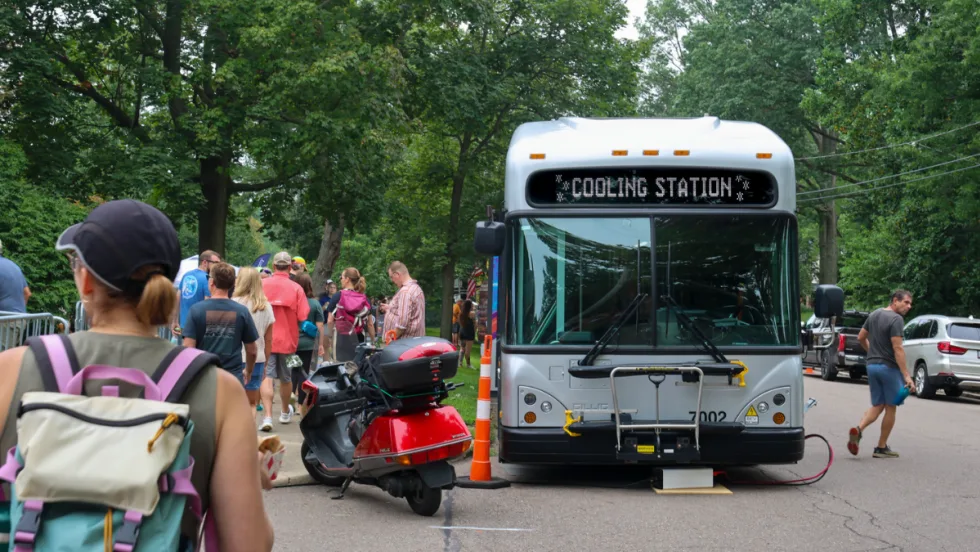
Ohio’s METRO RTA Turns Electric Buses into Mobile Power Sources at PorchROKR
See how three Gillig battery-electric buses powered festival stages while the agency’s new Park & Ride service carried approximately 1,000 attendees, demonstrating another potential use for transit agencies’ electric fleets.
Read More →
CALSTART and Forth Combine to Form Catalyst Mobility
The new name represents a renewed vision for the nonprofit focused on advancing clean, equitable, and affordable transportation solutions that move people and goods.
Read More →
Building a Flexible Path to Transit Electrification
John Hroncich discusses BAE Systems’ modular and scalable approach, lessons learned from decades of real-world operations, and how agencies can identify electrification strategies that fit their fleets.
Read More →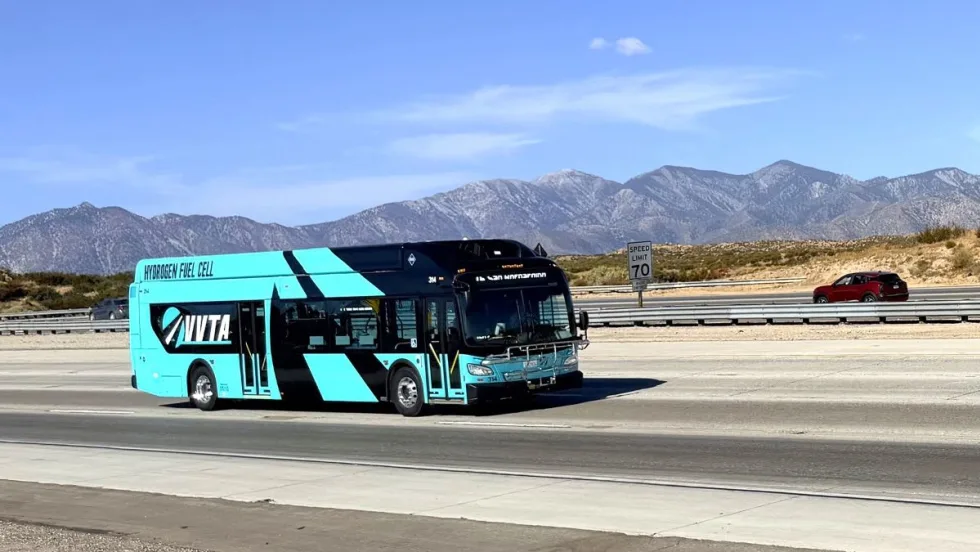
California's VVTA Begins Phased Rollout of Hydrogen Fuel Cell Buses
The agency is introducing 13 zero-emission buses into revenue service while evaluating performance across its urban, rural, and long-distance routes.
Read More →
Biz Briefs: OCTA Taps Clean Energy for Hydrogen Station, Stadler to Supply Via Rail Vehicles, and More
From manufacturers and suppliers to transit agencies and motorcoach operators, these updates offer a snapshot of the projects, partnerships and business moves driving the industry forward.
Read More →
AC Transit’s Cecil Blandon on Building the Next Generation of Transit Maintenance Leaders
The agency’s maintenance chief discusses leadership, workforce development, zero-emission technology, and preparing technicians for the future of public transportation.
Read More →