



Ohio’s METRO RTA Turns Electric Buses into Mobile Power Sources at PorchROKR
See how three Gillig battery-electric buses powered festival stages while the agency’s new Park & Ride service carried approximately 1,000 attendees, demonstrating another potential use for transit agencies’ electric fleets.

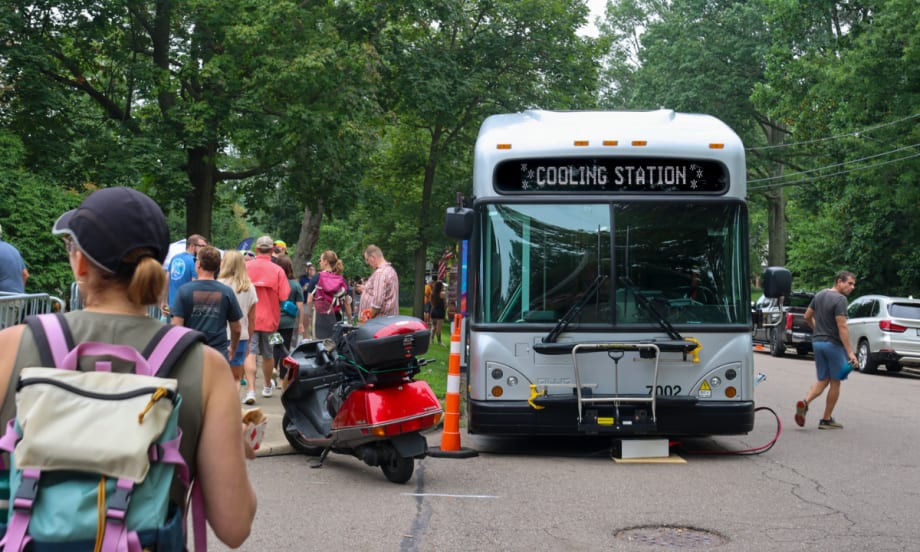
A Metro Regional Transit Authority bus that's powering the Beer Garden Stage and also serving as a Cooling & Charging Station for festival attendees.
Metro Regional Transit Authority
- Ohio's METRO RTA utilized three Gillig battery-electric buses to serve as mobile power sources for festival stages at PorchROKR.
- The agency showcased a new Park & Ride service that transported approximately 1,000 festival attendees.
- The event highlighted the versatility of electric fleets in transit agencies by demonstrating potential alternative uses.
*Summarized by AI
METRO Regional Transit Authority (RTA) put its battery-electric buses to work beyond passenger transportation during Akron, Ohio’s 2026 PorchROKR Music Festival, using three Gillig buses to power stages while also providing transportation and other amenities for festivalgoers.
The Summit County transit agency partnered with the Highland Square Neighborhood Association for the event, which draws crowds of up to 25,000 people and features an average of 160 local musicians and bands. The agency supplied three fully electric Gillig buses as the sole electrical sources for the festival’s three main stages. The buses also served as cooling and charging stations for attendees, while one doubled as a safety barrier between the festival and an active roadway.
How METRO RTA Used Electric Buses to Power the Festival
The setup was relatively straightforward. Each bus was parked in a predetermined location, with a stage constructed either in front of or beside it. Extension cords and electrical inverters then supplied power to the stage equipment.
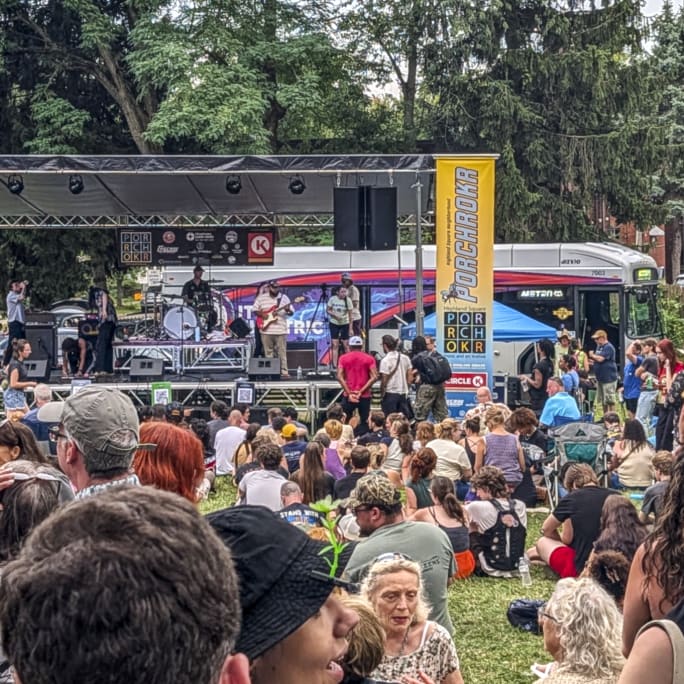
The crowd at 2026 PorchROKR’s Mainstage, powered by a fully electric METRO RTA bus behind it.
Metro Regional Transit Authority
The inverters converted the buses’ standard 24 volts of direct current into the 120 volts of alternating current needed by external equipment, allowing the buses to power stage lighting and sound systems.
The three buses included one 2021 Gillig Gen 2 battery-electric bus and two 2022 Gillig Gen 3 models. Bus No. 7001 carries six high-voltage battery packs with a combined capacity of 456 kWh, while buses No. 7002 and 7003 each have six battery packs with a combined capacity of 576 kWh.
Despite supporting festival equipment and onboard systems simultaneously, the buses did not require charging during the event.
For example, Bus No. 7001 used less than 25% of its stored energy (roughly 114 kWh) during approximately 10 hours of idle time. That energy powered external sound and lighting equipment as well as the bus's air conditioning, which was set to maximum cooling, and LED destination signs displaying custom messages.
All three buses entered the event at a 100% state of charge. According to the agency, they retained enough energy afterward to be dispatched on a standard transit run without first fully recharging.
Community Events Paved the Way
PorchROKR marked the first time METRO used its electric buses to power external equipment for direct public use. Still, the concept grew out of several years of experimenting with the buses at community events.
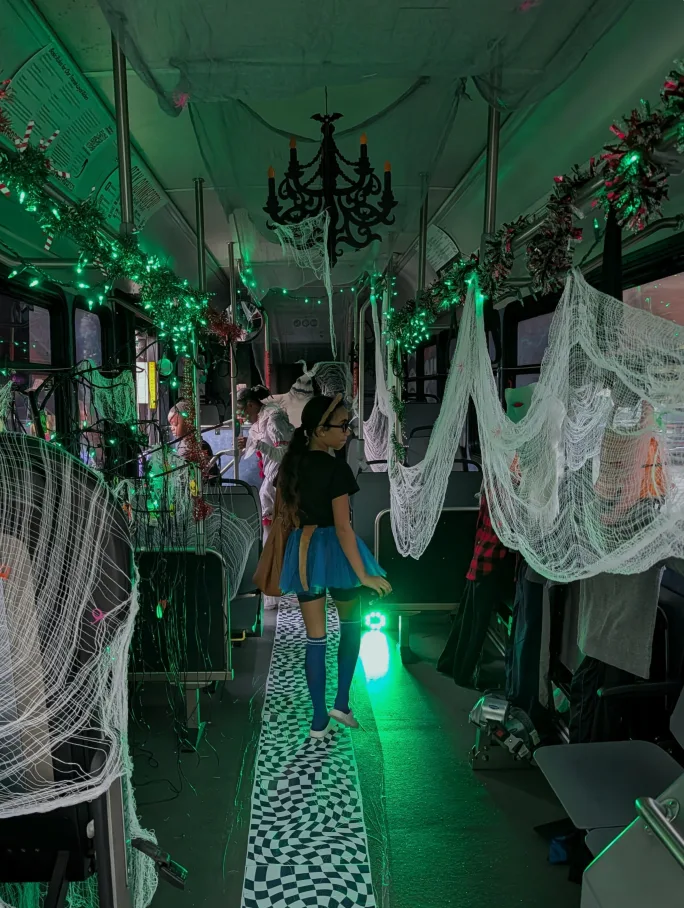
Inside METRO RTA’s 2025 “Boo Bus,” an electric bus transformed into a themed haunted house on wheels for families attending Downtown Akron Partnership’s annual Fall Fest.
Metro Regional Transit Authority
One example is the agency’s annual “Boo Bus” for the Downtown Akron Partnership’s Fall Fest. Each year, the agency decorates an electric bus around a different theme and turns it into a “haunted house on wheels” for families to walk through.
For the 2025 event, an external inverter powered string lights, fog machines, and animatronics aboard a “Nightmare Before Christmas”-themed bus. That experience helped demonstrate the buses’ ability to support equipment outside their traditional transportation role.
The PorchROKR partnership began taking shape in early 2026, when the Highland Square Neighborhood Association approached METRO RTA about establishing an official Park & Ride service for the festival. As discussions expanded to other festival needs, using the electric buses as stage power sources became a natural extension of the partnership.
“Being part of the public transit industry also means being part of a green industry, and this partnership highlighted that,” said Eric Scott, METRO RTA chief operations officer. “Overall, this experience showed us that even after 50+ years of attending community events and forming local partnerships, there are always new, creative ways to make an impact.”
Park & Ride Sees Ridership Boost
The buses were only one piece of METRO’s PorchROKR involvement. Approximately 1,000 festival attendees used the free Park & Ride service from the designated parking location. Compared with PorchROKR 2025, ridership along the official Park & Ride portion of Route 1 increased 56.18%.
METRO said systemwide ridership also increased 5.49% compared with the day of the 2025 festival. The agency expects Park & Ride participation to grow further next year as awareness of the service increases.
The partnership also gave festivalgoers places to escape the August heat. Attendees could enter the electric buses to cool off, charge devices using onboard USB ports, and access complimentary Wi-Fi.
Could Electric Buses Provide Emergency Power?
Following the festival, METRO RTA sees opportunities to use the concept in other situations. The agency has previously supplied buses to local law enforcement during emergencies such as apartment building evacuations. The agency said it would also be open to providing electric buses to power external devices during an emergency when appropriate.
The PorchROKR experiment demonstrated how transit agencies can find additional value in resources they already have.
“When you think you've 'been there, done that,' maybe it's time to flip the script and look at things from a different perspective,” Scott said. “Essentially, leveraging the resources, assets, and programs that we already had ended up being more effective than reinventing the wheel.”
More Zero Emissions

CALSTART and Forth Combine to Form Catalyst Mobility
The name represents a renewed vision for the nonprofit focused on advancing clean, equitable, and affordable transportation solutions that move all people and goods.
Read More →
Building a Flexible Path to Transit Electrification
John Hroncich discusses BAE Systems’ modular and scalable approach, lessons learned from decades of real-world operations, and how agencies can identify electrification strategies that fit their fleets.
Read More →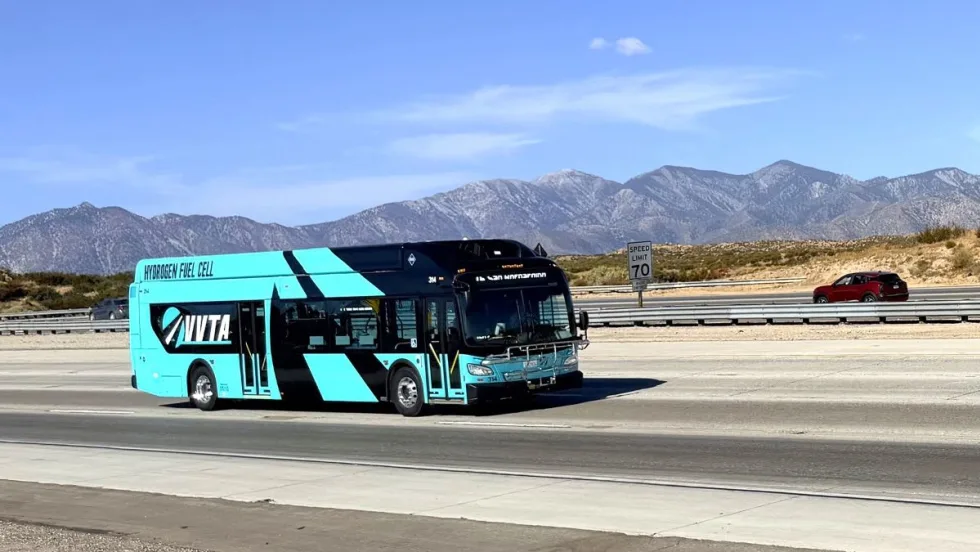
California's VVTA Begins Phased Rollout of Hydrogen Fuel Cell Buses
The agency is introducing 13 zero-emission buses into revenue service while evaluating performance across its urban, rural, and long-distance routes.
Read More →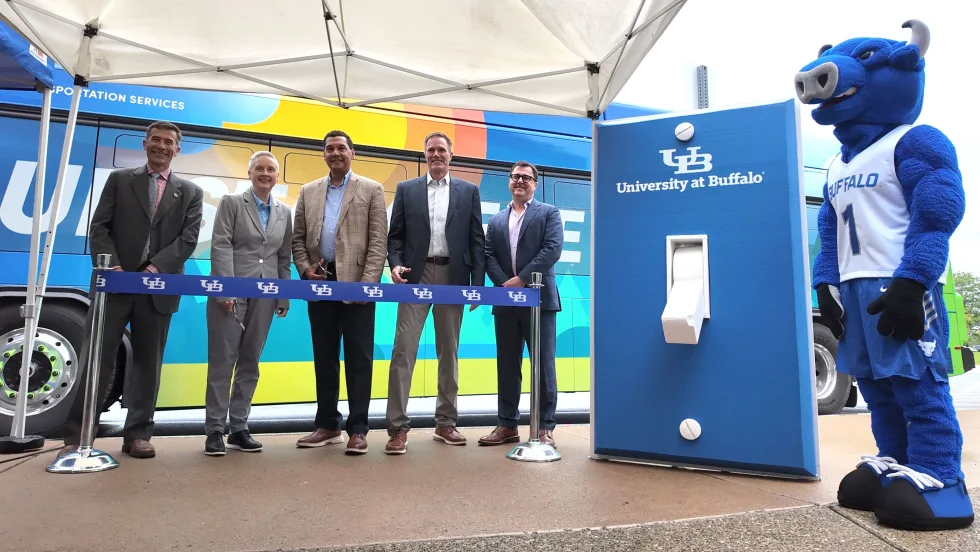
Inside Look: University at Buffalo Puts First 8 Electric Buses Into Stampede Service
UB, transportation solutions provider WeDriveU, and fleet electrification specialist Zenobē marked the deployment in the presence of students, university administrators, and local officials.
Read More →
Biz Briefs: OCTA Taps Clean Energy for Hydrogen Station, Stadler to Supply Via Rail Vehicles, and More
From manufacturers and suppliers to transit agencies and motorcoach operators, these updates offer a snapshot of the projects, partnerships and business moves driving the industry forward.
Read More →
AC Transit’s Cecil Blandon on Building the Next Generation of Transit Maintenance Leaders
The agency’s maintenance chief discusses leadership, workforce development, zero-emission technology, and preparing technicians for the future of public transportation.
Read More →
CTDOT Taps STV for Electric Bus Facility Design
The firm will work with CTDOT and RVT to define the facility layout, operational requirements, and long-term flexibility for RVT’s growing electric fleet.
Read More →
Chicago’s Pace Deploys 24 Hybrid-Electric Buses in Will County
The new buses reduce emissions and fuel consumption while advancing the agency's long-term goal of transitioning to a fully zero-emission fleet.
Read More →
DASH Breaks Ground on First On-Route Electric Bus Chargers in D.C. Region
The fast-charging infrastructure will help extend electric bus range, improve fleet utilization, and support DASH's goal of transitioning to a fully zero-emission fleet.
Read More →
Biz Briefs: Montréal Debuts Nova Electric Buses and More
In this edition of Biz Briefs, we spotlight the latest developments shaping the future of mobility.
Read More →