



Related: Stadler Taps Knorr-Bremse for MARTA Railcar Brake Systems
First SBCTA DMU Train Leaves Stadler Facility
All three Diesel Multiple Unit (DMU) vehicles are scheduled to undergo extensive testing on SBCTA’s infrastructure upon arrival in San Bernardino County.
by Staff
November 16, 2021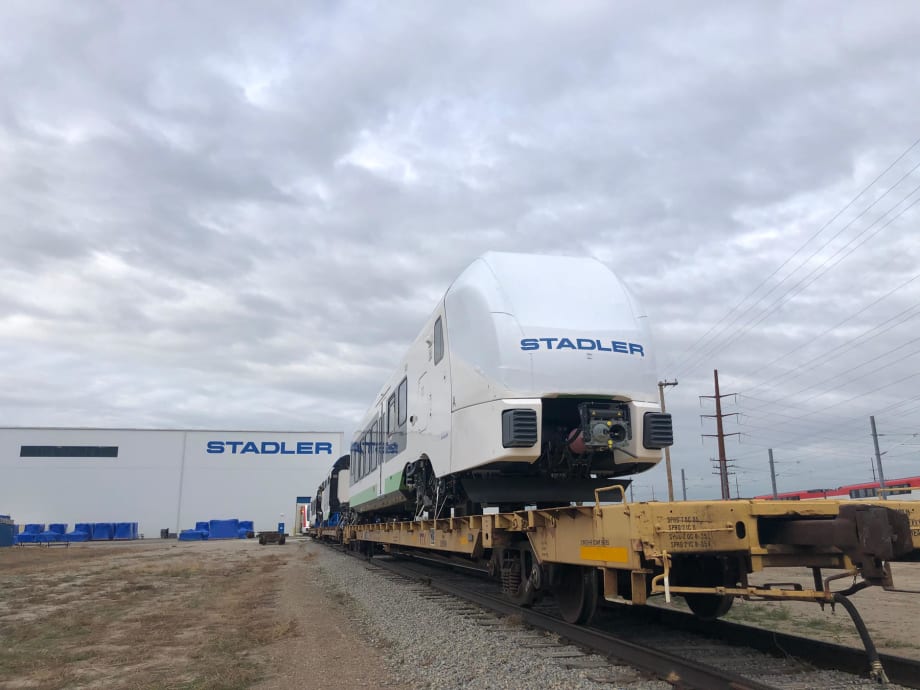
The DMUs comply with Alternative Vehicle Technology (AVT) requirements of the Federal Railroad Administration (FRA), and meet the Federal Transit Administration (FTA) Buy America requirements.
Photo: Stadler U.S.
2 min to read
The first of three DMU trains for San Bernardino County Transit Authority (SBCTA) has left Stadler’s Salt Lake City manufacturing facility, according to the company's press release.
This is the second project Stadler is able to deliver to a transit authority from its Salt Lake City location, after delivering trains to Trinity Metro’s Texrail line in Fort Worth, Texas, in 2019.
All three Diesel Multiple Unit (DMU) vehicles are scheduled to undergo extensive testing on SBCTA’s infrastructure upon arrival in San Bernardino County.
In September 2017, the SBCTA ordered three diesel-electric, low-floor multiple unit FLIRTs from Stadler for the Arrow passenger rail service, also known as the Redlands Passenger Rail Project. The trains operate on a 9-mile commuter route with five stations in the corridor between the San Bernardino Transit Center and the University of Redlands.
"We are pleased to deliver these state-of-the-art vehicles to San Bernardino County this year," said Martin Ritter, CEO Stadler U.S. Inc. "We are confident that our DMUs will allow SBCTA to provide excellent passenger rail service to their customers and that passengers will enjoy travelling on the new trains after successful completion of testing. This is just the beginning of a longstanding relationship between Stadler and SBCTA. As we finish up the DMU project we have already started the next project for SBCTA: the hydrogen train FLIRT H2."
The DMUs comply with Alternative Vehicle Technology (AVT) requirements of the Federal Railroad Administration (FRA), and meet the Federal Transit Administration (FTA) Buy America requirements. The FLIRTs for SBCTA offer 116 seats and additional standing room for 120 passengers.
"This initial shipment represents the culmination of a lot of hard work and collaboration to improve transit options in San Bernardino County," said Curt Hagman, president of the SBCTA. "It is also the pivotal first step to bringing cleaner transit technologies that will effectively move our residents throughout the region."
In addition to the three DMUs, in 2019 SBCTA and Stadler signed the first ever contract to supply a hydrogen-powered train, to run in the U.S. The hydrogen train FLIRT H2 is currently in development in Stadler’s headquarter in Switzerland and is planned to be introduced in 2024 as part of Arrow.
More Rail

New York MTA Advances Final Contract for Second Avenue Subway Expansion
Contract Four is the largest in the Second Avenue Subway Phase 2 project and includes construction of station infrastructure, tracks, and signals for the subway expansion, MTA officials said. Work on Contract Four will begin in 2027.
Read More →
San Diego MTS Breaks Monthly Trolley Ridership Record
Agency officials said July’s ridership indicates MTS’s continued recovery from the pandemic.
Read More →
Report Examines NJ TRANSIT Reliability, Funding Challenges
The Garden State Initiative analysis examines the roles of Amtrak infrastructure, fleet management, and agency operations while recommending a more performance-based approach to improving reliability.
Read More →
Stadler, CapMetro Sign Long-Term Rail Fleet Support Agreement
Beginning in 2027, Stadler will provide on-site technical expertise, spare parts support, training, and obsolescence management to help extend the reliability and longevity of CapMetro’s GTW fleet.
Read More →
Biz Briefs: Alstom Lands Canadian Contract, LYT to Supply California TSP, and More
In METRO's latest installment, we take a look at recent news from Complete Coach Works, Beep, FlixBus, and more partnerships making headlines across the transportation sector.
Read More →
CATS Gold Line Marks 5 Years of Service, 2.8M Passenger Trips
With a six-mile expansion planned, the Charlotte streetcar is positioned to connect more neighborhoods and major transit hubs across the region.
Read More →
Why Simulating Pedestrian Movement Has Become Essential for Modern Rail Stations
Pedestrian microsimulation is helping rail planners identify bottlenecks, test station designs, and prepare complex transit hubs for growing passenger volumes.
Read More →
Amtrak Begins Major Construction at New York’s Sunnyside Yard
The new maintenance facility will support Amtrak’s Airo trainsets while improving maintenance efficiency and turnaround times in New York.
Read More →
Chicago Leaders Unveil Plans for O’Hare Airport Express Train
The privately developed project would offer a 15-minute trip between downtown and O’Hare’s Terminal 2, with trains operating every 15 minutes on a dedicated track. The service would use battery-electric trains and three existing freight rail rights-of-way.
Read More →
OCTA Maps Out 30-Year Strategy to Protect Coastal Rail Corridor
The draft feasibility report identifies strategies to protect the coastal rail line for decades as the agency continues near-term stabilization and sand placement efforts.
Read More →