



Fla.'s HART, Red Coach announce partnership
The new partnership will help residents, students, business travelers and visitors leverage the resources of HART to increase their travel options all across the state.

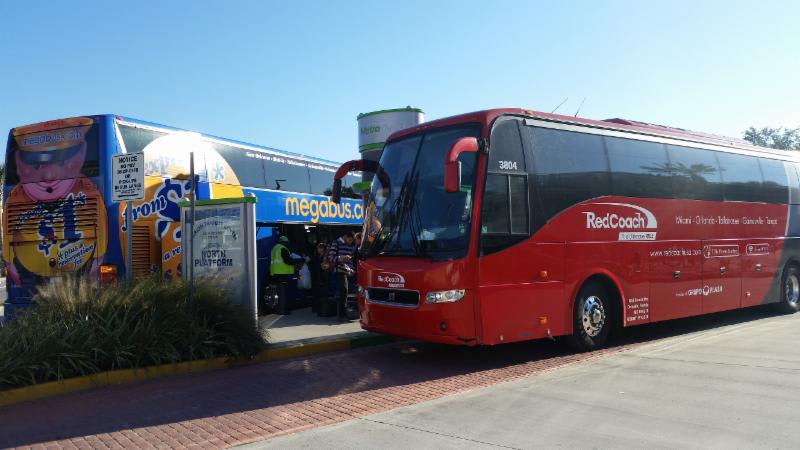
Hillsborough Area Regional Transit Authority (HART) riders using the Marion Transit Center (MTC) now have a new option for traveling with the agency announcing a new partnership enabling RedCoach, the first luxury ground transportation provider in the Southeast, to expand their services in the Tampa Bay, Fla. area.
The new partnership will help residents, students, business travelers and visitors leverage the resources of HART to increase their travel options all across the state. This Downtown Tampa RedCoach stop will complement RedCoach stops that are already in existence at the University of South Florida (USF) and the Tampa International Airport (TIA) to connect Tampa passengers to Miami, Tallahassee, Gainesville, and Orlando.
The multi-year partnership agreement between HART and RedCoach, similar to the agreement with MegaBus.com, will let anyone using the agency's MetroRapid routes, in-town trolley, TECO streetcar system and more to hop off and catch a RedCoach Bus at MTC for fast, comfortable, affordable travel to major cities throughout Florida.
RedCoach will pay HART a fee per month for access to the recently expanded MTC Station. The revenue will be reinvested in MTC maintenance and upkeep and is derived solely from granting use of the facility, requiring no HART resources or personnel to support RedCoach operations.
More New Mobility

From Hardware to Digital Partner: Luminator Charts Its Next Chapter
CEO Magnus Friberg discusses Luminator’s shift toward becoming a digital partner, the growing importance of software and interoperability, and how AI can help agencies improve operations and passenger experience.
Read More →
Biz Briefs: Alstom Lands Canadian Contract, LYT to Supply California TSP, and More
In METRO's latest installment, we take a look at recent news from Complete Coach Works, Beep, FlixBus, and more partnerships making headlines across the transportation sector.
Read More →
CharterUP’s Armir Harris on Technology, AI, and the Future of Group Mobility
In a recent episode of METROspectives, CharterUP Founder/CEO Armir Harris discussed the company’s evolution from an online charter bus marketplace into a technology platform supporting public- and private-sector mobility and much more.
Read More →
Jacksonville’s NAVI Project Charts a New Course for Autonomous Public Transportation
Through its NAVI program, JTA is showing how autonomous vehicles, intelligent infrastructure, and coordinated operations can work together to deliver everyday public transportation.
Read More →
Biz Briefs: Luminator Marks Milestone and More
From manufacturers and suppliers to transit agencies and motorcoach operators, these updates offer a snapshot of the projects, partnerships and business moves driving the industry forward.
Read More →
New Tricks for Old Bureaucracies: Joshua Schank on Making Transit Innovation Stick
Former LA Metro Chief Innovation Officer Joshua Schank discusses why good ideas aren't enough, how transit agencies can overcome resistance to change, and why today's challenges demand more innovation.
Read More →
How DART's GoPass Is Redefining Regional Mobility
Serving 14 transit agencies, GoPass simplifies multimodal travel by allowing riders to plan, pay for, and manage an entire trip through one app.
Read More →
Biz Briefs: OCTA Taps Clean Energy for Hydrogen Station, Stadler to Supply Via Rail Vehicles, and More
From manufacturers and suppliers to transit agencies and motorcoach operators, these updates offer a snapshot of the projects, partnerships and business moves driving the industry forward.
Read More →CharterUP Expands Into New Mobility and Autonomous Transportation
Vice President of New Mobility Stephen Joos discusses how CharterUP is leveraging its nationwide transportation network, technology platform, and autonomous vehicle partnerships to expand into workforce mobility, campus shuttles, and transit solutions.
Read More →
METRO Magazine Announces 2026 Innovative Solutions Awards Winners
Projects Recognized for Advancing Mobility Through Technology, Accessibility, Workforce Innovation, and Operational Excellence
Read More →