




Just Announced: EPA Proposes New Vehicle Emissions Standards
Flix Unveils Climate Strategy, Commitments
Representing a key component of its wider ESG strategy, Flix’s climate strategy rests on four major principles.
April 20, 2023

André Schwämmlein, founder/CEO of Flix, expressed excitment about the company's climate strategy.
Photo: Flix
3 min to read
Flix announced its climate strategy and reflects on the milestones completed within its framework ahead of Earth Day on April 22.
Representing a key component of its wider ESG strategy, Flix’s climate strategy rests on four major principles – avoid, reduce, offset, and engage – and provides a framework for action within the company’s vision of offering sustainable collective travel solutions, with full decarbonization as its long-term goal.
"We have always wanted to be at the forefront of a long-lasting transformation in mobility, with a view to providing as many people as possible with smart and affordable alternatives to private cars," said André Schwämmlein, founder/CEO of Flix. "With a progressive climate strategy and multiple, cross-sectoral projects to enforce it, we have set out for this change. Now, we count on decision-makers to support us throughout the process by securing the right infrastructure and enabling scalability of sustainable solutions along the supply chain with concrete and tangible measures."
Flix’s climate strategy
Avoid: Relevant data come with respect to CO2 avoidance: just by choosing Flix’s modern vehicles over other options, passengers saved over 800,000 tons of CO2 in 2022 alone. Besides, Flix is limiting its impact by maximizing the load factor of its fleet with the use of technology, thus optimizing the number of vehicles on duty.
Reduce: As to CO2 reduction, a key lever is represented by fleet transformation through testing alternative drives and fuels. Along with piloting the first long-distance e-Buses and testing solar energy and biogas, Flix is also involved in the development of a hydrogen fuel cell coach via the funded project HyFleet, in line with its technology-open approach.
Offset: The passengers themselves are a part of this evolution towards more sustainable mobility options: since 2015, over 98,000 tons of CO₂ have been offset, equaling over 3.7 bn km traveled by FlixBus.
Engage: While the fleet transformation process is supported by strategic cross-sector partnerships like that with Daimler Buses, customers’ engagement in CO2 offsetting and encouraging them to choose collective mobility can also produce a positive impact.
"While welcoming the EU’s commitment to fighting climate change, we believe it is paramount that all parties unite and cooperate even more closely for the sake of the communities, actively supporting the evolution of collective mobility to make it the obvious solution for passengers," added Schwämmlein. "Together with our partners, we are on our way to foster decarbonization of mobility and are eager to take part and invest in this transformation, but we expect institutions to be walking with us on this path."
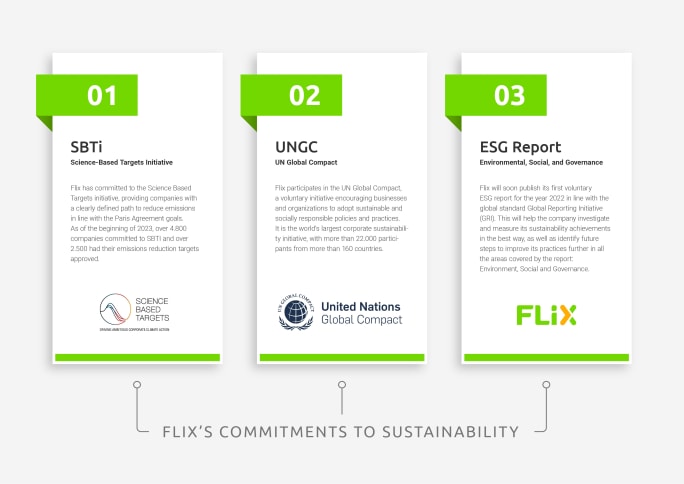
Flix will soon publish its first voluntary ESG report for the year 2022 in line with the global standard Global Reporting Initiative (GRI).
Photo: Flix
Flix commits to SBTi and UN Global Compact
The prioritization of sustainability as a core guiding value for the business, with ESG building a leading scheme for all its actions, has recently translated into Flix’s commitments.
The company has committed to the Science-Based Target initiative, which provides companies with a clearly defined path to cut emissions in line with the Paris Agreement goals. As of early 2023, over 4,800 companies committed to SBTi, and over 2,500 had their emissions reduction targets approved. With this commitment, Flix will set specific targets for near-term emissions reduction by 2032, as a first goal along its path to full decarbonization.
Besides, Flix is taking part in the UN Global Compact, involving over 22,000 participants from more than 160 countries.
Flix will also soon publish its first voluntary ESG report for the year 2022 in line with the global standard Global Reporting Initiative (GRI). This will help the company investigate and measure its sustainability achievements, as well as identify future steps to improve its practices further in all the areas covered by the report: Environment, Social, and Governance.
More Zero Emissions

LA Metro Board Awards 220 Battery-Electric Bus Contract to ENC
The contract, which is the largest base award of battery-electric buses by a U.S. transit agency, will be built in Southern California, sustaining good jobs as LA prepares to welcome the world in 2028
Read More →
Public Transit Conference Returning to GFX in 2027, Call for Papers Now Open
The Call for Papers is now open, allowing transit agency professionals and industry experts to help shape the PTC educational program by submitting session ideas for consideration.
Read More →
Report: Transit Bus Manufacturing Supports 34,100 Jobs, $5.1B in GDP
The “Buses Mean Business” report examines the transit bus manufacturing industry’s economic footprint, supply chain, and rising demand for vehicle replacements.
Read More →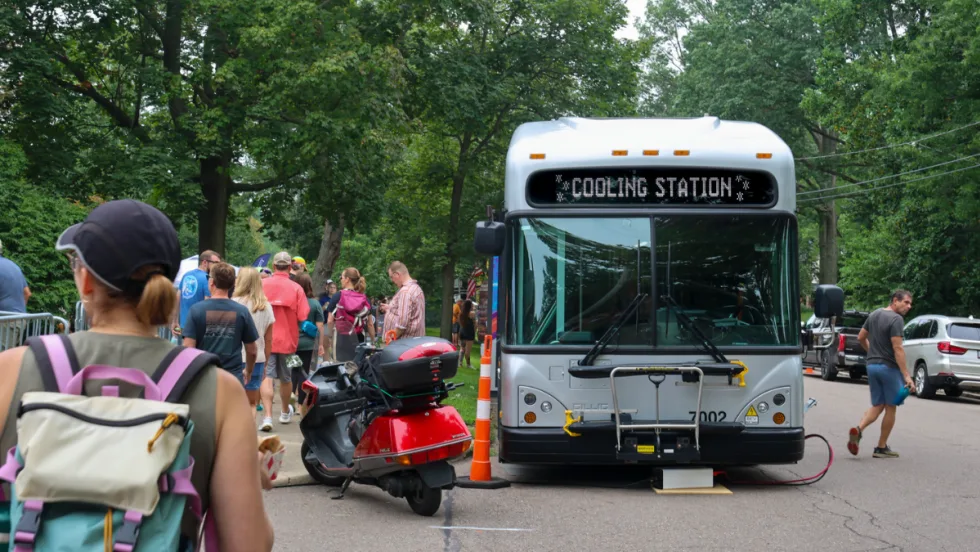
Ohio’s METRO RTA Turns Electric Buses into Mobile Power Sources at PorchROKR
See how three Gillig battery-electric buses powered festival stages while the agency’s new Park & Ride service carried approximately 1,000 attendees, demonstrating another potential use for transit agencies’ electric fleets.
Read More →
CALSTART and Forth Combine to Form Catalyst Mobility
The new name represents a renewed vision for the nonprofit focused on advancing clean, equitable, and affordable transportation solutions that move people and goods.
Read More →
Building a Flexible Path to Transit Electrification
John Hroncich discusses BAE Systems’ modular and scalable approach, lessons learned from decades of real-world operations, and how agencies can identify electrification strategies that fit their fleets.
Read More →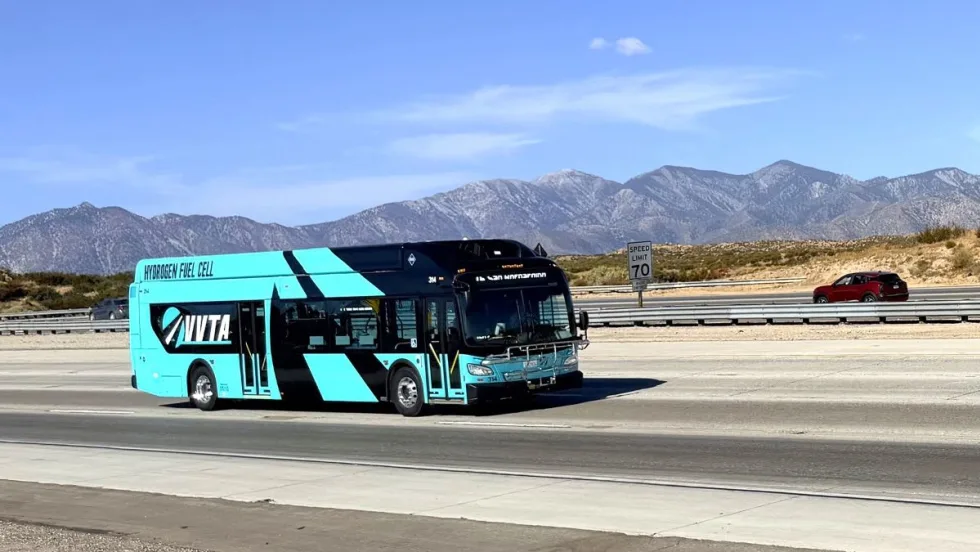
California's VVTA Begins Phased Rollout of Hydrogen Fuel Cell Buses
The agency is introducing 13 zero-emission buses into revenue service while evaluating performance across its urban, rural, and long-distance routes.
Read More →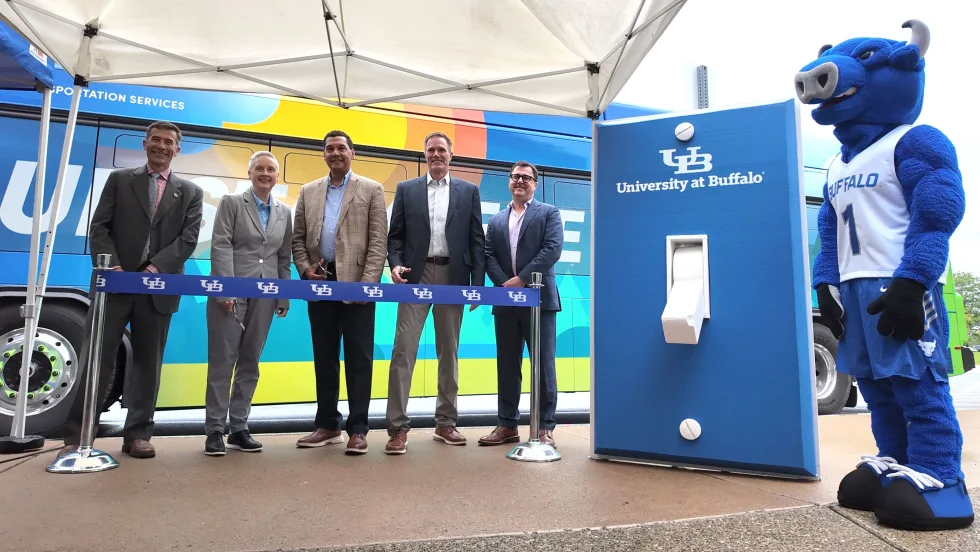
Inside Look: University at Buffalo Puts First 8 Electric Buses Into Stampede Service
UB, transportation solutions provider WeDriveU, and fleet electrification specialist Zenobē marked the deployment in the presence of students, university administrators, and local officials.
Read More →
Biz Briefs: OCTA Taps Clean Energy for Hydrogen Station, Stadler to Supply Via Rail Vehicles, and More
From manufacturers and suppliers to transit agencies and motorcoach operators, these updates offer a snapshot of the projects, partnerships and business moves driving the industry forward.
Read More →
AC Transit’s Cecil Blandon on Building the Next Generation of Transit Maintenance Leaders
The agency’s maintenance chief discusses leadership, workforce development, zero-emission technology, and preparing technicians for the future of public transportation.
Read More →