



<font color=red>Web Extra:</font> Project Action roundtable talks transportation for disabled youth
Group brought together youth with disabilities, parents and other family members, and representatives from the disability, transportation and youth communities.

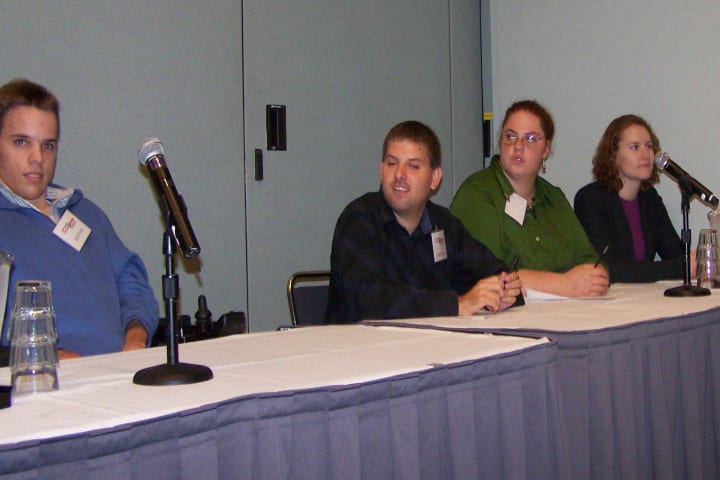
Student speakers pictured from left to right: Matt Potter, Alan Chase, Meghan Schrader and Chelsea Paulson. Speaker not shown is Cindy Singletary.
[IMAGE]Easter-Seals-roundtable-youth-full.jpg[/IMAGE]The transportation needs of the nation’s youth with disabilities were the focus of an Oct. 28 roundtable discussion event in Savannah, Ga., hosted by Easter Seals Project ACTION (ESPA) – a training and technical assistance center funded through a cooperative agreement with the Federal Transit Administration.
ESPA, based in Washington, D.C., brought together youth with disabilities, parents and other family members, and representatives from the disability, transportation and youth communities. They examined the state of transportation for youth, particularly young adults, who are in transition from high school to advanced education or employment.
James E. Williams Jr., president/CEO of Easter Seals, noted: “For years, education and employment have been viewed as integral to successful transition toward independent living in adulthood. Transportation is literally the link to schools, the work place, and every other destination in community life.”
This event’s goal was to identify solutions and develop a set of actions to address the needs of and, issues and barriers related to, transportation access for youth with disabilities. As part of the process to understand the perspectives of youth with disabilities who use transportation, an experiential learning collaboration was arranged through WVSA Arts Connection — Washington, D.C., affiliate of VSA Arts — and sponsored by ESPA.
The result of the day-long idea sharing and roundtable discussion was a prioritized list of key actions and resources that will help further transportation options for youth with disabilities.
Action needed to make transportation solutions for youth with disabilities a reality include but are not limited to:
Promote regional coordination and planning of transportation options.
Incorporation of universal design in planning, building and/or purchasing vehicles, facilities and equipment.
Develop public/private partnerships for greater funding and services.
Develop standards for quality, safe, accessible transportation.
Develop incentives to expand solutions such as ride-share and vanpools.
Increase awareness and knowledge among youth with disabilities and their parents of transportation-related programs and what they provide.
Build community awareness on the needs of and perspectives on transportation among people with disabilities.
Ensure that the percentage of accessible taxicabs mirrors the percentage of the population that needs those services.
Ensure that multi-modal transportation signage and navigational aids are available and that information about multi-modal transportation is easily accessible on the Web.
Resources and specific actions recommended include:
Make education and training on how to use public transportation available to improve accessibility and use.
Provide more opportunities for youth to receive travel training.
Teach ADA and the history of the disability rights movement in high school.
Teach self-advocacy skills.
Provide transition services planning and activities that educate students and parents early -- begin in elementary school -- regarding transportation choices and resources in the community.
Develop and launch a national awareness campaign on the positive effects and benefits of transportation; “I can now go to work and pay taxes!”
Provide incentives for operation of "green" accessible taxicabs and make available more federal dollars to support the purchase of accessible taxicabs.
In addition to developing recommendations, the meeting featured young artists with disabilities that were invited to express what public transportation means in their lives. The creative results were compiled into a series of artwork: a quilt, a three-dimensional painting and a digital photo collage. Easter Seals Intergenerational Center in Silver Spring, Md., participated in part of the process, with older adults from the center taking pictures representing their views on transportation access. To highlight the series, Easter Seals Project ACTION and WVSA Arts hosted an exhibit, “A View from Within — What Transportation Means to Me.”
For guidance and continuing involvement in the youth transportation initiative, ESPA convened an advisory committee comprised of leaders in the fields of education, disability services and transportation, including Lacy Pittman, The National Council on Independent Living and National Youth Leadership Network Governing Board member, and Judy Shanley, education program specialist, U.S. Department of Education.
Julia Kim, ESPA’s coordinator of this project, and Pittman worked together in fielding a pre-survey and ensuring that students with disabilities voices would be front and center at the event. “We are delighted to have such a distinguished team behind this vital initiative to tackle the issues of accessible transportation for youth with disabilities,” said Randall Rutta, executive vice president, Easter Seals Office of Public Affairs.
Mary Leary, senior director of Easter Seals Project ACTION, also expressed the team’s appreciation for the collaboration with the Center for Exceptional Children’s Division on Career Development and Transition, which resulted in this event being held at DCDT’s 15th International Conference. This venue provides an opportunity to garner additional participation of key stakeholders from the career transition community. “The DCDT team has provided invaluable assistance in this first opportunity to collaborate, and we look forward to developing joint initiatives based on what we learned during the roundtable,” Leary said.
Easter Seals is the leading non-profit provider of services for individuals with autism, developmental disabilities, physical disabilities and other special needs. For 90 years, Easter Seals has been offering help and hope to children and adults living with disabilities, and to the families who love them. Through therapy, training, education and support services, Easter Seals creates life-changing solutions so that people with disabilities can live, learn, work and play. Further information is available at www.easterseals.com.
More Paratransit

Driving Smarter Paratransit
John Hanlon shares how AlphaRoute is leveraging AI-powered technology to help paratransit providers optimize operations, support frontline staff, and enhance the rider experience.
Read More →
People Movement: Dan Dipert Coaches Adds Third-Generation Leader, Keolis Names New Valley Metro VP/GM, and More
In this edition, we also cover recent appointments and announcements at the Wabtec, SilverRide, HNTB, and more, showcasing the individuals helping to shape the future of transportation.
Read More →
Biz Briefs: RIPTA Unveils New Frontrunners, Clevland RTA Adds New Siemens, and More
In METRO's latest installment, we take a look at recent news from Siemens, Prevost, Dodge, and more partnerships making headlines across the transportation sector.
Read More →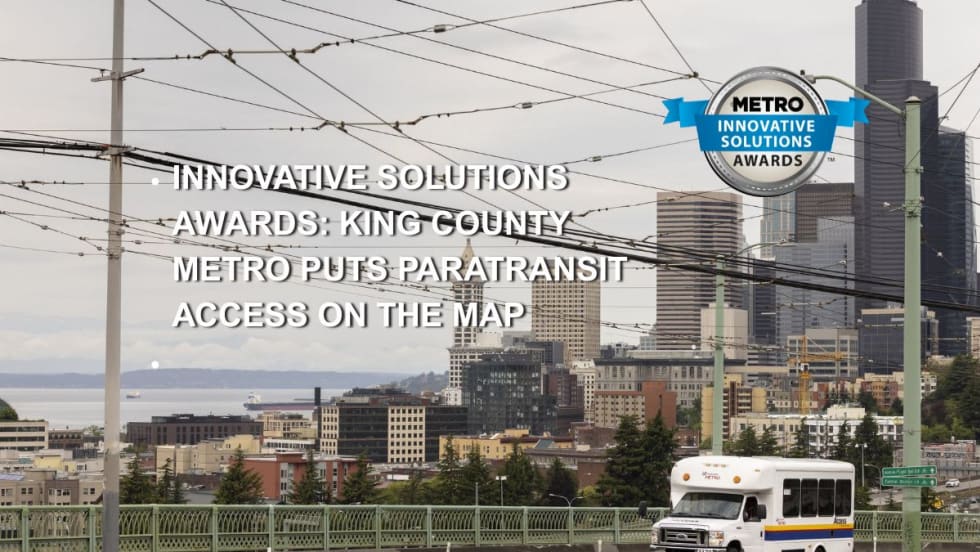
King County Metro Makes ADA Paratransit Easier to Navigate
METRO's Innovative Solutions Award winner replaces complex service-area descriptions with an accessible, interactive map that puts paratransit information directly in customers’ hands.
Read More →
Jacksonville’s NAVI Project Charts a New Course for Autonomous Public Transportation
Through its NAVI program, JTA is showing how autonomous vehicles, intelligent infrastructure, and coordinated operations can work together to deliver everyday public transportation.
Read More →
Driving Smarter Paratransit
John Hanlon shares how AlphaRoute is leveraging AI-powered technology to help paratransit providers optimize operations, support frontline staff, and enhance the rider experience.
Read More →
METRO Magazine Announces 2026 Innovative Solutions Awards Winners
Projects Recognized for Advancing Mobility Through Technology, Accessibility, Workforce Innovation, and Operational Excellence
Read More →
Biz Briefs: STV teams with Amtrak, Motorcoach Operators Boost Fleet and Land Contracts, and More
From manufacturers and suppliers to transit agencies and motorcoach operators, these updates offer a snapshot of the projects, partnerships and business moves driving the industry forward.
Read More →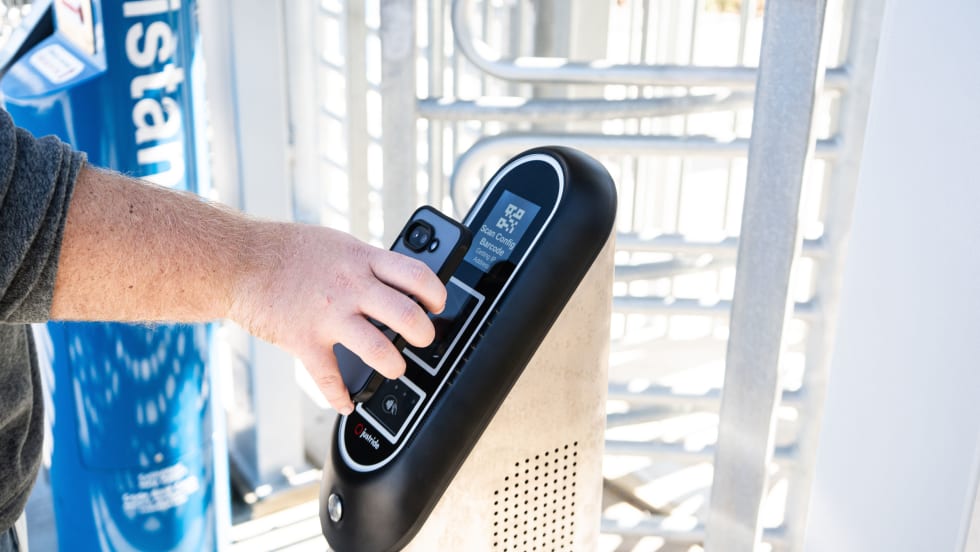
Biz Briefs: Masabi Teams with St. Louis Metro and More
In METRO's latest installment, we take a look at recent news from Transdev, Hitachi, and more partnerships making headlines across the transportation sector.
Read More →
New York MTA Leverages Zoning Program to Advance Station Accessibility
Accessibility enhancements at Nevins St Station will be financed through a development agreement tied to the MTA's Zoning for Accessibility initiative.
Read More →