



Foothill Transit, Cleveland RTA recognized for sustainability achievements
Public transit systems and businesses who voluntarily participate in the APTA Sustainability Commitment program pledge to implement processes and actions that create continuous improvements in environmental, social, and economic sustainability.

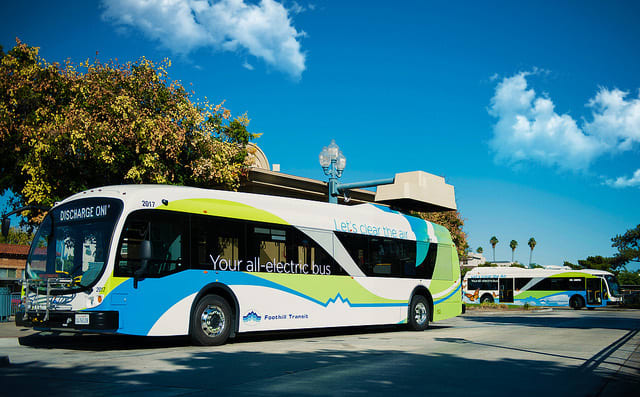
Photo: Foothill Transit
Photo: Foothill Transit
Foothill Transit and the Greater Cleveland Regional Transit Authority were recogized by the American Public Transportation Association (APTA) for significant achievements in sustainability achievements.
Calif.-based Foothill Transit was honored for reaching the Platinum Level, the highest recognition possible, in the APTA Sustainability Commitment Program. Including Foothill Transit, there are only five public transit systems in North America that have attained this top Platinum Level. This is the first bus-only public transit system to receive this status.
Sustainable accomplishments:
PLATINUM Level – Foothill Transit – West Covina, Calif.
In a period of extreme drought in California, Foothill Transit cut its water consumption by almost 30% thanks in part to using recycled water for bus washing. This significant success in reducing water consumption helped alleviate depleted local and state water resources.
The agency is also pioneering the adoption of bus fleet electrification. It currently operates one of the largest electric fleets in the U.S. and is committed to have an all-electric bus fleet by 2030. Foothill Transit also debuted the first double-decker all-electric bus in the nation. It operates on the Silver Streak line and helps to increase passenger capacity on one of its most popular routes.
The agency is also committed to social sustainability and has led diversity training for staff, promoted accessibility by partnering with Guide Dogs for America to train service animals on public buses, and established a Class Pass student rider program to provide discounted transit passes to students.
Foothill Transit was a founding signatory of the APTA Sustainability Commitment in 2009 and received Gold Level recognition in 2015.
----------------------------------------------------------------------------------------------------------------------

Photo: GCRTA
The Greater Cleveland Regional Transit Authority (RTA) was also recognized by APTA for its outstanding achievements in sustainability. As a result of its sustainable initiatives, RTA is one of five public transit systems in North America that are currently at the Silver Level status in APTA’s Sustainability Commitment program.
Sustainable accomplishments:
SILVER Level – Greater Cleveland Regional Transit Authority – Cleveland
RTA achieved an impressive 5% reduction in its water consumption through the implementation of a utility tracking program to quickly address leaks or other system inefficiencies. As part of its combined plan to reduce passenger rail emissions by 10% and bus emissions by 15% RTA reduced its greenhouse gas emissions by nearly 24% due to its investments in alternatively fueled vehicles.
Dedicated to performance excellence, the agency also participates in the Global Reporting Initiative to report on their sustainability programs and disclose their work according to a set of international standards. As part of this, RTA utilized a materiality assessment to inform the agency’s sustainability planning and implementation programs. This assessment helped the agency prioritize initiatives that address the issues most vital to the agency’s success.
RTA was a founding signatory of the APTA Sustainability Commitment in 2009 and received Bronze Level recognition in 2012.
Public transit systems and businesses who voluntarily participate in the APTA Sustainability Commitment program pledge to implement processes and actions that create continuous improvements in environmental, social, and economic sustainability. Based on specific measurable achievements, public transit systems and businesses are given Platinum, Gold, Silver, and Bronze Level recognition. First started in 2009, 139 public transit agencies and businesses have signed on to the APTA Sustainability Commitment. Currently, 38 signatories have received recognition.
More Technology

From Hardware to Digital Partner: Luminator Charts Its Next Chapter
CEO Magnus Friberg discusses Luminator’s shift toward becoming a digital partner, the growing importance of software and interoperability, and how AI can help agencies improve operations and passenger experience.
Read More →
Beyond the Checklist: A Structured Approach to Transit Maintenance
Reliability-Centered Maintenance helps transit agencies move beyond routine checklists to focus limited resources on the assets and failures that have the greatest impact on safety, reliability, and service.
Read More →
NJ TRANSIT Advances Bus Technology Upgrades Across Statewide Fleet
More than 1,500 buses now feature upgraded technology designed to improve arrival predictions and provide free Wi-Fi, with deployment expected to reach nearly 2,000 buses by the end of 2026.
Read More →

Building a Flexible Path to Transit Electrification
John Hroncich discusses BAE Systems’ modular and scalable approach, lessons learned from decades of real-world operations, and how agencies can identify electrification strategies that fit their fleets.
Read More →
Biz Briefs: Alstom Lands Canadian Contract, LYT to Supply California TSP, and More
In METRO's latest installment, we take a look at recent news from Complete Coach Works, Beep, FlixBus, and more partnerships making headlines across the transportation sector.
Read More →
From Legacy Silos to Conversational Intelligence
What if transit leaders could ask any operational question and get a trusted answer in seconds? Conversational AI is transforming how agencies use their data.
Read More →
USDOT Announces Rail Vehicle Replacement Grants, Chattanooga AV Shuttle Funding
More than $191 million in federal funding will help three transit agencies replace aging rail vehicles and support a new autonomous shuttle service in Chattanooga.
Read More →
Bus Tech Talk: Keeping Transit Technicians Ahead of the Technology Curve
LA Metro’s Obed Mejia discusses technician training, evolving maintenance technology, fleet replacement, and strategies for getting the most out of today’s transit fleets.
Read More →
Biz Briefs: RIPTA Unveils New Frontrunners, Clevland RTA Adds New Siemens, and More
In METRO's latest installment, we take a look at recent news from Siemens, Prevost, Dodge, and more partnerships making headlines across the transportation sector.
Read More →
Why Simulating Pedestrian Movement Has Become Essential for Modern Rail Stations
Pedestrian microsimulation is helping rail planners identify bottlenecks, test station designs, and prepare complex transit hubs for growing passenger volumes.
Read More →