



COTA, Ohio School District Partner on Student Transportation
Indiana District Seeks New School Transportation Plan
The new plan for Indianapolis Public Schools includes options for a walk zone policy, using the district’s yellow school buses, and partnering with IndyGo, the local transit agency.

Sadiah Thompson・Assistant Editor
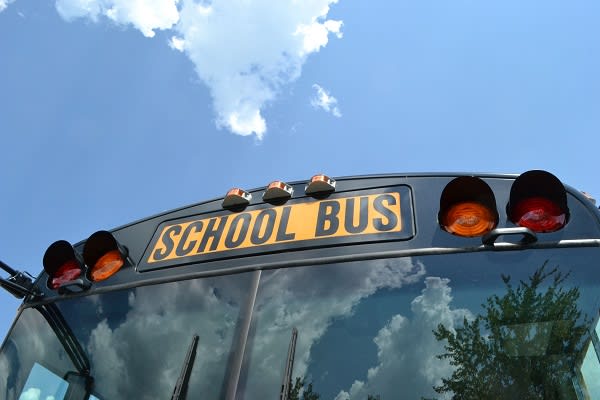
Indianapolis Public Schools developed a new transportation plan that includes options for a walk zone policy, using the district’s yellow school buses, and partnering with IndyGo, the local transit agency.
File photo
4 min to read
Indianapolis Public Schools (IPS) is seeking to update the ways in which students get to and from school for the 2021-22 school year, including options for walking, riding the district’s yellow buses, and using IndyGo, the city’s public transit agency.
IPS developed this new transportation plan as a result of high transportation costs per student, coupled with several factors related to COVID-19 and a $15 million budget shortfall, according to the district’s website. The plan was reportedly presented to the IPS board of commissioners during its meeting on March 25, and the board is expected to vote on the plan on April 29, according to a news release from IPS.
“Thinking about the proposal regarding IndyGo, it is a critical transition from a financial standpoint for the district,” said Aleesia Johnson, superintendent for IPS, in the news release. “There’s no need to duplicate services when we have a strong service in the city. We think this is a partnership that makes sense, will help us save dollars, and give our students not only access to school each day, but also access to the broader community.”
Inez Evans, president and CEO of IndyGo, added that the transit agency has the necessary infrastructure when it comes to the number of buses to complete IPS’s new transportation plan.
As School Bus Fleetpreviously reported, in 2018, IPS partnered with IndyGo for a pilot program encouraging students from Shortridge and Arsenal Technical high schools to use the city’s public transit buses. A year later, in 2019, the pilot was extended for another two years and expanded to include students from those schools as well as students from Crispus Attucks, George Washington, and KIPP Legacy high schools. Even though the district continued to provide yellow school bus service during this time, the pilot program was designed to help cut the district’s high school transportation costs.
Now, under the new plan, IPS is seeking a partnership with IndyGo to provide transportation to select students from the high schools listed above, in addition to Emmerich Manual, Graduation Academy, Newcomer Program at Northwest Middle School, and Thrival Academy, according to the district. The plan will affect approximately 605 of the district’s high school students, according to an FAQ webpage about the proposed partnership.
IPS will provide students that use IndyGo as their sole means of school transportation with student ID cards annually with a free electronic bus pass. The bus passes, according to the district, will allow students to commute to and from school, work, and extracurricular activities. The following criteria will be used to determine which students will be eligible to use IndyGo:
Zero IndyGo bus transfers.
Less than 0.7-mile total walk.
No more than 50 minutes total travel time. (IPS expects the average total travel time for students to be 25 minutes.)
IPS will continue to provide yellow school bus service as an option for students who are not eligible for the IndyGo service. Students with special needs and those receiving McKinney-Vento services will continue to receive transportation services per their Individualized Education Plan or their McKinney-Vento status, respectively, according to the district. (In July 2020, IPS began contracting its school buses with First Student, according to the news release.)
In addition to using IndyGo and the district's school buses, IPS is executing a walk zone policy for K–12 students at all schools for the upcoming school year. Families affected by this change will be contacted directly by IPS about their “walker” designation based on their walking distance from the student's school (between 1 to 1.5 miles from their school depending on grade level).
“We executed our walk zones policy at 13 schools this school year in an effort to move more than 3,000 students off of yellow buses given COVID concerns,” Johnson said in the release. “We brought in crossing guards to help students safely travel to school and that’s been a successful endeavor. As a result, we think we’re positioned to expand that across all our schools to be sure our students are safe, the district gets some savings, but we’re not negatively impacting the experience our students have in schools every day.”
IPS said transportation may be provided for students within the walking distance guidelines when physical barriers, such as busy intersections, prevent safe travel to school, or required because of a qualifying medical condition.
Originally posted on School Bus Fleet
More Bus

New York MTA Plans Largest Bus Fleet Upgrade in More Than a Decade
The agency is seeking manufacturers for 650 new CNG buses to replace aging vehicles, improve reliability, and advance its broader fleet modernization strategy.
Read More →
Building a Flexible Path to Transit Electrification
John Hroncich discusses BAE Systems’ modular and scalable approach, lessons learned from decades of real-world operations, and how agencies can identify electrification strategies that fit their fleets.
Read More →
Bus Tech Talk: Keeping Transit Technicians Ahead of the Technology Curve
LA Metro’s Obed Mejia discusses technician training, evolving maintenance technology, fleet replacement, and strategies for getting the most out of today’s transit fleets.
Read More →
Biz Briefs: RIPTA Unveils New Frontrunners, Clevland RTA Adds New Siemens, and More
In METRO's latest installment, we take a look at recent news from Siemens, Prevost, Dodge, and more partnerships making headlines across the transportation sector.
Read More →
People Movement: Holly Arnold Joins Transdev and More
In this edition, we also cover recent appointments and announcements at Pace, CamTran, MCI, and more, showcasing the individuals helping to shape the future of transportation.
Read More →
The High Cost of Transit Buses: Industry Leaders Look to Procurement Reform
Transit leaders and policymakers examine how standardized bus designs, streamlined procurement, and predictable funding could help agencies stretch budgets and deliver better service.
Read More →
The Business Voice Behind Public Transportation
As chair of APTA’s Business Members Board of Governors, Ray Melleady explains how more than 850 business members are partnering with transit agencies to advance funding, innovation, and industry-wide collaboration.
Read More →
From Surviving to Thriving: Building Stronger Transportation Organizations
Bus Business Consultants founder Brian Dickson shares lessons on leadership, organizational health, and creating options for long-term success in a changing transportation industry.
Read More →
Finding the ‘Happy Medium’: Optimizing Maintenance Without Sacrificing Reliability
The key to maintenance optimization isn’t doing less work—it’s doing the right work at the right time on the right assets.
Read More →
LA Metro, City of West Hollywood, and Partners Advance Smarter Bus Lane Enforcement
The award-winning partnership combines AI-powered detection with human oversight to improve bus reliability, accessibility, and enforcement efficiency.
Read More →