



L.A. Expands Bus Lane Enforcement Ticketing
This part of phase two marks a significant milestone in Metro's efforts to reduce congestion and ensure smooth and timely bus operations.

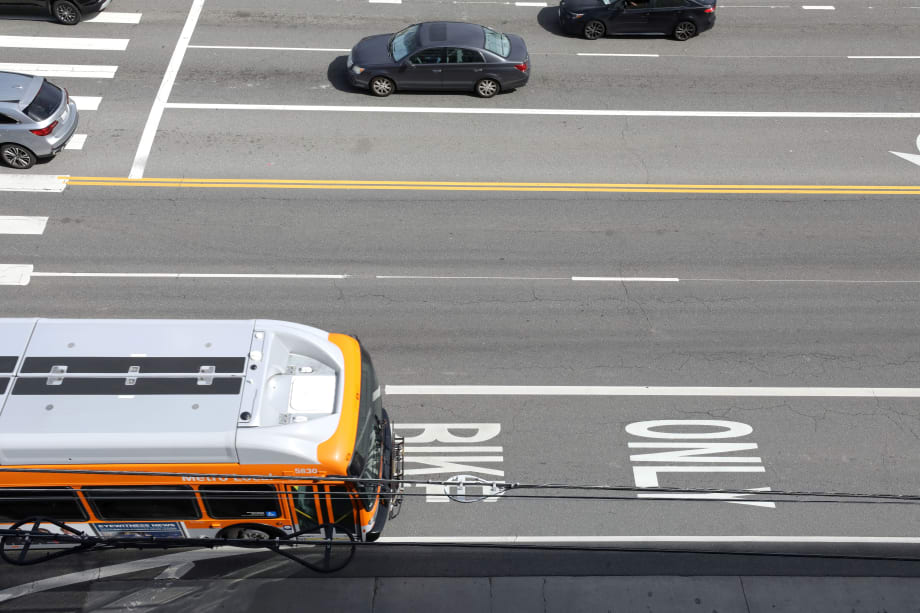
The program aims to curb the problem of parked vehicles obstructing bus lanes, which can delay bus services and affect the overall reliability of Metro’s extensive bus network.
Photo: LA Metro
The Los Angeles County Metropolitan Transportation Authority (Metro), in partnership with the Los Angeles Department of Transportation (LADOT), is expanding the bus lane enforcement pilot program and will begin ticketing along additional high-traffic routes.
During phase two’s initial 60-day warning period (March – May 2025), motorists illegally parked along bus lines 910 and 950, which serve the J line, and line 70, which serves Olive St./Grand Ave., received notices by mail warning that future violations would result in fines. Motorists who illegally park in those bus lanes will now face a penalty starting at $293, with fines increasing for repeat offenders.
This part of phase two marks a significant milestone in Metro's efforts to reduce congestion and ensure smooth and timely bus operations.
“We’re excited to take this important step forward in ensuring that our bus services remain reliable for commuters,” said Stephanie Wiggins, Metro CEO, in a press release announcing the program's expansion. “By addressing the issue of unauthorized vehicles in bus lanes, we can keep buses moving smoothly, reduce delays, and provide a better transit experience for all riders. Phase two builds on the success of the first phase, continuing our commitment to make public transportation faster, safer, and more efficient for the people of Los Angeles.”
Leveraging Tech
As part of this automated enforcement system, 100 cameras have been installed on select Metro buses operating along these key routes.
The dual-camera systems can detect vehicles illegally occupying bus-only lanes. The first camera captures the presence of a car in the bus lane, while the second records the vehicle's license plate number. Then, a traffic officer with LADOT will review the evidence and verify the accuracy of the image before issuing a ticket.
Tickets will include details of the violation, including time, location, and images or video evidence.
The program aims to curb the problem of parked vehicles obstructing bus lanes, which can delay bus services and affect the overall reliability of Metro’s extensive bus network.
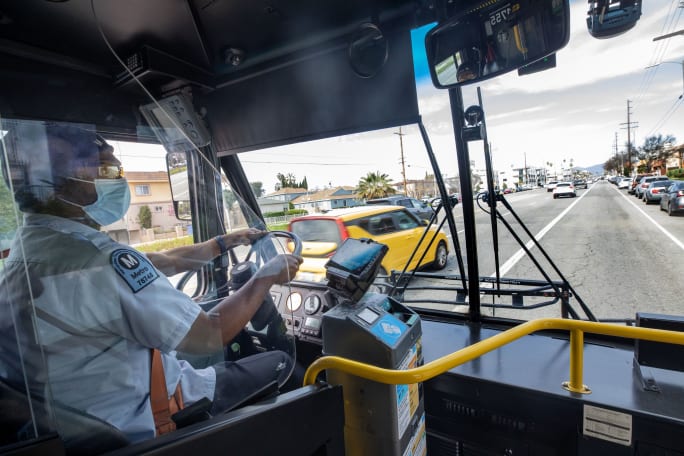
As part of this automated enforcement system, 100 cameras have been installed on select Metro buses operating along these key routes.
Photo: LA Metro
The Impact of Blocked Bus Lanes
In addition, for passengers with disabilities and other access needs, vehicles blocking bus lanes impact their ability to enter or exit the bus easily. With the expansion of automated enforcement, Metro expects significant improvements in bus on-time performance, contributing to better public transit service citywide.
Since phase one ticketing began this past February, LADOT has issued citations to more than 10,000 illegally parked vehicles disrupting service along bus lines 720, which serves Wilshire Blvd., and 212, which serves LA Brea Ave.
The automated bus lane enforcement technology advances LA Metro’s NextGen Bus Plan and reflects the agency’s ongoing efforts to modernize its operations and provide an equitable, high-quality public transportation system for the diverse communities of Los Angeles, the agency said in a press release.
More Security and Safety

Transit Agencies Highlight Safety Gains at National Summit
Leaders from 15 major transit systems shared crime-reduction results and safety initiatives while discussing the role of continued federal support.
Read More →
DART Launches Major Security, Fare Enforcement Initiative
The 90-day demonstration will deploy coordinated security teams at five light rail stations while testing controlled access and gathering data to guide future investments.
Read More →
RTD Launches NextRide App to Consolidate Trip Planning, Fares, Security Reporting
The app expands on RTD’s existing NextRide web application and allows customers to view real-time vehicle locations and service alerts, purchase and store digital fares, and access customer support.
Read More →

TAPTCO Updates OSHA Compliance Training for Transit Maintenance Operations
The revamped program addresses 26 OSHA standards for maintenance facilities, with TAPTCO pointing to training, documentation, and everyday shop hazards as continuing challenges for transit operations.
Read More →
How VaporVision Adds Value to Transit Door Systems
Wabtec engineers explain how the system improves doorway detection, strengthens diagnostics and gives transit agencies and OEMs greater operating flexibility.
Read More →
FRA Announces $5.3B in Rail Investments, Including $2B for Amtrak
Funding will support grade-crossing improvements, infrastructure upgrades, and new Amtrak equipment in 23 states.
Read More →
Chicago, Maryland Expand Non-Law-Enforcement Safety, Rider Support
The CTA and MTA are launching new programs aimed at de-escalation, crisis response, rider assistance, and greater transparency.
Read More →
LA Metro, City of West Hollywood, and Partners Advance Smarter Bus Lane Enforcement
The award-winning partnership combines AI-powered detection with human oversight to improve bus reliability, accessibility, and enforcement efficiency.
Read More →
LA Metro Reports 57% Decline in Homelessness on Transit System Since 2024
The agency's latest homelessness count offers new data on how care-based services and cross-sector partnerships can complement traditional transit security strategies.
Read More →
FTA Launches 'Transit Moves America' Dashboard to Highlight Agency Safety and Performance
The online dashboard transforms National Transit Database information into a public-facing resource that allows users to compare transit agencies on key operational and safety metrics.
Read More →