



L.A. Metro breaks ground on improvements project
Will build two aerial bridges and stations as well as bike and pedestrian path grade separations at two of the line’s busiest crossings.

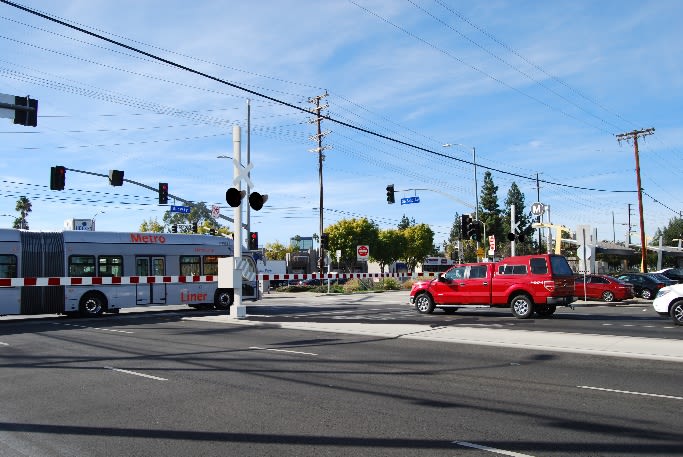
The $320 to $393 million transit project is funded by L.A. County’s Measure M voter-approved sales tax.
Photos courtesy LA Metro
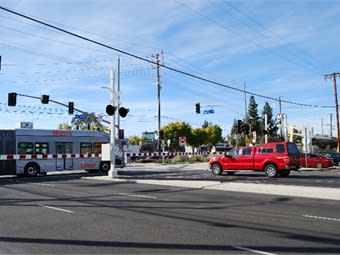
The $320 to $393 million transit project is funded by L.A. County’s Measure M voter-approved sales tax.
Photos courtesy LA Metro
The Los Angeles County Metropolitan Transportation Authority (Metro) broke ground on the Metro Orange Line Improvements Project, which will improve bus speeds and safety, and prepare the bus rapid transit line in the San Fernando Valley for a future conversion to light rail.
Metro has initiated preliminary engineering and has begun taking soil samples near the Sepulveda busway intersection in Van Nuys. The soil samples are part of site investigation work that will better characterize underground soil and ground conditions where the structural supports for aerial bridges are planned to physically separate buses from street traffic below. The project will build two aerial bridges and stations as well as bike and pedestrian path grade separations at Van Nuys and Sepulveda Boulevards — two of the line’s busiest crossings.
Metro will also build four-quadrant crossing gates at up to 35 intersections between North Hollywood and Chatsworth. Other project improvements will include better traffic signal priority technology for buses to improve travel times along the 18-mile corridor.
Taken together, the project could achieve a 20% reduction in bus travel times, increase ridership capacity by 39%, and virtually eliminate the potential for vehicle intrusions onto the busway while improving safety for buses, cars, pedestrians, and bicyclists alike.
The $320 to $393 million transit project is funded by L.A. County’s Measure M voter-approved sales tax. Approximately $75 million of the project cost has been made available by SB-1, the state’s gas tax and vehicle fee transportation funding program that was approved by the Legislature and signed into law by Gov. Jerry Brown in 2017.
The project is scheduled in Measure M to be completed by 2025 and is one of the transit projects identified in Metro’s Twenty-Eight by ‘28 list of transportation improvements slated for completion before the arrival of the Olympic and Paralympic Games in Los Angeles.
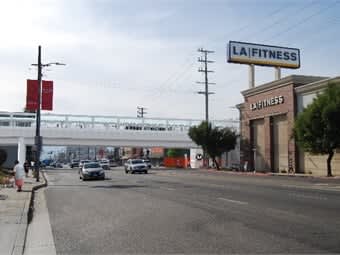
Metro is now working closely with the city of Los Angeles to test four-quadrant gates for a BRT application like the Orange Line.
Metro is now working closely with the city of Los Angeles to test four-quadrant gates for a BRT application like the Orange Line. The pilot gate will be located at the city of Los Angeles Bureau of Street Services crossing that is approximately 300 yards east of Sepulveda Boulevard and will be completed in winter 2019.
In conjunction with the pilot gates, a traffic impact analysis is being conducted with the Los Angeles Department of Transportation to evaluate potential impacts of crossing gates on traffic along the Orange Line corridor and to ensure that the proposed gating system meets desired speed improvements while minimizing delays for Valley cross traffic.
“We are now delivering on our agency’s promise to dramatically improve transit services, whether you’re traveling in the San Fernando Valley or throughout Los Angeles County,” said Metro CEO Phillip A. Washington. “In doing so, we are leveraging both local and state funding to build the Valley’s transit future as quickly as possible.”
Metro will coordinate the project’s future connections in Van Nuys or Sepulveda with other planned transit projects, including the Sepulveda Transit Corridor Project and the East San Fernando Valley Transit Corridor Project. Other planned transit projects in the area include the North San Fernando Valley Bus Rapid Transit Project, the North Hollywood to Pasadena Bus Rapid Transit Corridor Project, and the 2020 electrification of all buses on the Orange Line.
Metro began its technical study for the project less than a year after voter approval of the Measure M transportation measure in 2016. The Metro Board approved project recommendations this summer.
The Orange Line is planned to be converted to light rail by 2057 unless it can be delivered sooner via a Metro public-private partnership.
More Management

LIT Marks 10-Year Milestone at Annual Summit
Hosted by the COTA from September 10 to 13, the Summit carried the theme “Celebrating 10 Years of Excellence, Leadership, and Impact,” with every part of the program honoring the people, agencies, and partners who built LIT over its first decade.
Read More →
People Movement: Dan Dipert Coaches Adds Third-Generation Leader, Keolis Names New Valley Metro VP/GM, and More
In this edition, we also cover recent appointments and announcements at the Wabtec, SilverRide, HNTB, and more, showcasing the individuals helping to shape the future of transportation.
Read More →
METRO Opens Submissions for 2026 Motorcoach Awards
Nominations are now being accepted for METRO Magazine’s Operator of the Year and Innovative Operator of the Year awards.
Read More →

New York MTA Advances Final Contract for Second Avenue Subway Expansion
Contract Four is the largest in the Second Avenue Subway Phase 2 project and includes construction of station infrastructure, tracks, and signals for the subway expansion, MTA officials said. Work on Contract Four will begin in 2027.
Read More →
Transit Agencies Highlight Safety Gains at National Summit
Leaders from 15 major transit systems shared crime-reduction results and safety initiatives while discussing the role of continued federal support.
Read More →
NITA Names New Leadership, Expands Reduced-Fare Program at First Board Meeting
The new regional transit authority appointed its first board chair and interim executive director while extending reduced fares across CTA, Metra, and Pace for eligible riders.
Read More →
Beyond the Checklist: A Structured Approach to Transit Maintenance
Reliability-Centered Maintenance helps transit agencies move beyond routine checklists to focus limited resources on the assets and failures that have the greatest impact on safety, reliability, and service.
Read More →
APTA 2026 Nominating Committee Selects Leadership Slate, Names Chair and Vice Chair Nominees
Leadership changes will help shape the association’s priorities and its representation of the transportation industry during the 2026–2027 term.
Read More →
DART Launches Major Security, Fare Enforcement Initiative
The 90-day demonstration will deploy coordinated security teams at five light rail stations while testing controlled access and gathering data to guide future investments.
Read More →
Advancing Fare Collection Through Technology and Innovation
Learn about delivering 1300 gates at 91 stations while managing fare evasion. Explore the large scale deployment, solution customization and real-world results that affect the region. Prepare for deployment in your region now.
Read More →