



L.A. Metro, County launch school to prep youth for careers in transit
Will teach students transferrable STEAM industry skills focused on science, technology, engineering, arts, and math.


Curriculum of a new LA Metro Transportation School will be developed to teach students transferrable STEAM industry skills focused on science, technology, engineering, arts, and math.
Photo: Luis Inzunza-Metro

Curriculum of a new LA Metro Transportation School will be developed to teach students transferrable STEAM industry skills focused on science, technology, engineering, arts, and math.
Photo: Luis Inzunza-Metro
The Los Angeles County Transportation Authority (Metro), in partnership with the County of Los Angeles, announced the kick-off of their Transportation School, which will prepare Los Angeles County youth for career and college pathways in the global transportation industry. The school’s curriculum will be developed to teach students transferrable STEAM industry skills focused on science, technology, engineering, arts, and math.
The school is the centerpiece of a larger Workforce Development Initiative that Metro has created to address the transportation industry’s need for a skilled workforce. This educational and vocational program expands Metro’s existing career pathway programs to include more high-school age youth, including those at-risk from underserved communities. Eventually, Metro will expand the program to reach youth across L.A. County.
Nearly 30% of Metro’s workforce is eligible for retirement in the next few years. As a result, Metro will need a new workforce to help plan, build, manage, and operate the myriad of major transportation projects that the agency will deliver in the coming years. The Los Angeles Economic Development Corp. (LAEDC) estimates that Measure M alone will support and create 778,000 jobs over the next 40 years.
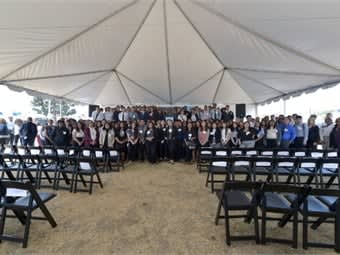
New LA Metro school will be the entry point into agency’s career pathway initiative intended to develop its future workforce.
LA Metro
“Tomorrow’s economy depends on today’s opportunities,” said L.A. Mayor and Metro Board Chair Eric Garcetti. “This new school gives young Angelenos a pathway to successful, long-lasting careers in the transportation industry — which, thanks to Measure M, will create hundreds of thousands of jobs in our region for years to come."
The Transportation School will be part of a larger mixed-use development that will transform a vacant property in the Vermont/Manchester area of South Los Angeles into an active community with improved quality of life, increased safety, community amenities, and workforce development opportunities. In addition to the school, site will include retail, affordable housing, and access to transit.
"Our vision is to put a one-of-a-kind asset here on the corner of Vermont and Manchester that will fundamentally alter the ecosystem of this community — and do so in a culturally sensitive and context-specific manner," said Metro Board of Director and County Supervisor Mark Ridley-Thomas. "There will be housing, retail, and a workforce training center, but the real engine of long-term economic opportunity will be a state-of-the-art boarding academy that will prepare young people for transportation-related jobs."
The school will be the entry point into Metro’s career pathway initiative intended to develop its future workforce. Another component of the career pathway is the Workforce Initiative Now-Los Angeles (WIN-LA) Program which creates a workforce development and skills training program for transportation jobs by partnering with private-sector employers, community colleges, labor organizations, and others. Metro’s Project Labor Agreement/Construction Career Policy (PLA/CCP) encourages construction employment and training opportunities on Metro projects to those who reside in economically disadvantaged areas.
“The transportation industry faces a huge challenge in creating a qualified workforce for the future,” said Metro CEO Phillip A. Washington. “Not only is this a way to ensure we have the employees we need to transform transportation in Los Angeles County, but also a way to develop and cultivate the most important asset we have — our people.”
More Management

METRO Opens Submissions for 2026 Motorcoach Awards
Nominations are now being accepted for METRO Magazine’s Operator of the Year and Innovative Operator of the Year awards.
Read More →
New York MTA Advances Final Contract for Second Avenue Subway Expansion
Contract Four is the largest in the Second Avenue Subway Phase 2 project and includes construction of station infrastructure, tracks, and signals for the subway expansion, MTA officials said. Work on Contract Four will begin in 2027.
Read More →
Transit Agencies Highlight Safety Gains at National Summit
Leaders from 15 major transit systems shared crime-reduction results and safety initiatives while discussing the role of continued federal support.
Read More →

NITA Names New Leadership, Expands Reduced-Fare Program at First Board Meeting
The new regional transit authority appointed its first board chair and interim executive director while extending reduced fares across CTA, Metra, and Pace for eligible riders.
Read More →
Beyond the Checklist: A Structured Approach to Transit Maintenance
Reliability-Centered Maintenance helps transit agencies move beyond routine checklists to focus limited resources on the assets and failures that have the greatest impact on safety, reliability, and service.
Read More →
APTA 2026 Nominating Committee Selects Leadership Slate, Names Chair and Vice Chair Nominees
Leadership changes will help shape the association’s priorities and its representation of the transportation industry during the 2026–2027 term.
Read More →
DART Launches Major Security, Fare Enforcement Initiative
The 90-day demonstration will deploy coordinated security teams at five light rail stations while testing controlled access and gathering data to guide future investments.
Read More →
Advancing Fare Collection Through Technology and Innovation
Learn about delivering 1300 gates at 91 stations while managing fare evasion. Explore the large scale deployment, solution customization and real-world results that affect the region. Prepare for deployment in your region now.
Read More →
Game Day in Motion: Moving Millions During the 2026 World Cup
Between packed transit stations and team motorcoaches, see how agencies and operators across North America tackled the transportation demands of the 2026 FIFA World Cup.
Read More →
Surface Transportation Extension Averts Shutdown, Leaves Transit Funding Gap
The stopgap keeps federal transportation programs moving, but missing advance funding could complicate the transit and rail projects agencies are planning next.
Read More →