



L.A. Metro Extends Popular GoPass Pilot
The program provides a free transit pass that helps lower students’ overall educational costs, while giving them a reliable means of transportation to attend school, jobs, medical appointments, and leisure activities.

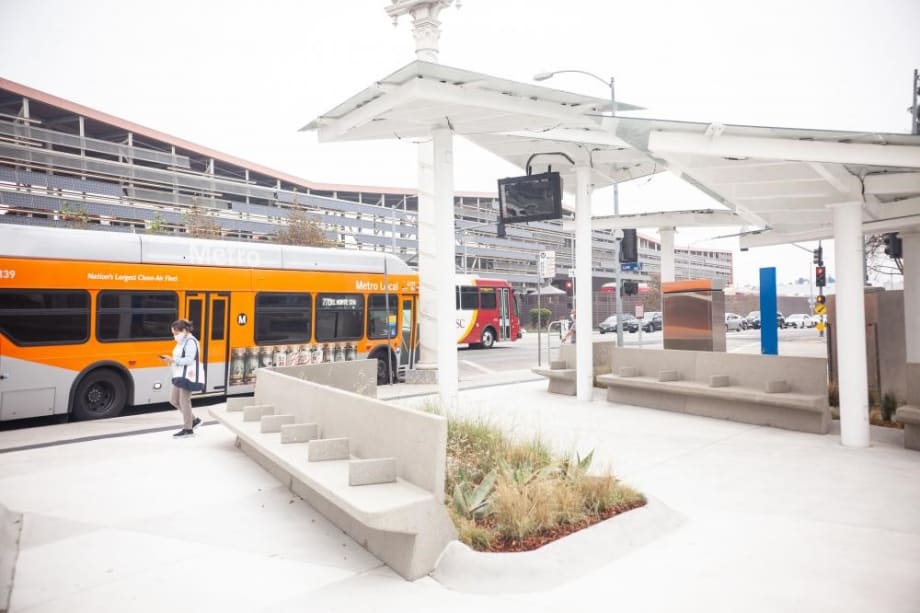
More than 241,000 students have registered as GoPass participants, which represents nearly 20% of the two-plus million students in L.A. County.
L.A. Metro
The Los Angeles County Metropolitan Transportation Authority (Metro) board approved $20 million to extend Metro’s popular GoPass fareless pilot program for K-14 students for the next fiscal year ending June 30, 2024. The program was originally set to expire on June 30.
Metro’s GoPass pilot program provides a free transit pass that helps lower students’ overall educational costs and improves academic performance, while giving them a reliable means of transportation to attend school, jobs, medical appointments, and leisure activities.
The program has grown in popularity among county schools and school districts since its launch, with more than 100 school districts and 1,400 schools now participating.
More than 241,000 students have registered as GoPass participants, which represents nearly 20% of the two-plus million students in L.A. County. Students have generated over 16.6 million boardings on the Metro system since the program began, averaging over 1.2 million boardings every month.
Metro’s Innovative Fare Program
Metro’s GoPass pilot program officially launched in October 2021. It sought to alleviate some of the financial pressure for L.A. County residents still recovering from the COVID-19 pandemic and utilized one-time federal funding through the 2021 American Rescue Plan Act. Funding the program also relies on cost-sharing agreements with participating schools and school districts.
“Transportation can be cost-prohibitive for many low-income residents, especially if they need to use our system frequently,” said Jacquelyn Dupont-Walker, Metro board member. “That’s why this program is so important. This program reduces the need for Angelenos to spend a large portion of their income on transportation.”
The board’s extension, paid for with Fiscal Year 2024 operating funds, will enable Metro to retain the benefits of this pilot program while the agency continues to identify and pursue local, state, federal, and other funding opportunities.
The GoPass pilot program makes it possible for Metro to remove the burden of transit costs for students and their families and provide them with greater economic stability. Providing free fares for these riders greatly enhances their access to schools and post-school activities, employment, medical care, and social services, among others.
Impact of Metro Fare Program
According to Metro, impacts of the GoPass Program include:
Families of K-12 students who participate typically see a yearly savings of $288 per student compared with Metro’s previously offered reduced fare student monthly passes.
Community college students participating in the program save $516 per year.
Some community college participants are parents with children who also participate in GoPass, which saves the entire family more than $800 a year overall.
A study Metro participated in has shown that students who receive a free transit pass have up to 27% higher graduation rates, which leads to expanded academic and employment opportunities.
One of the key benefits of the GoPass pilot program has been its ability to help Metro meet a number of important goals, such as improving social equity, increasing transit ridership, and creating environmental benefits. The program positively impacts public health with reduced greenhouse gas emissions and improved air quality.
“Thank you to the Metro Board for extending the GoPass pilot program for another year,” said Metro CEO Stephanie Wiggins. “GoPass has clearly met an unmet need in our communities by helping K-12 and community college students get to school while building up their familiarity and comfort with public transportation. We are also benefitting our climate action goals.”
The GoPass pilot program is the first phase of Metro’s Fareless System Initiative. The agency greatly streamlined the regional “Low Income Fare is Easy” (LIFE) discount fare program and has also succeeded in doubling public participation in that program as well within the last year. There are now more than 221,000 participants in the LIFE Program.
More Management

METRO Opens Submissions for 2026 Motorcoach Awards
Nominations are now being accepted for METRO Magazine’s Operator of the Year and Innovative Operator of the Year awards.
Read More →
New York MTA Advances Final Contract for Second Avenue Subway Expansion
Contract Four is the largest in the Second Avenue Subway Phase 2 project and includes construction of station infrastructure, tracks, and signals for the subway expansion, MTA officials said. Work on Contract Four will begin in 2027.
Read More →
Transit Agencies Highlight Safety Gains at National Summit
Leaders from 15 major transit systems shared crime-reduction results and safety initiatives while discussing the role of continued federal support.
Read More →

NITA Names New Leadership, Expands Reduced-Fare Program at First Board Meeting
The new regional transit authority appointed its first board chair and interim executive director while extending reduced fares across CTA, Metra, and Pace for eligible riders.
Read More →
Beyond the Checklist: A Structured Approach to Transit Maintenance
Reliability-Centered Maintenance helps transit agencies move beyond routine checklists to focus limited resources on the assets and failures that have the greatest impact on safety, reliability, and service.
Read More →
APTA 2026 Nominating Committee Selects Leadership Slate, Names Chair and Vice Chair Nominees
Leadership changes will help shape the association’s priorities and its representation of the transportation industry during the 2026–2027 term.
Read More →
DART Launches Major Security, Fare Enforcement Initiative
The 90-day demonstration will deploy coordinated security teams at five light rail stations while testing controlled access and gathering data to guide future investments.
Read More →
Advancing Fare Collection Through Technology and Innovation
Learn about delivering 1300 gates at 91 stations while managing fare evasion. Explore the large scale deployment, solution customization and real-world results that affect the region. Prepare for deployment in your region now.
Read More →
Game Day in Motion: Moving Millions During the 2026 World Cup
Between packed transit stations and team motorcoaches, see how agencies and operators across North America tackled the transportation demands of the 2026 FIFA World Cup.
Read More →
Surface Transportation Extension Averts Shutdown, Leaves Transit Funding Gap
The stopgap keeps federal transportation programs moving, but missing advance funding could complicate the transit and rail projects agencies are planning next.
Read More →