




Partner Up: L.A. Metro Taps Partner for Transit Ambassador Program
L.A. Metro Teams to Provide Crisis Response Services Across its Entire System
Once assigned, LACDMH and Metro will work together to deploy these teams where needed within distinct areas of the Metro system to de-escalate crises, provide linkage to appropriate mental health services, and educate the community.
May 27, 2022
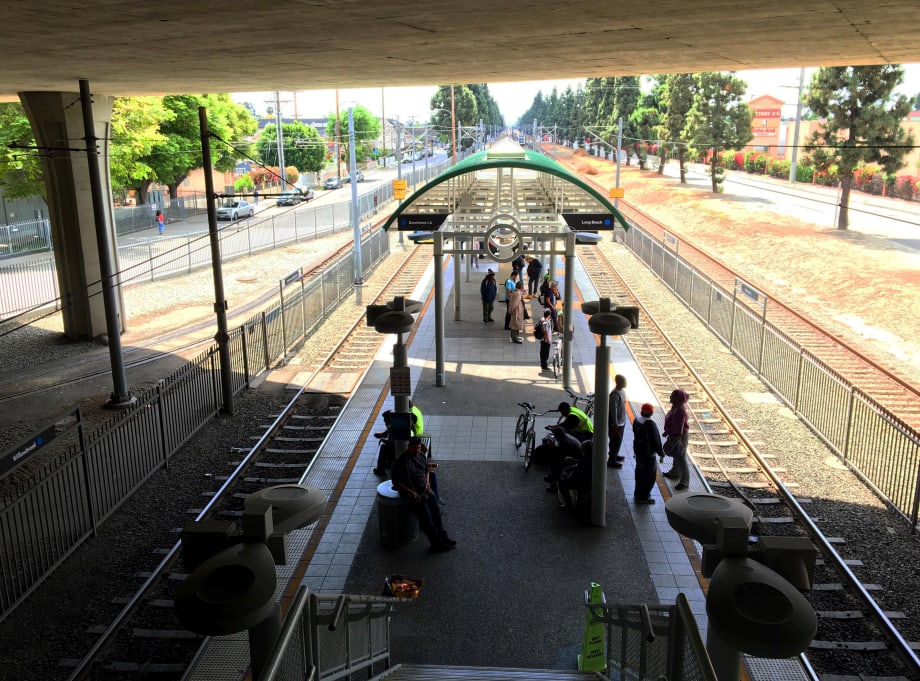
The innovative partnership is part of L.A. County’s broader "Alternative Crisis Response" strategy that focuses on responding to behavioral health crises with emergency health and human service responses so individuals do not end up in jails, on the streets, or repeatedly hospitalized.
Credit:
L.A. Metro
3 min to read
The Los Angeles County Department of Mental Health (LACDMH) and the Los Angeles County Metropolitan Transportation Authority (Metro) entered into an agreement for LACDMH to pilot the provision of comprehensive crisis response services to individuals experiencing mental health crises while onboard Metro vehicles or at Metro stations.
As part of this pilot, LACDMH will staff Metro-dedicated psychiatric mobile response teams (consisting of at least one licensed mental health clinician and one other mental health professional or paraprofessional), co-response teams (consisting of one clinician and one law enforcement officer trained in mental health crisis response), and community ambassador network teams (consisting of outreach and engagement staff). Once assigned, LACDMH and Metro will work together to deploy these teams where needed within distinct areas of the Metro system to de-escalate crises, provide linkage to appropriate mental health services, and educate the community. LACDMH will provide mental health training to METRO staff enterprise-wide and has also commissioned a study to assess and help guide the program as it is implemented.
Psychiatric mobile response, co-response and community ambassador network teams are all existing LACDMH services that have proven to be effective for crisis intervention, service linkage, and community outreach in other field-based settings throughout L.A. County.
LACDMH will work with Metro Transit Security to identify "hotspots" with high need for crisis response and to provide crisis intervention and de-escalation skills training to Metro’s security staff. LACDMH and Metro will also continually assess and refine the program — utilizing its own research, national industry best practices from other transportation and crisis response agencies, and stakeholder feedback — to optimize the program’s effectiveness in maintaining public safety while diverting individuals in crisis to appropriate treatment instead of a law enforcement response.
"This partnership allows us to take a critical step toward assisting those facing mental health crises on our system, which is part of a larger focus on public safety across Metro," said Metro CEO Stephanie N. Wiggins. "The agreement enables us to tap additional resources to respond quickly to those in crisis with field-based mental health services, which means law enforcement is not the first responder. We believe this is an important tactic in our strategy to create a more comprehensive community-oriented model for ensuring the safety and security of our transit riders."
The innovative partnership is part of L.A. County’s broader "Alternative Crisis Response" strategy that focuses on responding to behavioral health crises — including those related to mental health, substance use, and suicide — with emergency health and human service responses so individuals do not end up in jails, on the streets, or repeatedly hospitalized.
Utilizing alternative crisis responses will also minimize uses of force, incarceration, and justice system involvement, all of which are counterproductive to both the individual’s wellbeing and to L.A. County’s "Care First, Jails Last" vision, according to the agency’s press release.
Under the signed agreement, this partnership between LACDMH and Metro will be ongoing for three years with the option to renew on an annual basis. LACDMH and Metro will conduct an initial needs assessment study to determine service, coverage, and capacity needs prior to assigning response and outreach teams for this pilot.
More Security and Safety

CSA Group Releases Climate Resilience Standard for Transit, Passenger Rail
Developed with support from the Standards Council of Canada, CSA D700 guides assessing climate-related risks and planning adaptation measures for transit and passenger rail systems.
Read More →
San Diego MTS Approves New Fare Evasion Penalty Program
The new administrative process will move eligible violations out of the criminal court system, cap penalties at $125, and provide flexible payment options for riders.
Read More →
RTC of Southern Nevada Reports 29% Drop in Transit Operator Assaults
The agency credits expanded security measures, employee training, and technology investments for improvements in transit safety, while security officers have responded to 19 suspected overdoses since July.
Read More →
Public Transit Conference Returning to GFX in 2027, Call for Papers Now Open
The Call for Papers is now open, allowing transit agency professionals and industry experts to help shape the PTC educational program by submitting session ideas for consideration.
Read More →
Safe Transit Act Proposes New Security Requirements for Federal Transit Funding
Proposed legislation would link federal transit dollars to safety measures while requiring security investments, onboard cameras, and new fare collection standards.
Read More →
FTA Ends Direct Oversight of MBTA Safety Actions
The federal agency closed its remaining special directive to the Massachusetts Department of Public Utilities following a safety review that began in 2022.
Read More →
Transit Agencies Highlight Safety Gains at National Summit
Leaders from 15 major transit systems shared crime-reduction results and safety initiatives while discussing the role of continued federal support.
Read More →
DART Launches Major Security, Fare Enforcement Initiative
The 90-day demonstration will deploy coordinated security teams at five light rail stations while testing controlled access and gathering data to guide future investments.
Read More →
RTD Launches NextRide App to Consolidate Trip Planning, Fares, Security Reporting
The app expands on RTD’s existing NextRide web application and allows customers to view real-time vehicle locations and service alerts, purchase and store digital fares, and access customer support.
Read More →
TAPTCO Updates OSHA Compliance Training for Transit Maintenance Operations
The revamped program addresses 26 OSHA standards for maintenance facilities, with TAPTCO pointing to training, documentation, and everyday shop hazards as continuing challenges for transit operations.
Read More →