




Design-Build Facilitates Completion of L.A.'s Expo Line Phase 2
L.A.'s Gold Line sets March 5 launch date
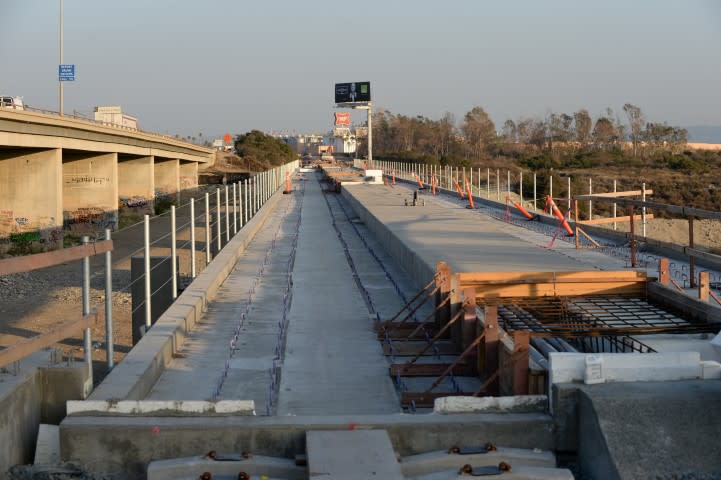
The rail extension was built by the Metro Gold Line Foothill Extension Construction Authority, an independent transportation planning and construction agency. The line took approximately five years to build, with major construction completed in September 2015.
October 28, 2015
Metro Gold Line Foothill Extension Construction Authority
2 min to read
Metro Gold Line Foothill Extension Construction Authority
Phillip A. Washington, CEO for the Los Angeles County Metropolitan Transportation Authority (Metro), announced the Metro Gold Line Foothill Extension Project, the very first rail line funded and built thanks to the 2008 Measure R countywide sales tax, will officially open to the public on Saturday, March 5.
“The opening of the Metro Gold Line Foothill Extension will bring Metro Rail to new San Gabriel Valley communities, and provide a relief valve for the increasingly congested 210 freeway,” said L.A. County Supervisor and Metro Board Chair Mark Ridley-Thomas. “Its opening is a significant milestone: Metro is delivering on its promise to lead a transit revolution. Work is well underway to add four additional rail lines and a total of 32 new miles of service to L.A. County’s rail system in the coming years.”
The rail extension was built by the Metro Gold Line Foothill Extension Construction Authority, an independent transportation planning and construction agency. The line took approximately five years to build, with major construction completed in September 2015.
“Our testing and training process before we open any rail line is a big part of making safety Metro’s number one priority,” said Washington. “But once the Gold Line Extension opens to the public in March, it will be yet another example of our regional investment in transforming transportation across this region.”
Metro has now accepted delivery of the rail line extension and will require the next several months to complete rigorous pre-revenue operations testing to ensure the line is safe and ready for service. This precursor work is critically important for the successful launch of the rail line. Metro is testing the line, training operators, supervisors and maintenance personnel, and will conduct extensive community outreach to help keep pedestrians, bicyclists and motorists safe around passing trains.
For example, Metro will test its fleet of brand new Kinkisharyo train cars as part of its pre-revenue service operations. The brand new P3010 train cars will seat 68 passengers and are highly advanced stainless steel vehicles specifically designed to support Metro’s complex system expansion needs. Metro has already begun train testing on the alignment and will accelerate train testing frequencies in preparation for the opening. New railcars must be tested and go through a “burn-in” process, with each car needing to run on the tracks for 1,500 miles.
In addition to the trains themselves, Metro also will test 23 miles of main train track. Tracks traverse 24 bridges and 14 at-grade street crossings. Metro must also test power and substation components in a simulated revenue service environment. Integrated testing will ensure that all systems, from power, communications, signals and grade crossings are all operating properly.
More Rail

New York MTA Advances Final Contract for Second Avenue Subway Expansion
Contract Four is the largest in the Second Avenue Subway Phase 2 project and includes construction of station infrastructure, tracks, and signals for the subway expansion, MTA officials said. Work on Contract Four will begin in 2027.
Read More →
San Diego MTS Breaks Monthly Trolley Ridership Record
Agency officials said July’s ridership indicates MTS’s continued recovery from the pandemic.
Read More →
Report Examines NJ TRANSIT Reliability, Funding Challenges
The Garden State Initiative analysis examines the roles of Amtrak infrastructure, fleet management, and agency operations while recommending a more performance-based approach to improving reliability.
Read More →
Stadler, CapMetro Sign Long-Term Rail Fleet Support Agreement
Beginning in 2027, Stadler will provide on-site technical expertise, spare parts support, training, and obsolescence management to help extend the reliability and longevity of CapMetro’s GTW fleet.
Read More →
Biz Briefs: Alstom Lands Canadian Contract, LYT to Supply California TSP, and More
In METRO's latest installment, we take a look at recent news from Complete Coach Works, Beep, FlixBus, and more partnerships making headlines across the transportation sector.
Read More →
CATS Gold Line Marks 5 Years of Service, 2.8M Passenger Trips
With a six-mile expansion planned, the Charlotte streetcar is positioned to connect more neighborhoods and major transit hubs across the region.
Read More →
Why Simulating Pedestrian Movement Has Become Essential for Modern Rail Stations
Pedestrian microsimulation is helping rail planners identify bottlenecks, test station designs, and prepare complex transit hubs for growing passenger volumes.
Read More →
Amtrak Begins Major Construction at New York’s Sunnyside Yard
The new maintenance facility will support Amtrak’s Airo trainsets while improving maintenance efficiency and turnaround times in New York.
Read More →
Chicago Leaders Unveil Plans for O’Hare Airport Express Train
The privately developed project would offer a 15-minute trip between downtown and O’Hare’s Terminal 2, with trains operating every 15 minutes on a dedicated track. The service would use battery-electric trains and three existing freight rail rights-of-way.
Read More →
OCTA Maps Out 30-Year Strategy to Protect Coastal Rail Corridor
The draft feasibility report identifies strategies to protect the coastal rail line for decades as the agency continues near-term stabilization and sand placement efforts.
Read More →