



LA Metro A Line Extension Boosts Connections Across the County
The new stations connect even more communities from Pomona to Long Beach in time for major upcoming LA events, including the 2028 Olympic and Paralympic Games.

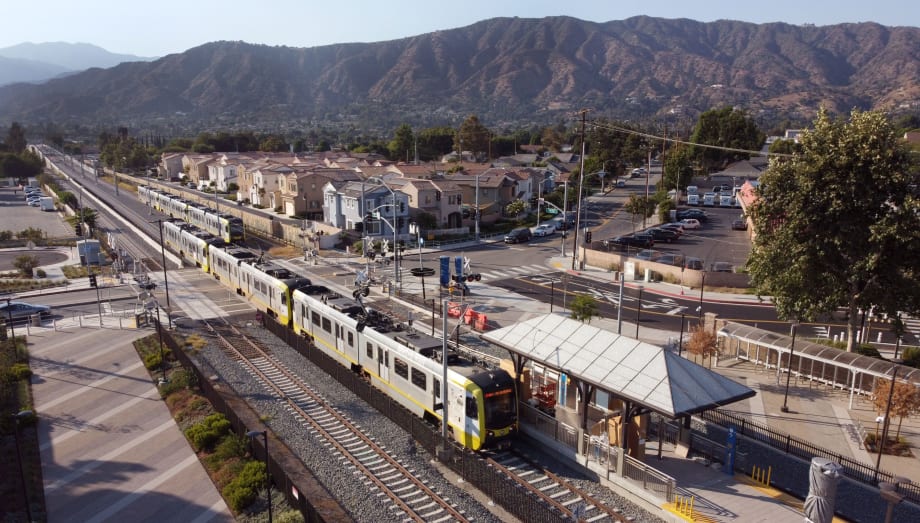
The new LA Metro extension adds nine miles to the current 48.5-mile Long Beach to Azusa Metro A Line. It harkens back to the Pacific Electric Railway Monrovia-Glendora “Red Car” trains, which ceased operations in 1951.
Photo: LA Metro
The Los Angeles County Metropolitan Transportation Authority (Metro) celebrated the official opening of the extension of the Metro A Line to the cities of Glendora, San Dimas, La Verne, and Pomona, further extending the world’s longest rail line.
The new stations connect even more communities from Pomona to Long Beach in time for major upcoming LA events, including the 2028 Olympic and Paralympic Games.
LA Metro’s Ribbon Cutting
Metro’s grand opening, ribbon-cutting event featured an inaugural Metro A Line train breaking through a commemorative banner as confetti cannons exploded overhead at the new Pomona North Station.
The celebration continued with “Rock the Rails,” a multi-station community music festival across all the new Metro A Line stations, featuring live bands and DJs, food trucks, and local exhibitors unique to each community.
The new extension adds nine miles to the current 48.5-mile Long Beach to Azusa Metro A Line. It harkens back to the Pacific Electric Railway Monrovia-Glendora “Red Car” trains, which ceased operations in 1951.
The new A Line will expand access to many regional destinations, including major colleges and universities, the Pomona Fairplex, regional parks, historic downtowns, museums, hospitals, medical centers, shopping, dining, and entertainment venues. It will also connect people living in San Bernardino County to Los Angeles County via the joint Metro/Metrolink station in Pomona.
The Metro A Line Project
Built by the Foothill Gold Line Construction Authority and delivered on time and on budget, the $1.5 billion rail extension project will be operated by Metro. It is the ninth project completed in Metro's Twenty-Eight by '28 initiative, an ambitious plan to enhance the region's transit infrastructure in time for the 2028 Olympic and Paralympic Games.
The La Verne/Fairplex Metro A Line Station will provide sports fans with direct access to the Pomona Fairplex, where cricket will be contested at the Olympic Games for the first time since 1900.
Throughout the year, the Pomona Fairplex hosts a wide range of educational events and entertainment activities connecting communities and driving commerce in the region, including the LA County Fair, KABOOM!, Oktoberfest, LIGHTS OUT, and the Imaginarium holiday light festival.
The venue serves as a hub for car enthusiasts with events like the Pomona Swap Meet and FuelFest, and it also hosts concerts, trade shows, and has an educational farm and learning centers on site.
Additional destinations now served by the Metro A Line include 19 nearby college and university campuses, including Azusa Pacific University, Citrus College, Life Pacific University, University of La Verne, California State Polytechnic University, Pomona, Pomona College, Claremont Graduate University, Scripps College, Claremont McKenna College, Harvey Mudd College, Pitzer College and Keck Graduate Institute, Mt. San Antonio College and St. Luke University, among others.
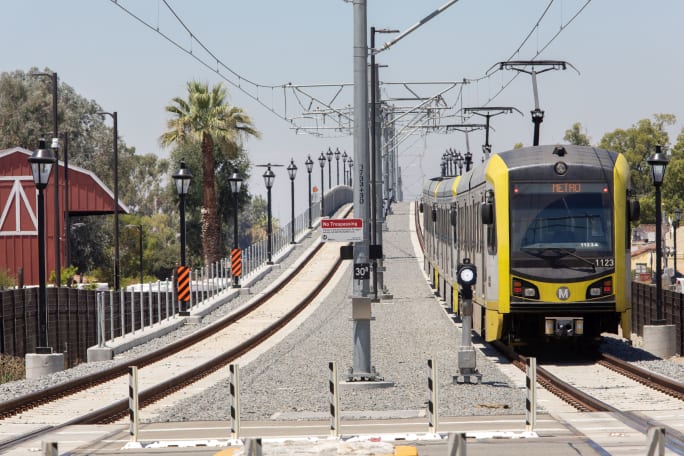
Built by the Foothill Gold Line Construction Authority and delivered on time and on budget, the $1.5 billion rail extension project will be operated by Metro.
Photo: LA Metro
A Convenient Way to Travel
Travel times between Los Angeles Union Station and the Glendora and Pomona Stations will range from 52 to 64 minutes, respectively. A similar 30-mile drive between Union Station and Pomona via the I-10 freeway, for example, could easily take an hour and a half or longer during peak commute periods.
Metro A Line trains will operate every eight minutes during peak service weekdays, 10 minutes off-peak, weekday and daytime weekend service, and every 20 minutes during evening/late-night service. Several Foothill Transit bus lines will directly serve the new rail stations to support the seamless integration of bus and rail services along the extension.
Each new Metro A Line station includes a multimodal public parking lot with easy pedestrian access and approximately 300 parking spaces each. There are 1,200 combined new parking spaces available on the line. Parking lots include passenger drop-off areas for transit and rideshare users, bicycle parking facilities, and electric vehicle chargers.
The Pomona North Station will also provide a convenient connection with Metrolink’s San Bernardino Line, which serves the Inland Empire, further expanding transit options for Metro riders seeking to travel throughout the region. This new connection, the third joint Metro/Metrolink hub in L.A. County, will help create a more integrated commuter and interregional rail network.
The Foothill Gold Line Construction Authority began major project construction in 2020. Funding for the Los Angeles County-only portion of the project was provided by Metro’s Measure R and Measure M transportation sales taxes. A significant portion of the project funding was also provided by the California State Transportation Agency (CalSTA) through its Transit and Intercity Rail Capital Program.
Projected ridership on the extension is 10,904 new boardings at the four new stations.
More Rail

New York MTA Advances Final Contract for Second Avenue Subway Expansion
Contract Four is the largest in the Second Avenue Subway Phase 2 project and includes construction of station infrastructure, tracks, and signals for the subway expansion, MTA officials said. Work on Contract Four will begin in 2027.
Read More →
San Diego MTS Breaks Monthly Trolley Ridership Record
Agency officials said July’s ridership indicates MTS’s continued recovery from the pandemic.
Read More →
Report Examines NJ TRANSIT Reliability, Funding Challenges
The Garden State Initiative analysis examines the roles of Amtrak infrastructure, fleet management, and agency operations while recommending a more performance-based approach to improving reliability.
Read More →
Stadler, CapMetro Sign Long-Term Rail Fleet Support Agreement
Beginning in 2027, Stadler will provide on-site technical expertise, spare parts support, training, and obsolescence management to help extend the reliability and longevity of CapMetro’s GTW fleet.
Read More →
Biz Briefs: Alstom Lands Canadian Contract, LYT to Supply California TSP, and More
In METRO's latest installment, we take a look at recent news from Complete Coach Works, Beep, FlixBus, and more partnerships making headlines across the transportation sector.
Read More →
CATS Gold Line Marks 5 Years of Service, 2.8M Passenger Trips
With a six-mile expansion planned, the Charlotte streetcar is positioned to connect more neighborhoods and major transit hubs across the region.
Read More →
Why Simulating Pedestrian Movement Has Become Essential for Modern Rail Stations
Pedestrian microsimulation is helping rail planners identify bottlenecks, test station designs, and prepare complex transit hubs for growing passenger volumes.
Read More →
Amtrak Begins Major Construction at New York’s Sunnyside Yard
The new maintenance facility will support Amtrak’s Airo trainsets while improving maintenance efficiency and turnaround times in New York.
Read More →
Chicago Leaders Unveil Plans for O’Hare Airport Express Train
The privately developed project would offer a 15-minute trip between downtown and O’Hare’s Terminal 2, with trains operating every 15 minutes on a dedicated track. The service would use battery-electric trains and three existing freight rail rights-of-way.
Read More →
OCTA Maps Out 30-Year Strategy to Protect Coastal Rail Corridor
The draft feasibility report identifies strategies to protect the coastal rail line for decades as the agency continues near-term stabilization and sand placement efforts.
Read More →