



Legislators urge President to support motorcoach industry amid COVID-19
Both the House Ways and Means Committee Chairman and the T&I Committee Chairman requested Steven Mnuchin and Federal Reserve Chair Jerome Powell consider providing at least $5 billion.


The Economic Stabilization and Assistance to Severely Distressed Sectors of the U.S. Economy program allocates $454 billion to help struggling companies, such as those in the motorcoach industry.
DC Trails
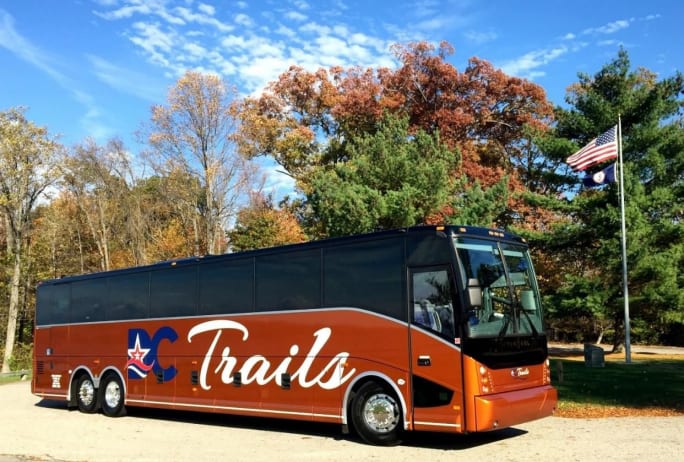
The Economic Stabilization and Assistance to Severely Distressed Sectors of the U.S. Economy program allocates $454 billion to help struggling companies, such as those in the motorcoach industry. DC Trails
House Ways and Means Committee Chairman Richard E. Neal (D-MA) and House Transportation and Infrastructure Committee Chairman Peter A. DeFazio (D-OR) requested Department of Treasury Secretary Steven Mnuchin and Federal Reserve Chair Jerome Powell consider providing at least $5 billion in loans to over-the-road bus carriers under a program recently enacted by the CARES Act. The Economic Stabilization and Assistance to Severely Distressed Sectors of the U.S. Economy program allocates $454 billion to help struggling companies, such as those in the motorcoach industry.
“The motorcoach industry is not only an important part of the nation’s transportation network, it is also an important part of the economy, providing over 88,000 good-paying full-time equivalent jobs,” the lawmakers wrote. “However, today the fallout from the COVID-19 pandemic has decimated the motorcoach industry. Based on reports from motorcoach companies, between 80 and 95 percent of motorcoach trips have been cancelled or are simply not being booked due to the pandemic, and scheduled service operations are down 80 to 90 percent.”
Noting that the short-term impacts of the crisis are staggering, the Chairmen also emphasized that, “in the longer term if bus companies go out of business, hundreds of thousands of travelers who rely on buses to get to their jobs and reach vital services, intermodal connections and educational facilities, especially in rural America, risk losing what may be their only means of transportation. This is especially true for low-income travelers and those without cars. It also means our national emergency response capabilities are at risk, as motorcoaches provide key evacuation services during times of weather — and security — related events.”
The lawmakers concluded, “as you consider companies for eligibility under this program, we ask that you direct at least $5 billion in loans to over-the-road bus carriers.”
To view the full letter, click here.
More Motorcoach

METRO Opens Submissions for 2026 Motorcoach Awards
Nominations are now being accepted for METRO Magazine’s Operator of the Year and Innovative Operator of the Year awards.
Read More →
Biz Briefs: Alstom Lands Canadian Contract, LYT to Supply California TSP, and More
In METRO's latest installment, we take a look at recent news from Complete Coach Works, Beep, FlixBus, and more partnerships making headlines across the transportation sector.
Read More →
Biz Briefs: RIPTA Unveils New Frontrunners, Clevland RTA Adds New Siemens, and More
In METRO's latest installment, we take a look at recent news from Siemens, Prevost, Dodge, and more partnerships making headlines across the transportation sector.
Read More →
People Movement: Holly Arnold Joins Transdev and More
In this edition, we also cover recent appointments and announcements at Pace, CamTran, MCI, and more, showcasing the individuals helping to shape the future of transportation.
Read More →
ABA Report: Motorcoach Travel Generates $161.6B Economic Impact
The 2025 analysis finds motorcoach travel supported nearly 900,000 jobs and generated $28 billion in federal, state, and local taxes.
Read More →
CharterUP’s Armir Harris on Technology, AI, and the Future of Group Mobility
In a recent episode of METROspectives, CharterUP Founder/CEO Armir Harris discussed the company’s evolution from an online charter bus marketplace into a technology platform supporting public- and private-sector mobility and much more.
Read More →
People Movement: ABC Names John Walsh as Chief Commercial Officer
In this edition, METRO also covers recent appointments and announcements at the DART, STV, and more, showcasing the individuals helping to shape the future of transportation.
Read More →
From Surviving to Thriving: Building Stronger Transportation Organizations
Bus Business Consultants founder Brian Dickson shares lessons on leadership, organizational health, and creating options for long-term success in a changing transportation industry.
Read More →
Biz Briefs: Luminator Marks Milestone and More
From manufacturers and suppliers to transit agencies and motorcoach operators, these updates offer a snapshot of the projects, partnerships and business moves driving the industry forward.
Read More →
ABAF Study Reveals Growing Insurance Crisis for Motorcoach Operators
Preliminary findings show 98% of operators faced premium increases over the past five years, while shrinking insurer participation is putting added pressure on businesses and customers.
Read More →