




RELATED: Keolis, MBTA to replace up to 30K rail ties on line
Mammoth-sized track construction machine used for Conn. line unveiled
The 250-ton machine can assemble up to 1,000 feet of track per hour (500 ties) in ideal conditions, at over one mile of track per day.
October 12, 2016
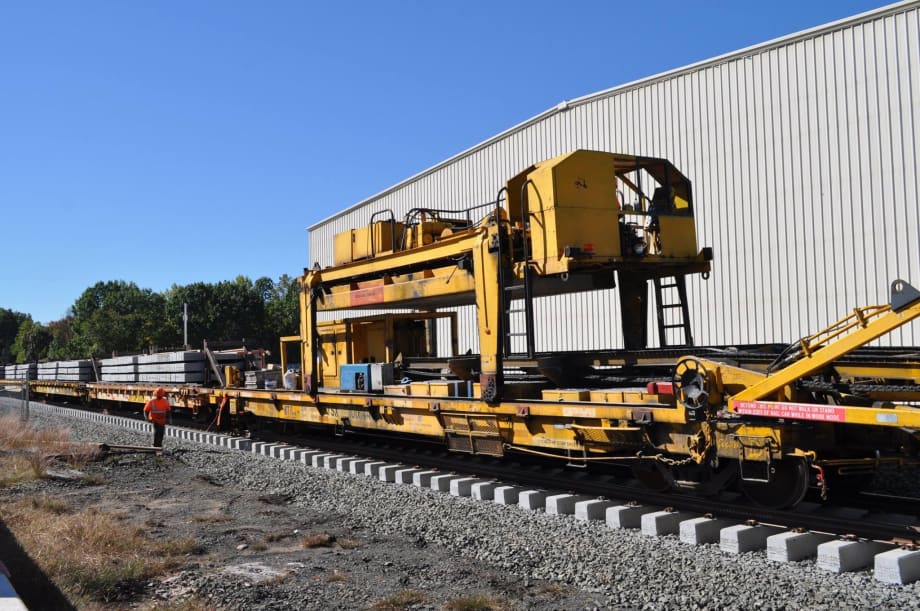
Track Construction Machine photos via New Haven-Hartford-Springfield (NHHS) passenger rail program.
3 min to read
Track Construction Machine photos via New Haven-Hartford-Springfield (NHHS) passenger rail program.
A mammoth-sized Track Construction Machine (TCM) that is now being used to double-track portions of the New Haven-Hartford-Springfield (NHHS) passenger rail line, now being branded as the CTrail Hartford Line, was unveiled this week.
Building a second track parallel to the existing single track, which is currently used by Amtrak trains, will allow more frequent train service and more efficient train movements when the CTrail Hartford Line, which will allow frequent, commuter rail service between New Haven, Hartford and Springfield, begins operations in January 2018.
As part of the NHHS Rail Program, the 250-ton TCM is laying nearly nine miles of track between North Haven and Meriden. The effort will take approximately three weeks to complete and will safely and efficiently lay new track without interfering with the operation of train traffic on the adjacent existing mainline track. The primary benefits of using a TCM over other methods of track construction are its production capability and the fact that it can lay track without disrupting train operations on adjacent tracks. This marks the first time a TCM will be used to lay this significant length of track in Connecticut.
TCM Installs Double-Track from NHHS Rail on Vimeo.
The TCM is the main component of a moving assembly line designed to install rails and ties in one efficient operation. Prior to start of the operation, train cars carrying fifty, 1,600-foot long rails were off-loaded and the rail was deposited on either side of the rail bed. Fifteen tie cars, each carrying 176 concrete railroad ties weighing over 800 pounds each, are towed behind the TCM and feed it with concrete ties via a conveyor system. While pulled along the rail bed by a bulldozer, the TCM uniformly lays the ties onto the ballast (rail bed) at predetermined spacing and simultaneously threads the rails onto the ties. A clipping machine attaches the rail clips to hold the completed track assembly together.
Track Construction Machine photos via New Haven-Hartford-Springfield (NHHS) passenger rail program.
The machine can assemble up to 1,000 feet of track per hour (500 ties) in ideal conditions, at over one mile of track per day. Prior to the use of the TCM, it would have taken months to complete this work using either track panels, which require offsite assembly and transportation to the site, or manual installation through the use of other, more traditional track construction equipment.
The TCM is expected to return to Connecticut in 2017 to add another ten miles of track between Meriden and Newington. By the time the expanded service begins in 2018, about 32 miles of the 62-mile corridor between New Haven and Springfield will be double-tracked.
TCMs have been used successfully around the world on some of the largest track construction projects over the last ten years, including in Italy, Northern Ireland, Brazil, India, and Saudi Arabia, among others. Only a handful of these machines exist in the United States.
The CTrail Hartford Line service will provide more frequent, convenient and faster passenger rail service between New Haven, Hartford and Springfield by increasing the number of round trip trains from six daily Amtrak intercity and regional trains to a total of 17 round trip trains a day to Hartford, and 12 trains per day to Springfield.
More Rail

New York MTA Advances Final Contract for Second Avenue Subway Expansion
Contract Four is the largest in the Second Avenue Subway Phase 2 project and includes construction of station infrastructure, tracks, and signals for the subway expansion, MTA officials said. Work on Contract Four will begin in 2027.
Read More →
San Diego MTS Breaks Monthly Trolley Ridership Record
Agency officials said July’s ridership indicates MTS’s continued recovery from the pandemic.
Read More →
Report Examines NJ TRANSIT Reliability, Funding Challenges
The Garden State Initiative analysis examines the roles of Amtrak infrastructure, fleet management, and agency operations while recommending a more performance-based approach to improving reliability.
Read More →
Stadler, CapMetro Sign Long-Term Rail Fleet Support Agreement
Beginning in 2027, Stadler will provide on-site technical expertise, spare parts support, training, and obsolescence management to help extend the reliability and longevity of CapMetro’s GTW fleet.
Read More →
Biz Briefs: Alstom Lands Canadian Contract, LYT to Supply California TSP, and More
In METRO's latest installment, we take a look at recent news from Complete Coach Works, Beep, FlixBus, and more partnerships making headlines across the transportation sector.
Read More →
CATS Gold Line Marks 5 Years of Service, 2.8M Passenger Trips
With a six-mile expansion planned, the Charlotte streetcar is positioned to connect more neighborhoods and major transit hubs across the region.
Read More →
Why Simulating Pedestrian Movement Has Become Essential for Modern Rail Stations
Pedestrian microsimulation is helping rail planners identify bottlenecks, test station designs, and prepare complex transit hubs for growing passenger volumes.
Read More →
Amtrak Begins Major Construction at New York’s Sunnyside Yard
The new maintenance facility will support Amtrak’s Airo trainsets while improving maintenance efficiency and turnaround times in New York.
Read More →
Chicago Leaders Unveil Plans for O’Hare Airport Express Train
The privately developed project would offer a 15-minute trip between downtown and O’Hare’s Terminal 2, with trains operating every 15 minutes on a dedicated track. The service would use battery-electric trains and three existing freight rail rights-of-way.
Read More →
OCTA Maps Out 30-Year Strategy to Protect Coastal Rail Corridor
The draft feasibility report identifies strategies to protect the coastal rail line for decades as the agency continues near-term stabilization and sand placement efforts.
Read More →