



March Networks Lands Large California Contract
The $4 million contract will see more than 400 buses deployed with March Networks’ complete end-to-end RideSafe solution.
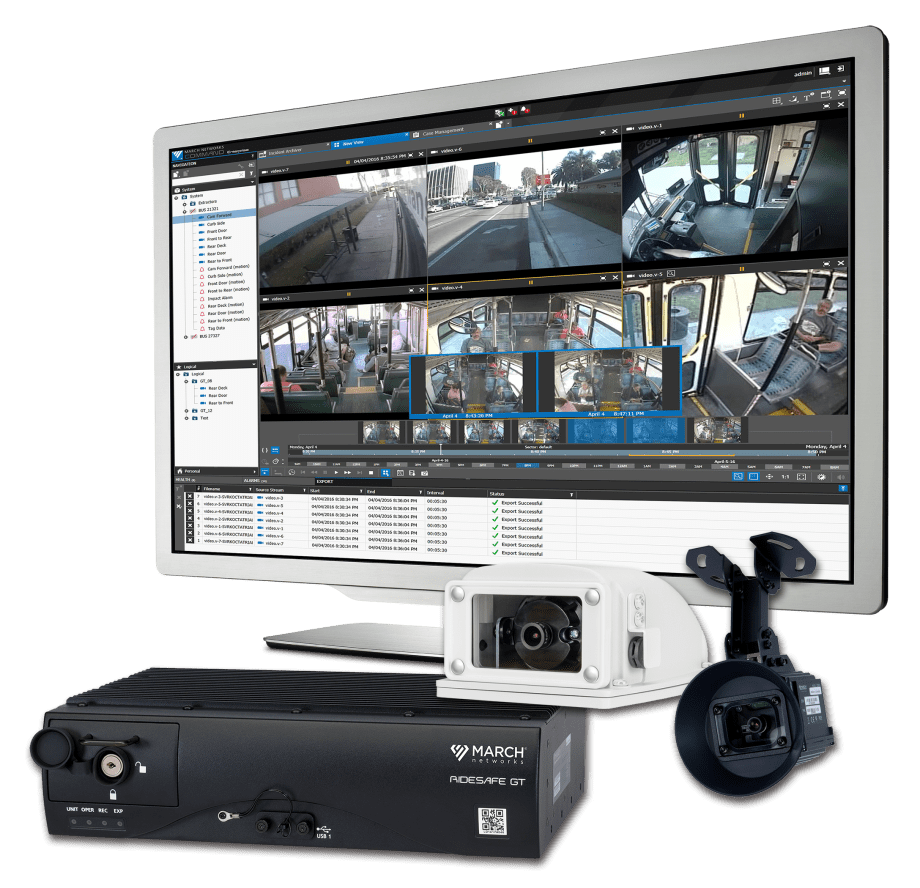
RideSafe enables transit operators to maintain the highest security for passengers and employees, respond quickly to emergency situations, and resolve liability claims faster with integrated surveillance video and vehicle metadata.
March Networks
March Networks® announced that one of California’s busiest transportation authorities will standardize its entire bus fleet on its RideSafe mobile solution.
The $4 million contract will see more than 400 buses deployed with March Networks’ complete end-to-end RideSafe solution. The contract includes cloud-based monitoring of all the transportation authority’s mobile cameras and recorders, a services contract providing annual and recurring revenue for March Networks for up to seven years.
RideSafe enables transit operators to maintain the highest security for passengers and employees, respond quickly to emergency situations, and resolve liability claims faster with integrated surveillance video and vehicle metadata. It also provides peace of mind with sophisticated monitoring through March Networks’ Insight Monitoring and Resolution Service.
With Insight, March Networks’ managed services professionals proactively monitor all video devices and troubleshoot issues remotely, saving customers’ time and money by eliminating unnecessary truck rolls. If a physical update is required, March Networks immediately dispatches a technician to conduct onsite repair services. All activity is logged online, giving customers a complete view of their network via a secure web browser.
Fully integrated with Insight is March Networks’ RideSafe™ GT Series Hybrid Transit NVRs, the backbone of the RideSafe solution. The highly reliable, Linux-based recording platforms are purpose-built for transportation environments with industry-recognized SAE J1455-standards and tamper-proof enclosures that protect against dust and moisture. They allow operators to quickly access live and recorded video and search for incidents based on vehicle information like GPS location when managed by March Networks Command for Transit™ video management software.
As true hybrid appliances, the NVRs support a mix of analog and IP cameras, allowing transportation agencies to migrate to IP video cost-effectively and at their own pace.
The California transportation authority will also deploy March Networks’ ruggedized mobile cameras, including its new SE2 Fleet Dash Camera and SE2 Fleet Wedge Camera.
Both cameras deliver 2MP resolution and feature industry-first LED flicker mitigation technology, which suppresses the strobing in recorded video caused by LED light sources. Eliminating flicker in surveillance video ensures brake lights and other light sources are not mistaken for flicker, and allows for more accurate post-incident investigations.
More Security and Safety

Transit Agencies Highlight Safety Gains at National Summit
Leaders from 15 major transit systems shared crime-reduction results and safety initiatives while discussing the role of continued federal support.
Read More →
DART Launches Major Security, Fare Enforcement Initiative
The 90-day demonstration will deploy coordinated security teams at five light rail stations while testing controlled access and gathering data to guide future investments.
Read More →
RTD Launches NextRide App to Consolidate Trip Planning, Fares, Security Reporting
The app expands on RTD’s existing NextRide web application and allows customers to view real-time vehicle locations and service alerts, purchase and store digital fares, and access customer support.
Read More →

TAPTCO Updates OSHA Compliance Training for Transit Maintenance Operations
The revamped program addresses 26 OSHA standards for maintenance facilities, with TAPTCO pointing to training, documentation, and everyday shop hazards as continuing challenges for transit operations.
Read More →
How VaporVision Adds Value to Transit Door Systems
Wabtec engineers explain how the system improves doorway detection, strengthens diagnostics and gives transit agencies and OEMs greater operating flexibility.
Read More →
FRA Announces $5.3B in Rail Investments, Including $2B for Amtrak
Funding will support grade-crossing improvements, infrastructure upgrades, and new Amtrak equipment in 23 states.
Read More →
Chicago, Maryland Expand Non-Law-Enforcement Safety, Rider Support
The CTA and MTA are launching new programs aimed at de-escalation, crisis response, rider assistance, and greater transparency.
Read More →
LA Metro, City of West Hollywood, and Partners Advance Smarter Bus Lane Enforcement
The award-winning partnership combines AI-powered detection with human oversight to improve bus reliability, accessibility, and enforcement efficiency.
Read More →
LA Metro Reports 57% Decline in Homelessness on Transit System Since 2024
The agency's latest homelessness count offers new data on how care-based services and cross-sector partnerships can complement traditional transit security strategies.
Read More →
FTA Launches 'Transit Moves America' Dashboard to Highlight Agency Safety and Performance
The online dashboard transforms National Transit Database information into a public-facing resource that allows users to compare transit agencies on key operational and safety metrics.
Read More →