



Maryland launches transformational transit revamp
The multi-phase plan creates an interconnected transit system, redesigns the local and express bus systems, and adds 12 new high-frequency, color-coded bus routes that improve connections to jobs and other transit modes.

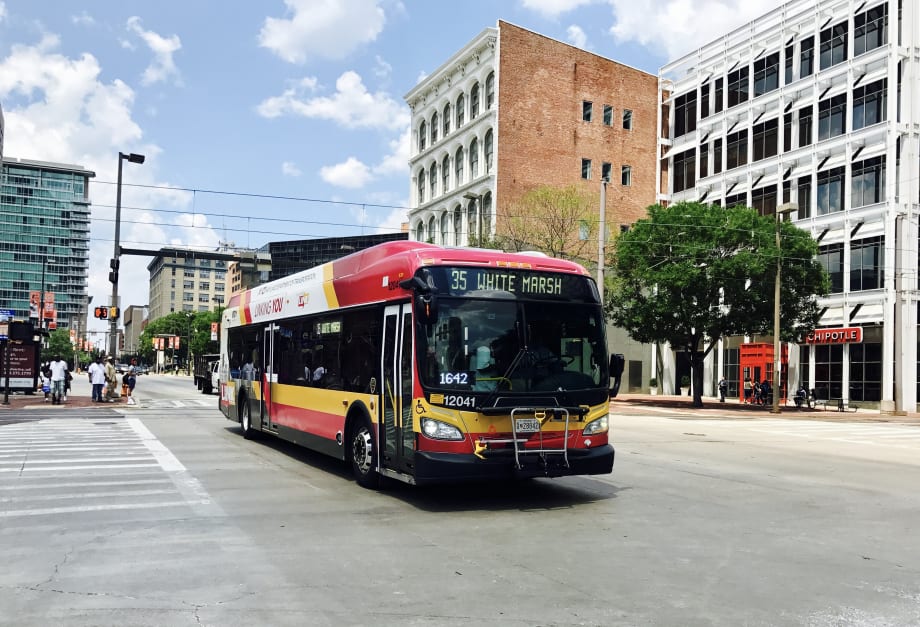
The Hogan Administration’s new transformative transit improvement project delivers on the state’s promise to better connect people in the Baltimore region to jobs and other transit modes.
The Hogan Administration’s new transformative transit improvement project delivers on the state’s promise to better connect people in the Baltimore region to jobs and other transit modes.
Gov. Larry Hogan, Maryland Department of Transportation (MDOT) Secretary Pete K. Rahn, and MDOT Maryland Transit Administration (MDOT MTA) Acting Administrator Kevin Quinn officially launched BaltimoreLink at the West Baltimore MARC Station on Wednesday. The Hogan Administration’s new transformative transit improvement project delivers on the state’s promise to better connect people in the Baltimore region to jobs and other transit modes.
“We stood here 19 months ago and promised that we would fix Baltimore’s broken transit system, and we have done exactly what we said we would do,” said Gov. Hogan. “BaltimoreLink signifies the state’s long-term commitment to the future of this city. This $135 million dollar state investment will create a customer-focused transit system for Baltimore that is safer, cleaner, and which better meets the needs of city residents.”
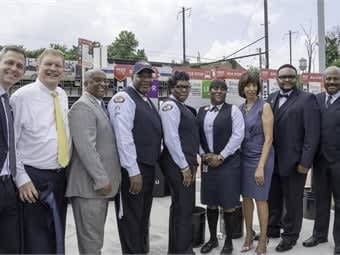
Several local dignitaries as well as the Maryland Transit Administration team were on hand for the launch press conference.
The official rollout of BaltimoreLink starts at 3 a.m. on Sunday, June 18. This multi-phase plan creates an interconnected transit system, redesigns the local and express bus systems, and adds 12 new high-frequency, color-coded bus routes that improve connections to jobs and other transit modes. The new $135 million in state funding builds on hundreds of millions of dollars in key capital investments by the Hogan administration for critical improvements to Baltimore City's transit system.
Secretary Rahn credited the hard work and dedication of the MDOT MTA team for making the new transit system a reality.
“Few cities get to completely redesign their entire transit system from scratch, fixing decades of accumulated inefficiencies,” said Secretary Rahn. “We have developed a comprehensive, efficient and effective transit system that delivers a true transit network that connects people to life’s opportunities.”
With the official launch of BaltimoreLink, existing MDOT MTA transit modes will be renamed: BicycleLink, LocalLink (Local Bus), Light RailLink, Metro SubwayLink and MobilityLink. Express BusLink, which was designed to improve suburb-to-suburb connectivity, was launched in June 2016.
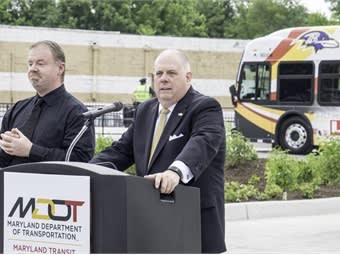
The new $135 million in state funding builds on hundreds of millions of dollars in key capital investments by the Hogan administration for critical improvements to Baltimore City's transit system.
A key component of the BaltimoreLink system is CityLink — 12 new high-frequency, color-coded bus routes that will improve reliability and better connect riders to Amtrak, Commuter Bus, Light RailLink, MARC Train, Metro SubwayLink, and other services in Baltimore and the surrounding suburbs. In Baltimore City, new CityLink routes will run every 15 minutes during peak periods. The new CityLink buses will be specially branded and travel on color-coded routes with easy-to-read signage and detailed maps that will make the system easier to use. The CityLink bus routes, Light RailLink and Metro SubwayLink will form an interconnected, transit system. New LocalLink buses, which will operate on neighborhood streets, will also launch on June 18.
“We are committed to transforming our transit system to better connect our riders to jobs and our various transit modes to help ease congestion in the Baltimore area,” said Quinn. “We encourage everyone to try our new system by riding free of charge for the first two weeks. This new system will be a dramatic improvement that will link our customers to more jobs and greater economic opportunity.”
In addition to the new services, BaltimoreLink includes several other major capital improvements including: dedicated bus lanes to provide efficient, high-speed travel through downtown Baltimore; transit signal priority to increase reliability and speed of the buses by holding green lights longer or shortening red lights; transit hubs to improve transit connectivity; rebranding and replacement of more than 5,000 transit signs; expanded commuter bus service; new shared bicycle availability; access to car-sharing options and more.
More Management

METRO Opens Submissions for 2026 Motorcoach Awards
Nominations are now being accepted for METRO Magazine’s Operator of the Year and Innovative Operator of the Year awards.
Read More →
New York MTA Advances Final Contract for Second Avenue Subway Expansion
Contract Four is the largest in the Second Avenue Subway Phase 2 project and includes construction of station infrastructure, tracks, and signals for the subway expansion, MTA officials said. Work on Contract Four will begin in 2027.
Read More →
Transit Agencies Highlight Safety Gains at National Summit
Leaders from 15 major transit systems shared crime-reduction results and safety initiatives while discussing the role of continued federal support.
Read More →

NITA Names New Leadership, Expands Reduced-Fare Program at First Board Meeting
The new regional transit authority appointed its first board chair and interim executive director while extending reduced fares across CTA, Metra, and Pace for eligible riders.
Read More →
Beyond the Checklist: A Structured Approach to Transit Maintenance
Reliability-Centered Maintenance helps transit agencies move beyond routine checklists to focus limited resources on the assets and failures that have the greatest impact on safety, reliability, and service.
Read More →
APTA 2026 Nominating Committee Selects Leadership Slate, Names Chair and Vice Chair Nominees
Leadership changes will help shape the association’s priorities and its representation of the transportation industry during the 2026–2027 term.
Read More →
DART Launches Major Security, Fare Enforcement Initiative
The 90-day demonstration will deploy coordinated security teams at five light rail stations while testing controlled access and gathering data to guide future investments.
Read More →
Advancing Fare Collection Through Technology and Innovation
Learn about delivering 1300 gates at 91 stations while managing fare evasion. Explore the large scale deployment, solution customization and real-world results that affect the region. Prepare for deployment in your region now.
Read More →
Game Day in Motion: Moving Millions During the 2026 World Cup
Between packed transit stations and team motorcoaches, see how agencies and operators across North America tackled the transportation demands of the 2026 FIFA World Cup.
Read More →
Surface Transportation Extension Averts Shutdown, Leaves Transit Funding Gap
The stopgap keeps federal transportation programs moving, but missing advance funding could complicate the transit and rail projects agencies are planning next.
Read More →