



Transit Agencies Nationwide Gear Up to Move World Cup Crowds
As millions of fans prepare to descend on host cities, transit leaders are turning a month-long global event into a proving ground for the future of customer experience, mobility, and crowd management.

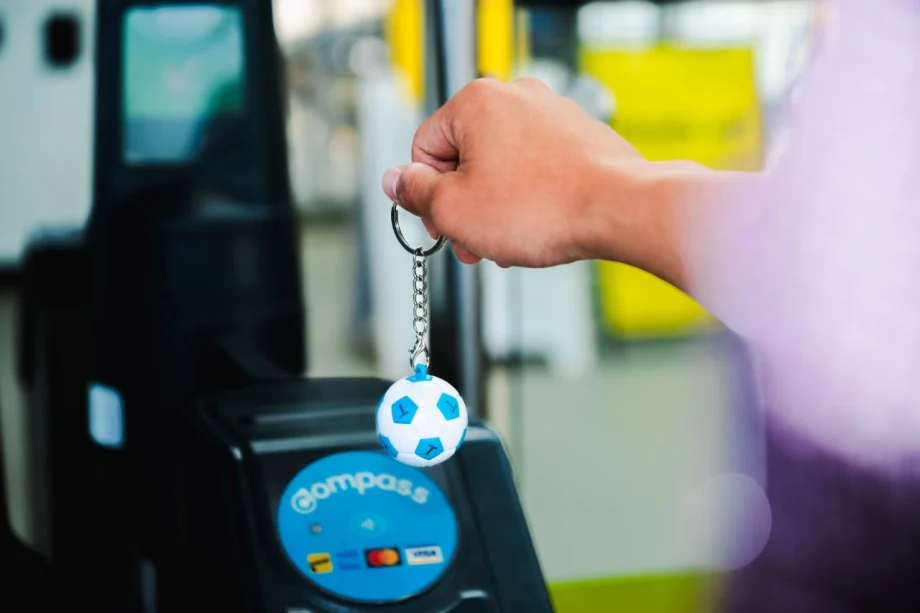
TransLink's limited-edition Compass Soccer Mini works just like a Compass Card, letting fans tap in at fare gates and on buses across the region.
TransLink
- Transit agencies nationwide are preparing to manage the influx of millions of fans during the World Cup in host cities.
- The event serves as an opportunity for these agencies to test and improve customer experience, mobility, and crowd management strategies.
- The month-long event is being used as a platform for transit leaders to innovate and enhance public transportation systems.
*Summarized by AI
As the FIFA World Cup prepares to kick off, transit agencies across North America are moving beyond basic service plans and focusing on the rider experience. To achieve this, agencies are honing in on and promoting amenities such as clearer wayfinding, easier fare payment, more frequent service, and extra staff to help fans who may be using local transit for the first time.
From Vancouver to Toronto, Mexico City, Los Angeles, Dallas, New Jersey, Boston, Philadelphia, Atlanta, and the San Francisco Bay Area, agencies are treating the tournament as both a stress test and a showcase moment for their systems.
More Service, More Capacity
Several agencies are adding service around match days and fan events.
TransLink will operate approximately 600 additional bus trips per day across Metro Vancouver, along with a dedicated shuttle to the FIFA Fan Festival at the PNE, a temporary Downtown Vancouver South Circulator route, SkyTrain service as frequent as every two minutes during peak match periods, extra SeaBus sailings, and special weekend West Coast Express trips on local match days.
DART in Texas will temporarily increase light rail and Trinity Railway Express service from June 8 through July 19. The agency will run 20-minute service all day, every day on the Red, Green, Orange, and Blue lines, while TRE will offer 30-minute service on match days.
“Our priority during the FIFA World Cup events here in North Texas is to ensure seamless service for residents and visitors alike. We have secured funding to temporarily increase rail service across the region with more frequency and more capacity,” said Trenise Winters, DART’s EVP and COO.
In Philadelphia, SEPTA will add Broad Street Line trips to and from NRG Station, with expected ridership of about 31,000 per match. The agency said the line will be able to move about 15,000 people per hour with the added service and capacity.
The MBTA in Boston is also preparing for heavy World Cup demand, including extra bus and subway service on weekday match days and extra Silver Line SL1 service on all match days. The agency previously reported more than 17,450 Boston Stadium Train mTickets sold during the first day of sales.
World Cup Host Cities Crafting a Clearer Trip for First-Time Riders
A common thread across the announcements is the push to make transit easier for visitors who may be unfamiliar with local systems.
The TTC will deploy more than 600 event ambassadors across Toronto’s system, identifiable by red TTC jerseys, to answer questions and provide directions at high-traffic locations. The agency is also piloting a new alphanumeric station identification system at six busy subway stations to make exits, transfers, and landmarks easier to find.
“TTC service is central to Toronto’s Transit First approach for the World Cup,” said TTC CEO Mandeep S. Lali. “We’ve been preparing for this moment for many months, and our focus is clear: deliver the service our customers need, provide simple and reliable information, and respond decisively as conditions evolve. Our ambassadors will play a vital role in welcoming the world to Toronto, ensuring every journey matters.”
SEPTA has installed its first digital real-time arrival display at a bus stop in South Philadelphia as part of a pilot program. The solar-powered e-paper displays include text-to-speech buttons for blind and low-vision riders.
“Our customers have made it clear that they want better access to real-time information, and we are listening,” said SEPTA GM Scott A. Sauer. “This program is about putting the tools our riders need right where they need them — whether they are a daily commuter or a first-time visitor to our region.”
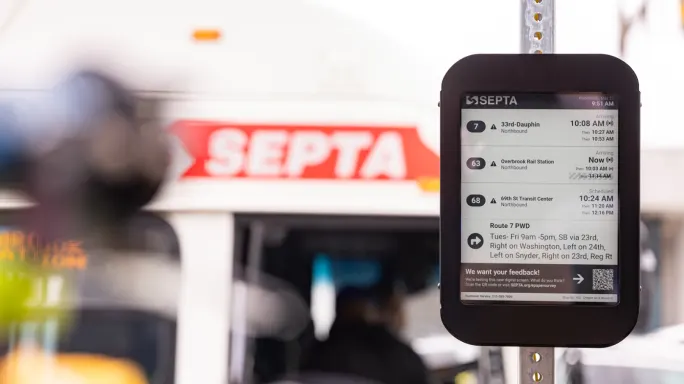
SEPTA's new real-time arrival displays are solar-powered and use e-paper technology. The screens are small enough to be mounted on a bus stop sign pole.
SEPTA
Fare Payment Gets Simpler Under International Scrutiny
Several agencies are also using the World Cup as a catalyst for fare technology improvements.
LA Metro launched its official mobile app and contactless credit and debit fare payment, allowing riders to tap bank cards, digital wallets, or wearable devices at fare gates and bus validators. The system also allows one card to pay for up to five passengers.
“Metro customers shouldn’t have to navigate multiple apps just to ride transit,” said LA Metro CEO Stephanie Wiggins. “This new app, combined with credit and debit payments at the fare gates and on board buses, is about creating a seamless, intuitive experience, whether you’re a daily rider or visiting Los Angeles for the first time. It also positions us for the future, not only as we prepare to welcome the world for major events, including the FIFA World Cup 2026, but also as we continue to serve the millions of people who depend on us every day.”
In Atlanta, MARTA launched its modernized Breeze fare payment system ahead of the tournament, allowing customers to tap bank cards or mobile wallets at faregates and validators. MARTA is also producing 100,000 commemorative World Cup-branded Breeze cards.
TransLink is leaning into both practicality and fan energy. The agency partnered with the Transit app as its recommended trip-planning app and is offering Transit Royale free to Metro Vancouver users. It also launched a limited-edition Compass Soccer Mini and wrapped a Soccer SeaBus in a FIFA World Cup 2026-inspired design.
“Our partnership with Transit app will give riders better real-time information, more personalized tools, and more confidence getting around during the FIFA World Cup 2026 Vancouver,” says TransLink CEO Kevin Quinn. “With Transit Royale now available for free, customers will have more ways to plan their trips during one of the busiest moments our region has ever hosted, and those benefits will continue long after the final match. The Compass Soccer Mini and Soccer SeaBus will help bring the energy of the tournament onto our transit system.”
Crowd Management Starts Before Fans Arrive
Agencies are also working to reduce congestion before it builds.
TransLink added two new fare gates at Yaletown–Roundhouse Station, increasing the total from three to five and adding a second accessible fare gate. The station handled more than three million boardings in 2025 and is a key access point during large events at Rogers Arena and BC Place.
In New Jersey, NJ TRANSIT and the New York New Jersey Host Committee released a regional mobility plan for matches at MetLife Stadium. The plan is designed to move more than 78,000 spectators per match using stadium shuttle buses, rail service, rideshare, permitted vehicles, and limited premium parking. There will be no general spectator parking on stadium property on match days.
NJ TRANSIT also reduced the round-trip fare for dedicated World Cup transportation to $98, citing advertising revenue from corporate partners to offset ticket costs. Tickets must be purchased in advance through NJ TRANSIT’s mobile app and will be limited to 40,000 per match day.
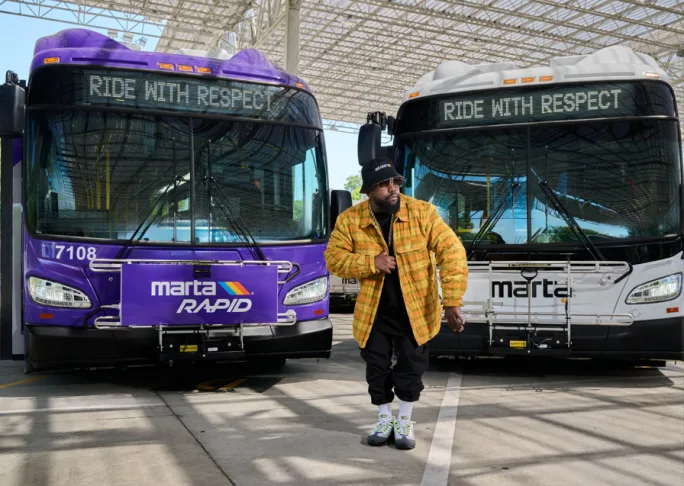
Big Boi is a Grammy Award-winning artist, entrepreneur, philanthropist, and Rock & Roll Hall of Fame inductee whose work as one-half of OutKast helped shape Atlanta’s global cultural influence
MARTA
Agencies Turn to People, Not Just Platforms
While the announcements include apps, payment systems, signage, and service increases, many agencies are also emphasizing human support.
MARTA plans to deploy hundreds of transit ambassadors for up to 12 hours of daily coverage, along with 100 FIFA volunteers stationed throughout the system to provide navigation assistance in multiple languages. The agency is also preparing five-minute rail headways on match days, a rapid response bus fleet, crowd-control strategies, and security coordination with local and federal partners.
“MARTA stands ready to provide the mobility backbone for this global event,” said Jonathan Hunt, interim GM and CEO at MARTA. “We will provide increased rail frequency, station upgrades, and tech-enabled customer support to ensure a seamless, world-class transit experience for visitors and metro Atlantans alike. We want the world to know that the safest and most reliable way to get around Atlanta this summer is to let MARTA drive.”
MARTA is also leaning into Atlanta's cultural identity as part of its World Cup preparations. The agency recently partnered with Grammy Award-winning artist and Atlanta native Big Boi for its "LET MARTA DRIVE" campaign, which encourages fans to use transit to reach matches, fan festivals, concerts, and other events while promoting MARTA's Ride with Respect initiative.
"Big Boi’s music is deeply embedded in the culture of Atlanta, making him the perfect person to help us welcome soccer fans from around the globe," Hunt said. "We look forward to bringing his unmistakable voice directly to our riders through exclusive station announcements and digital content. This partnership is an exciting way to showcase our world-class transit network while reminding everyone to ride safely and with respect."
"Atlanta has always been a city that moves people and sets trends," Big Boi said. "When the world comes here, I want everyone to feel that energy without the stress. MARTA makes it easy to get downtown, to the events, and everywhere in between. I’m proud to be part of what keeps Atlanta moving and shows the world how we do it."
The campaign highlights another emerging theme among host transit agencies: creating a sense of place alongside moving crowds. From MARTA's partnership with one of Atlanta's most recognizable artists to TransLink's limited-edition Compass Soccer Mini and FIFA-themed Soccer SeaBus, agencies are using the tournament to showcase local culture and build excitement around public transportation itself.
The Santa Clara Valley Transportation Authority in California, which will serve matches at Levi’s Stadium, is also working with international consulates to promote transit use among visiting fans. Participating consulates include Austria, Jordan, and Switzerland.
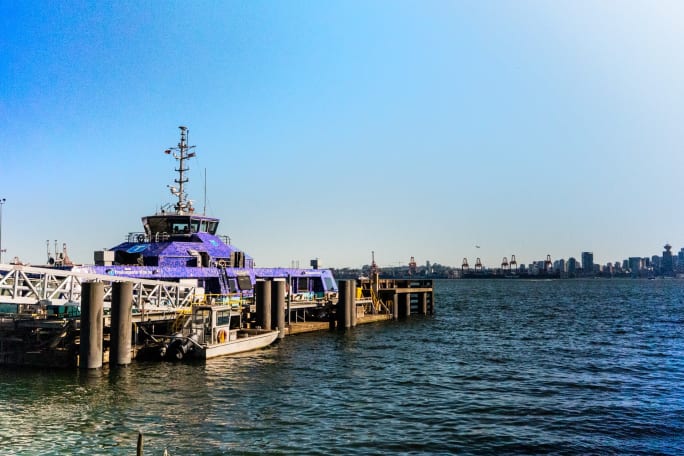
TransLink's Soccer SeaBus is a specially wrapped Burrard Otter II ferry featuring official FIFA World Cup 2026 branding, showcasing a packed soccer stadium crowd.
TransLink
World Cup Host Cities Also Planning for the Last Mile
Mexico City, which will host five World Cup matches beginning June 11, is taking perhaps the most aggressive approach to managing fan arrivals at the stadium.
City officials are building operations around FIFA's "Última Milla" (Last Mile) strategy, which prioritizes pedestrians and public transportation in the areas surrounding Estadio Ciudad de México. Match-day operations begin at 7 a.m., with officials encouraging fans to arrive early and avoid driving directly to the venue.
A centerpiece of the plan is a Park and Ride network that allows fans to leave vehicles at designated lots throughout the city and board shuttle buses to the stadium area. Round-trip service will operate from locations including Campo Marte, Parque Xochimilco, Six Flags, Santa Fe, Plaza Carso, and Parque México, with fares including a special-edition World Cup transportation card.
For many fans, however, transit will remain the preferred option. Riders can take Metro Line 2 to Tasqueña and transfer to the Tren Ligero, which will operate at full capacity beginning three hours before kickoff. City officials expect the light rail service to move nearly 60,000 fans toward the stadium on match days.
The city is also promoting walking, cycling, and scooter use through dedicated arrival corridors, bicycle and scooter parking areas, and seven marked pedestrian routes, supported by signage and QR code navigation tools.
Mexico City's strategy mirrors efforts underway elsewhere in North America. From NJ TRANSIT's stadium mobility plan, which eliminates general spectator parking at MetLife Stadium, to SEPTA's overnight subway service and TransLink's expanded regional network, agencies are more focused on managing the entire trip. The emphasis is shifting from moving vehicles to moving people efficiently through every stage of the event experience.
Taken together, agencies are preparing for the World Cup in four overlapping ways:
- Increasing capacity.
- Removing friction for unfamiliar riders.
- Improving wayfinding.
- Carefully managing the "last mile" between transit and the venue.
For daily riders, those changes may mean more crowded trains and buses during match windows, but they could also leave behind better apps, clearer signage, faster payments, stronger service plans, and new approaches to moving large crowds in the future.
Quick Answers
Transit agencies are implementing advanced strategies for customer experience, mobility, and crowd management to effectively handle the large number of fans.
*Summarized by AI
More Management

NITA Names New Leadership, Expands Reduced-Fare Program at First Board Meeting
The new regional transit authority appointed its first board chair and interim executive director while extending reduced fares across CTA, Metra, and Pace for eligible riders.
Read More →
Beyond the Checklist: A Structured Approach to Transit Maintenance
Reliability-Centered Maintenance helps transit agencies move beyond routine checklists to focus limited resources on the assets and failures that have the greatest impact on safety, reliability, and service.
Read More →
APTA 2026 Nominating Committee Selects Leadership Slate, Names Chair and Vice Chair Nominees
Leadership changes will help shape the association’s priorities and its representation of the transportation industry during the 2026–2027 term.
Read More →

DART Launches Major Security, Fare Enforcement Initiative
The 90-day demonstration will deploy coordinated security teams at five light rail stations while testing controlled access and gathering data to guide future investments.
Read More →
Advancing Fare Collection Through Technology and Innovation
Learn about delivering 1300 gates at 91 stations while managing fare evasion. Explore the large scale deployment, solution customization and real-world results that affect the region. Prepare for deployment in your region now.
Read More →
Game Day in Motion: Moving Millions During the 2026 World Cup
Between packed transit stations and team motorcoaches, see how agencies and operators across North America tackled the transportation demands of the 2026 FIFA World Cup.
Read More →
Surface Transportation Extension Averts Shutdown, Leaves Transit Funding Gap
The stopgap keeps federal transportation programs moving, but missing advance funding could complicate the transit and rail projects agencies are planning next.
Read More →
Bus Tech Talk: Keeping Transit Technicians Ahead of the Technology Curve
LA Metro’s Obed Mejia discusses technician training, evolving maintenance technology, fleet replacement, and strategies for getting the most out of today’s transit fleets.
Read More →
Why Simulating Pedestrian Movement Has Become Essential for Modern Rail Stations
Pedestrian microsimulation is helping rail planners identify bottlenecks, test station designs, and prepare complex transit hubs for growing passenger volumes.
Read More →
People Movement: Holly Arnold Joins Transdev and More
In this edition, we also cover recent appointments and announcements at Pace, CamTran, MCI, and more, showcasing the individuals helping to shape the future of transportation.
Read More →