



MBTA Launches New Resources to Support Bus Priority Expansion
The Bus Priority Vision and Toolkit are two new complementary resources that are designed to support the expansion of bus priority investments throughout the region over the next five to seven years.

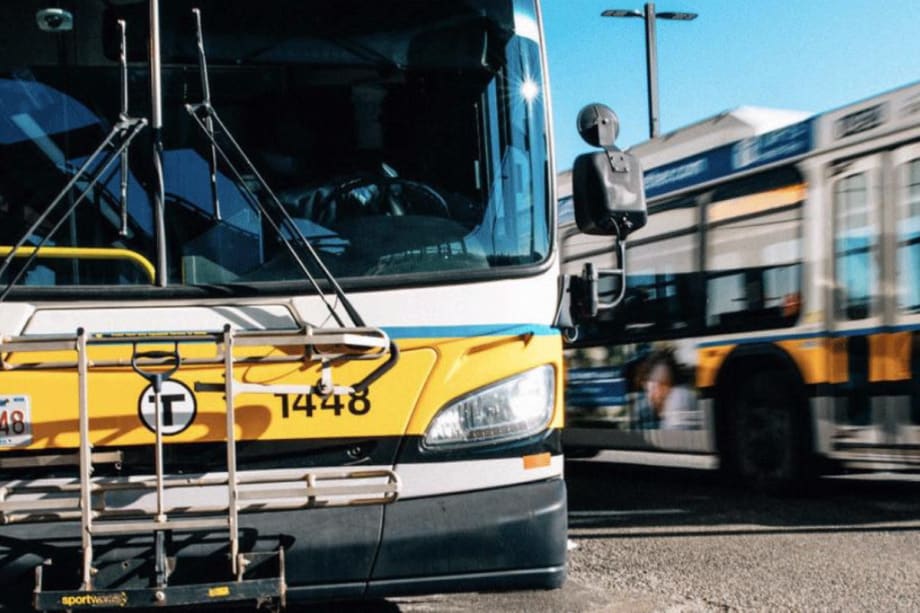
Through partnerships with communities and municipalities, bus priority allows the MBTA to make bus transit faster and more efficient through the creation of dedicated bus lanes, the implementation of transit signal priority, and the use of queue jumps.
Photo: MBTA
The Massachusetts Bay Transportation Authority (MBTA) announced the launch of the Bus Priority Vision and Toolkit.
Through partnerships with communities and municipalities, bus priority allows the MBTA to make bus transit faster and more efficient through the creation of dedicated bus lanes, the implementation of transit signal priority, and the use of queue jumps.
The Bus Priority Vision and Toolkit are two new complementary resources that are designed to support the expansion of bus priority investments throughout the region over the next five to seven years. They provide guidance to municipal, state, and transit staff on planning and implementing bus priority treatments to encourage more regional transit use.
“Our long-term vision for regional bus priority investments is now available for the first time ever. We are showing how joint investments in street improvements with our municipal and state partners can create the changes we need to better serve our bus riders,” said MBTA GM/CEO Phillip Eng. “As part of this, ensuring robust public engagement is integral to the decision to rebuild and grow bus service for the Commonwealth. As congestion has increased across the region, it’s clear that investments in projects like bus lanes will keep people moving reliably, and these initiatives reaffirm the T’s commitment to making the bus better for more people. This Vision, along with the Network Redesign, is our plan to rebuild and grow bus service.”
MBTA's The Vision
The Vision is a regional network of 26 bus corridors with high ridership and frequency that will have significant benefits from bus priority treatments such as bus-only lanes, transit signal priority, and improved bus stops.
Implementing these measures will improve bus service reliability and reduce travel delays.
Improvements in these corridors will benefit around 220,000 daily bus riders, which accounts for 80% of bus riders.
The Vision is aligned with the MBTA's Bus Network Redesign, which was approved by the MBTA Board of Directors in late 2022.
The Redesign will update the bus network to better serve the region’s mobility needs and address changing travel patterns, traffic congestion, changing demographics, and access to housing and jobs.
MBTA's The Toolkit
The Toolkit is designed to provide a consistent approach to planning and implementing bus priority treatments that cater to local community needs within the MBTA region.
It draws from best practices at local and national levels, summarizes past project experiences, and outlines the benefits, tradeoffs, and considerations of effectively using limited road space.
“Bus prioritization improves the rider experience. We have worked closely with the MBTA to ensure that bus riders are able to move more quickly on high-delay corridors like Washington Street in Roslindale or Summer Street in the Seaport,” said Boston Chief of Streets Jascha Franklin-Hodge. “We look forward to continuing our partnership with the MBTA to create a regional transit system that is reliable, equitable, and accessible to everyone who lives, works, and visits Boston.”
Since 2018, approximately 50 miles of bus lanes have been constructed. The Vision identifies an additional 60 miles of roadway for targeted transit improvements.
Bus priority measures have been implemented or are currently being planned in coordination with the MBTA and municipal and state partners across 14 municipalities including Arlington, Boston, Brookline, Cambridge, Chelsea, East Boston, Everett, Lynn, Revere, and Somerville.
The Barr Foundation provided funding to develop the MBTA’s Bus Priority Vision and Toolkit.
More Bus

People Movement: Dan Dipert Coaches Adds Third-Generation Leader, Keolis Names New Valley Metro VP/GM, and More
In this edition, we also cover recent appointments and announcements at the Wabtec, SilverRide, HNTB, and more, showcasing the individuals helping to shape the future of transportation.
Read More →
New York MTA Plans Largest Bus Fleet Upgrade in More Than a Decade
The agency is seeking manufacturers for 650 new CNG buses to replace aging vehicles, improve reliability, and advance its broader fleet modernization strategy.
Read More →
Building a Flexible Path to Transit Electrification
John Hroncich discusses BAE Systems’ modular and scalable approach, lessons learned from decades of real-world operations, and how agencies can identify electrification strategies that fit their fleets.
Read More →
Bus Tech Talk: Keeping Transit Technicians Ahead of the Technology Curve
LA Metro’s Obed Mejia discusses technician training, evolving maintenance technology, fleet replacement, and strategies for getting the most out of today’s transit fleets.
Read More →
Biz Briefs: RIPTA Unveils New Frontrunners, Clevland RTA Adds New Siemens, and More
In METRO's latest installment, we take a look at recent news from Siemens, Prevost, Dodge, and more partnerships making headlines across the transportation sector.
Read More →
People Movement: Holly Arnold Joins Transdev and More
In this edition, we also cover recent appointments and announcements at Pace, CamTran, MCI, and more, showcasing the individuals helping to shape the future of transportation.
Read More →
The High Cost of Transit Buses: Industry Leaders Look to Procurement Reform
Transit leaders and policymakers examine how standardized bus designs, streamlined procurement, and predictable funding could help agencies stretch budgets and deliver better service.
Read More →
The Business Voice Behind Public Transportation
As chair of APTA’s Business Members Board of Governors, Ray Melleady explains how more than 850 business members are partnering with transit agencies to advance funding, innovation, and industry-wide collaboration.
Read More →
From Surviving to Thriving: Building Stronger Transportation Organizations
Bus Business Consultants founder Brian Dickson shares lessons on leadership, organizational health, and creating options for long-term success in a changing transportation industry.
Read More →
Finding the ‘Happy Medium’: Optimizing Maintenance Without Sacrificing Reliability
The key to maintenance optimization isn’t doing less work—it’s doing the right work at the right time on the right assets.
Read More →