



Metra to seek proposals for new railcars, engines
The exact number will depend on the responses to the RFP, the amount of funding available, and whether Metra can use financing alternatives, such as leasing, to maximize its funding.

Brian Moore
Brian Moore
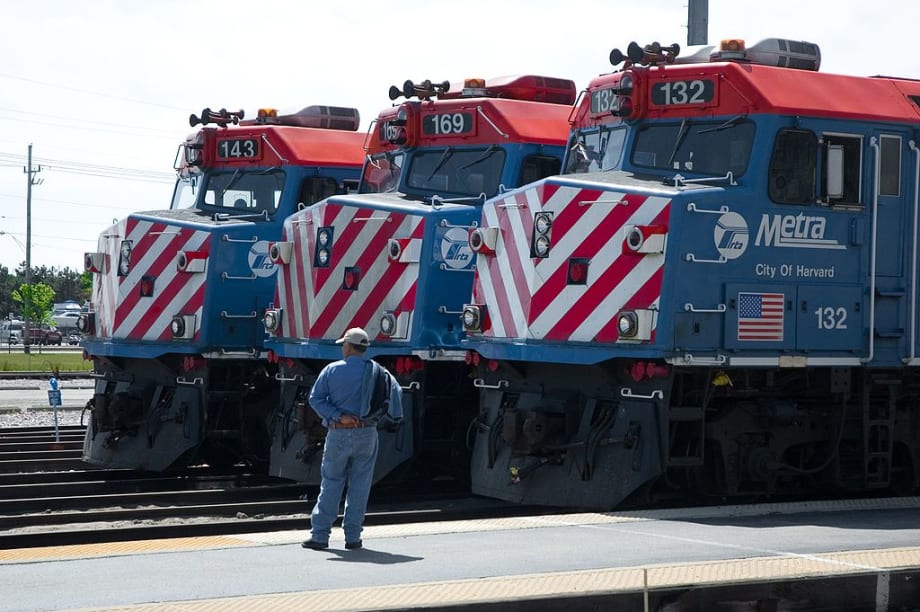
Chicago’s Metra board of directors authorized the agency to move forward with requests for proposals (RFPs) for the design and production of new railcars and locomotives to begin to replace its aging fleet.
The railcar RFP, which will be published next week, will provide for at least 25 new railcars, plus as many more railcars above that amount as possible. The exact number will depend on the responses to the RFP, the amount of funding available, and whether Metra can use financing alternatives, such as leasing, to maximize its funding. Likewise, the locomotive RFP, which will be published during the third quarter of 2017, will provide for a base order of 10 locomotives plus as many more as possible.
Metra currently has approximately $200 million programmed for rolling stock purchases over the next five years, although some of that money could be needed for Positive Train Control or other capital needs, according to the agency. The Metra board of directors has asked staff to consider financing alternatives, such as leasing, to maximize the efficient use of available capital resources.
Metra’s 2014 modernization plan called for the purchase of 367 railcars and 52 locomotives. That plan, however, counted on Metra receiving $1.3 billion in new funding, primarily from a new state bond program. Because anticipated funding did not come through, Metra is now attempting to acquire as many cars and engines as possible with existing funding.
“By now, we had hoped to benefit from a new state infrastructure program and planned to use those funds to buy new rolling stock. Clearly, that has not happened,” said Metra Executive Director/CEO Don Orseno. “Until the state passes a new program, we have decided to do what we can with the resources we have available to us.”
Metra has identified modernization of rolling stock as one of its highest capital priorities due to the age of its fleet and the fact that the condition of cars and locomotives is so essential to providing high-quality, reliable, and comfortable service. With an average age of 28 years, Metra’s fleet is seven years older than the peer average.
“Funding for capital transportation projects has never been more uncertain. We believe this is a measured, realistic, and responsible way for us to buy new cars and locomotives with the funding resources we have on hand today,” said Board Chairman Norman Carlson. “And, if the state comes through with a new infrastructure program, we will be able to accelerate our orders if that’s what the board chooses to do.”
Metra expects to award the contract for new railcars in the first quarter of 2018. Delivery of the first cars will be part of the negotiations and dependent upon the manufacturer’s capacity to build. The last time Metra received new railcars for lines other than the Metra Electric was in 2006.
Metra would expect to award the contract for new locomotives later in 2018, with delivery of the first locomotive in 2020. New locomotives will allow Metra to begin to replace outdated diesel locomotives serving Chicago Union Station with modern, cleaner-burning engines, significantly improving air quality for the 120,000 passengers who travel through the station each day.
More Rail

New York MTA Advances Final Contract for Second Avenue Subway Expansion
Contract Four is the largest in the Second Avenue Subway Phase 2 project and includes construction of station infrastructure, tracks, and signals for the subway expansion, MTA officials said. Work on Contract Four will begin in 2027.
Read More →
San Diego MTS Breaks Monthly Trolley Ridership Record
Agency officials said July’s ridership indicates MTS’s continued recovery from the pandemic.
Read More →
Report Examines NJ TRANSIT Reliability, Funding Challenges
The Garden State Initiative analysis examines the roles of Amtrak infrastructure, fleet management, and agency operations while recommending a more performance-based approach to improving reliability.
Read More →
Stadler, CapMetro Sign Long-Term Rail Fleet Support Agreement
Beginning in 2027, Stadler will provide on-site technical expertise, spare parts support, training, and obsolescence management to help extend the reliability and longevity of CapMetro’s GTW fleet.
Read More →
Biz Briefs: Alstom Lands Canadian Contract, LYT to Supply California TSP, and More
In METRO's latest installment, we take a look at recent news from Complete Coach Works, Beep, FlixBus, and more partnerships making headlines across the transportation sector.
Read More →
CATS Gold Line Marks 5 Years of Service, 2.8M Passenger Trips
With a six-mile expansion planned, the Charlotte streetcar is positioned to connect more neighborhoods and major transit hubs across the region.
Read More →
Why Simulating Pedestrian Movement Has Become Essential for Modern Rail Stations
Pedestrian microsimulation is helping rail planners identify bottlenecks, test station designs, and prepare complex transit hubs for growing passenger volumes.
Read More →
Amtrak Begins Major Construction at New York’s Sunnyside Yard
The new maintenance facility will support Amtrak’s Airo trainsets while improving maintenance efficiency and turnaround times in New York.
Read More →
Chicago Leaders Unveil Plans for O’Hare Airport Express Train
The privately developed project would offer a 15-minute trip between downtown and O’Hare’s Terminal 2, with trains operating every 15 minutes on a dedicated track. The service would use battery-electric trains and three existing freight rail rights-of-way.
Read More →
OCTA Maps Out 30-Year Strategy to Protect Coastal Rail Corridor
The draft feasibility report identifies strategies to protect the coastal rail line for decades as the agency continues near-term stabilization and sand placement efforts.
Read More →