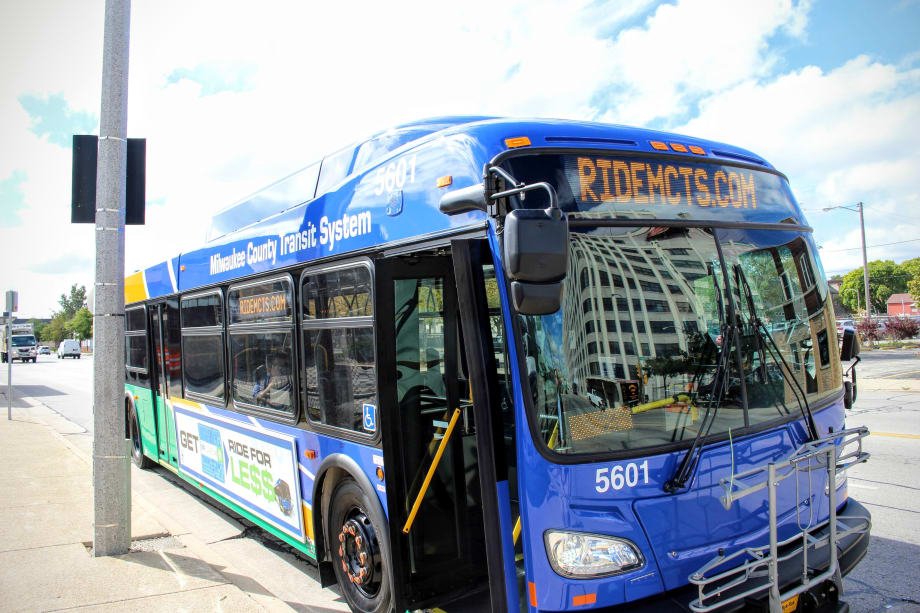
With a fleet of 370 clean diesel buses and a dedicated team of 1,000-plus operators, mechanics, and administrative staff, MCTS provides 30 million rides annually.
MCTS
2 min to read
With a fleet of 370 clean diesel buses and a dedicated team of 1,000-plus operators, mechanics, and administrative staff, MCTS provides 30 million rides annually.
MCTS
The Milwaukee County Transit System (MCTS) reported its Ride MCTS app is now the highest-rated customized transit tracking and mobile ticketing app in North America. In less than two years, the app has been downloaded more than 100,000 times, received thousands of positive reviews, and achieved an average rating of 4.8 out of 5 stars in the iOS App Store.
App users can purchase a 90-minute ticket for $2 or a 24-hour ticket for $5. Some of the app’s other popular features include trip planning, detour alerts, real-time arrival estimates, and live tracking maps — which physically show where a specific bus is at any given moment.
Ad Loading...
Ride MCTS App by the Numbers
100,000: Downloads.
740,000: Tickets purchased.
6,220,000: Times riders have used the app to plan a trip, get arrival information or track a bus.
3,000: Positive reviews left on the Apple App Store.
4.8 out of 5: Average rating on the Apple App Store.
The app was developed in partnership with Tixora, a Wisconsin-based start-up company that has worked with MCTS since 2016.
MCTS, which was honored this year with a prestigious Innovation Award from the American Public Transportation Association, has grown from a single horse-drawn streetcar in 1860 to the largest transit system in the state. With a fleet of 370 clean diesel buses and a dedicated team of 1,000-plus operators, mechanics, and administrative staff, MCTS provides 30 million rides annually.
The agency recently introduced more than two dozen state-of-the-art GILLIG buses, which feature improved fuel economy, lower emissions, optimized driver visibility, anti-slip flooring, easier-to-read digital display signs, a stainless-steel understructure designed to reduce salt corrosion, and heated side mirrors to help melt snow and ice.
CEO Magnus Friberg discusses Luminator’s shift toward becoming a digital partner, the growing importance of software and interoperability, and how AI can help agencies improve operations and passenger experience.
Reliability-Centered Maintenance helps transit agencies move beyond routine checklists to focus limited resources on the assets and failures that have the greatest impact on safety, reliability, and service.
More than 1,500 buses now feature upgraded technology designed to improve arrival predictions and provide free Wi-Fi, with deployment expected to reach nearly 2,000 buses by the end of 2026.
John Hroncich discusses BAE Systems’ modular and scalable approach, lessons learned from decades of real-world operations, and how agencies can identify electrification strategies that fit their fleets.
In METRO's latest installment, we take a look at recent news from Complete Coach Works, Beep, FlixBus, and more partnerships making headlines across the transportation sector.
What if transit leaders could ask any operational question and get a trusted answer in seconds? Conversational AI is transforming how agencies use their data.
More than $191 million in federal funding will help three transit agencies replace aging rail vehicles and support a new autonomous shuttle service in Chattanooga.
LA Metro’s Obed Mejia discusses technician training, evolving maintenance technology, fleet replacement, and strategies for getting the most out of today’s transit fleets.
In METRO's latest installment, we take a look at recent news from Siemens, Prevost, Dodge, and more partnerships making headlines across the transportation sector.
Pedestrian microsimulation is helping rail planners identify bottlenecks, test station designs, and prepare complex transit hubs for growing passenger volumes.