



Minn. Metro Transit ridership surpasses 81 million in 2013
The Northstar Commuter Rail line had a particularly strong year, with ridership up more than 12%.

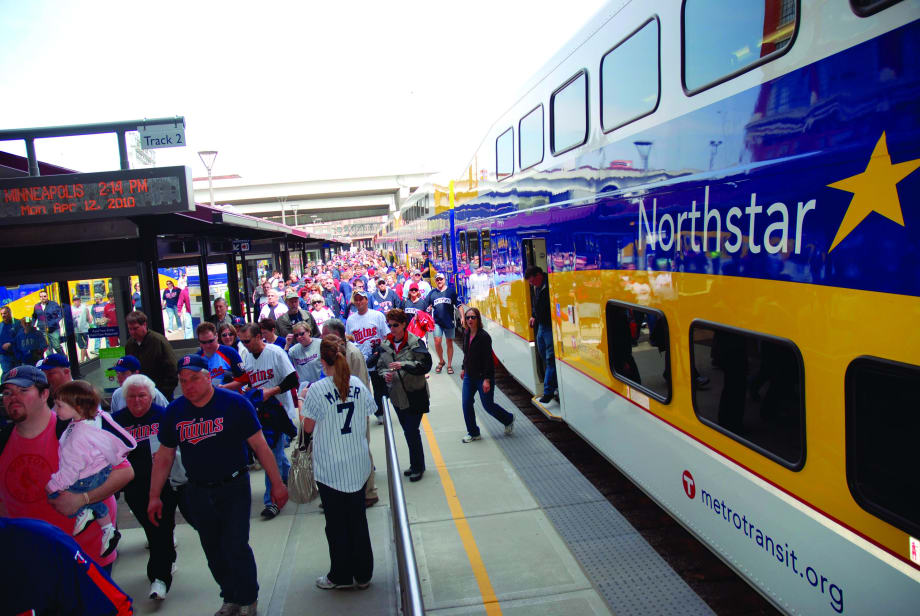
Customers boarded Minneapolis Metro Transit buses and trains nearly 81.4 million times in 2013, an increase of more than 300,000 rides (0.4%) over 2012. The Northstar Commuter Rail line had a particularly strong year, with ridership up more than 12%.
“Only twice in 32 years has Metro Transit ridership reached this level,” said GM Brian Lamb. “We thank our customers — both long-time and new — for this fourth consecutive year of growth. In 2013, we provided five million more rides than just four years ago.”
Buses
Customers boarded buses operated by Metro Transit 70.4 million times in 2013. Ridership on urban local routes – the heart of the agency’s all-day service — increased 565,266 rides to 59.3 million. Customers boarded freeway-oriented express buses 9.5 million times and suburban crosstown routes 1.6 million times.
Rail
Ridership on the METRO Blue Line dropped 3.2% to 10.2 million. Planned service interruptions for construction and maintenance projects dampened weekend ridership. Projects included the first-ever smoothing of all miles of track, completion of the junction with the METRO Green Line and accommodating a major rebuilding of the roadway interchange at 34th Avenue and I-494 in Bloomington. Average weekday ridership on the region’s first light-rail line continues to exceed projections for the year 2020 by more than 25%.
“We know that many weekends of construction and maintenance on the METRO system wore on our customers last year,” said Lamb. “This year, we intend to repay that patience with the results — improved reliability and comfort on the Blue Line and the opening of the METRO Green Line.”
Meanwhile, customers boarded Northstar trains 787,239 times in 2013, the highest number in the line’s four-year history. This overall 12.4% increase is attributable to a fare reduction made permanent in April and the addition of a station in Ramsey in November 2012. Average weekday ridership — the line’s primary commuter market — increased 17%.
“Although trains served more special events than ever before, new weekday commuters drove the strong gains in Northstar ridership,” said Lamb. “The line’s weather-proof reliability, comfortable ride and new onboard Wi-Fi service offer an increasingly attractive package for work travelers.”
More Bus

New York MTA Plans Largest Bus Fleet Upgrade in More Than a Decade
The agency is seeking manufacturers for 650 new CNG buses to replace aging vehicles, improve reliability, and advance its broader fleet modernization strategy.
Read More →
Building a Flexible Path to Transit Electrification
John Hroncich discusses BAE Systems’ modular and scalable approach, lessons learned from decades of real-world operations, and how agencies can identify electrification strategies that fit their fleets.
Read More →
Bus Tech Talk: Keeping Transit Technicians Ahead of the Technology Curve
LA Metro’s Obed Mejia discusses technician training, evolving maintenance technology, fleet replacement, and strategies for getting the most out of today’s transit fleets.
Read More →
Biz Briefs: RIPTA Unveils New Frontrunners, Clevland RTA Adds New Siemens, and More
In METRO's latest installment, we take a look at recent news from Siemens, Prevost, Dodge, and more partnerships making headlines across the transportation sector.
Read More →
People Movement: Holly Arnold Joins Transdev and More
In this edition, we also cover recent appointments and announcements at Pace, CamTran, MCI, and more, showcasing the individuals helping to shape the future of transportation.
Read More →
The High Cost of Transit Buses: Industry Leaders Look to Procurement Reform
Transit leaders and policymakers examine how standardized bus designs, streamlined procurement, and predictable funding could help agencies stretch budgets and deliver better service.
Read More →
The Business Voice Behind Public Transportation
As chair of APTA’s Business Members Board of Governors, Ray Melleady explains how more than 850 business members are partnering with transit agencies to advance funding, innovation, and industry-wide collaboration.
Read More →
From Surviving to Thriving: Building Stronger Transportation Organizations
Bus Business Consultants founder Brian Dickson shares lessons on leadership, organizational health, and creating options for long-term success in a changing transportation industry.
Read More →
Finding the ‘Happy Medium’: Optimizing Maintenance Without Sacrificing Reliability
The key to maintenance optimization isn’t doing less work—it’s doing the right work at the right time on the right assets.
Read More →
LA Metro, City of West Hollywood, and Partners Advance Smarter Bus Lane Enforcement
The award-winning partnership combines AI-powered detection with human oversight to improve bus reliability, accessibility, and enforcement efficiency.
Read More →