



Mobile Apps and Passenger Information Top METRO's Business Briefs
In our latest installment, we take a look at recent news from Masabi, Axentia, Moovit, and more partnerships making headlines across the transportation sector.

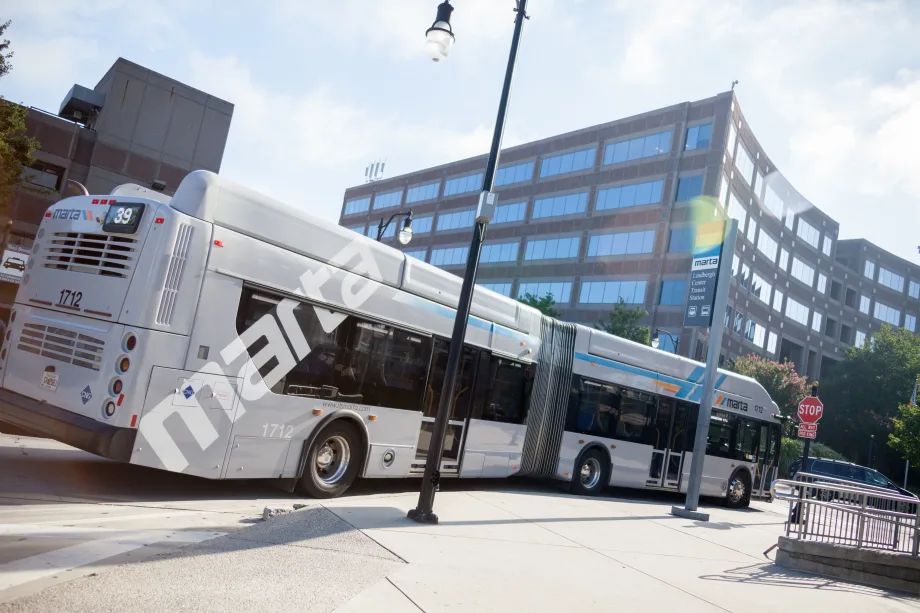
The new MARTA app and rider tools are powered by real-time data from MARTA’s GTFS (General Transit Feed Specification) data feeds and built on the Open Trip Planner platform.
MARTA
- The business briefs highlight recent developments involving Masabi and Axentia in the transportation sector.
- Moovit, a player in the mobile app space, is featured for its recent activities.
- Several new partnerships are noted for making an impact across the transportation industry.
*Summarized by AI
From strategic partnerships and acquisitions to service expansions and technology investments, the transportation industry continues to evolve at a rapid pace.
In this edition of Biz Briefs, we spotlight the latest developments shaping the future of mobility. From manufacturers and suppliers to transit agencies and motorcoach operators, these updates offer a snapshot of the projects, partnerships and business moves driving the industry forward.
In METRO's latest installment, we take a look at recent news from Masabi, Axentia, Moovit, and more partnerships making headlines across the transportation sector.
MARTA, Reflexions Launch New Digital Rider Tools
Through a partnership with Reflexions, the Metropolitan Atlanta Rapid Transit Authority (MARTA) has launched a redesigned mobile app and new web-based rider tools to improve the customer experience.
Reflexions, which specializes in civic technology and digital design, developed the new platforms as part of MARTA's broader technology modernization efforts.
The new mobile app and web-based rider tools are designed to help MARTA customers navigate the system with ease and confidence.
The new MARTA app and rider tools are powered by real-time data from MARTA’s GTFS (General Transit Feed Specification) data feeds and built on the Open Trip Planner platform — a widely adopted open-source system for delivering accurate, timely service information and sophisticated trip planning capabilities.
A full redesign of the MARTA website, also being delivered by Reflexions, will provide a cohesive online presence that complements the new app and web-based rider tools.
Florida’s Collier Area Transit, Masabi Launches Account-Based Ticketing
Collier County, Florida’s Collier Area Transit (CAT) launched Account-Based Ticketing (ABT) powered by Masabi. The upgrade extends CAT's existing mobile ticketing capability, first deployed with Masabi in 2020, to become a fully Account-Based Ticketing (ABT) system, and is available via an updated rideCAT app and new Go Pass smartcards.
With ABT, riders will no longer need to purchase tickets before boarding. Instead, stored value is loaded onto a rideCAT account and fares are automatically deducted when tapping Masabi's Justride Validators when boarding, making the experience faster and more straightforward for everyone. Eligible riders can add their discount to their account and will automatically be charged the reduced fare every time they travel, with no need to present documentation or select the correct ticket at the point of purchase.
Go Pass smartcards offer riders an additional layer of convenience and security. If a card is lost, the account balance is protected and can be recovered, ensuring riders never lose the value stored on their card.
For the agency, the shift to ABT will deliver operational benefits, reducing its reliance on cash fare collection and lowering the administrative burden associated with cash handling, allowing the agency to streamline operations and redirect resources toward service delivery, said officials.
Alstom, Hartsfield-Jackson Airport Launches Upgraded Plane Train Service
Alstom and Hartsfield-Jackson Atlanta International Airport (ATL) announced the introduction of next-generation vehicles and strategic infrastructure upgrades to the Plane Train system.
The milestone marks a significant step forward in increasing the system’s capacity for both long-term growth and the short-term imperative of accommodating soccer-related traffic this summer.
Four state-of-the-art automated people mover (APM) vehicles entered passenger service last week. These are the first of 63 Innovia APM R cars that Alstom is manufacturing for the airport to modernize and expand its fleet. The larger fleet, combined with guideway improvements, will let the airport run trains more frequently, reducing wait times and crowding for travelers.
Alstom built and installed the Plane Train 45 years ago and has operated and maintained it ever since. The driverless Innovia APM system is critical to the operation of the world’s largest airport, connecting seven concourses and two terminals across a 2.8-mile underground network. Running around the clock and every day of the year, the system transported a record 95 million passengers in 2025, according to officials.
Axentia Strengthens Long-Term Commitment to US Public Transit Market
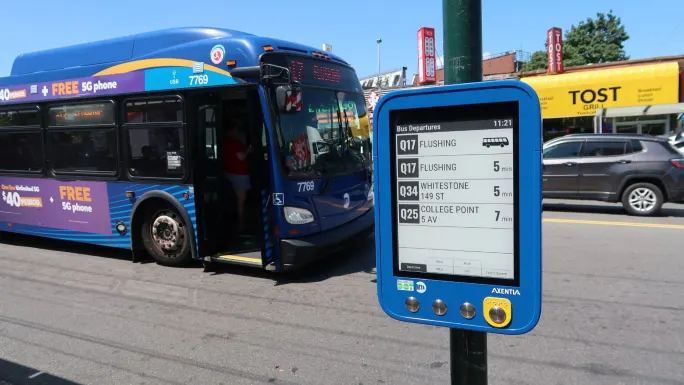
Axentia has been active in the US for the past five years, working together with local partners, resellers, and transit agencies to deliver energy-efficient real-time passenger information solutions.
Axentia
Axentia, a Swedish supplier of real-time passenger information systems for public transportation, is strengthening its presence in North America by establishing Axentia Inc., which was incorporated in 2025.
The expansion marks an important step in the company’s long-term commitment to support transit agencies and partners across North America.
Axentia has been active in the US for the past five years, working together with local partners, resellers, and transit agencies to deliver energy-efficient real-time passenger information solutions. As demand continues to grow for cost-efficient, easy-to-deploy passenger information systems in both urban and rural areas, Axentia’s technology has already been deployed by over 20 public transportation agencies across North America.
By establishing Axentia Inc., the company strengthens its ability to support transit agencies and partners locally while reinforcing its long-term commitment in the US market and its existing partner network, officials said.
Axentia’s solutions combine a Transit Intelligence platform with ultra-low-power, battery-powered real-time displays designed for both urban and rural environments. The systems simplify the deployment of passenger information in locations where traditional infrastructure can be costly or difficult to implement.
“With more than 30,000 displays in operation globally, we bring proven technology and operational reliability to the U.S. market,” said Dick Ollas, CEO of Axentia Group. “We see strong long-term potential in North America and are committed to supporting transit agencies and partners with scalable and sustainable passenger information solutions.”
LA Metro Partners with Moovit to Power LA Metro App
LA Metro officially selected Moovit to power its new app, which delivers a seamless, multimodal mobility experience for residents and visitors just before the FIFA World Cup.
The LA Metro app brings Metro’s six standalone applications into one seamless platform for planning and paying across modes of transportation.
The app integrates information and guidance on buses, rail, subway, on-demand rideshare, bikes, scooters, and car-share to provide comprehensive trip planning and contactless payment, with real-time information, live directions, and service alerts. and more key features.
For Metro, this initiative is part of the agency’s goal of digitally enhancing its transport network for everyday commuters. It is also a critical step in preparing the region for a series of world-class global events, including the World Cup, Super Bowl LXI, and the Olympic and Paralympic Games in 2028. The app is available in 45 languages and provides accessibility features that empower people across the disability spectrum to use public transport with greater confidence.
Argo Announces $4.5M Agreement with the Town of Caledon
Argo Corporation announced a $4.5 million service agreement with the Corporation of the Town of Caledon, in the Greater Toronto area, to launch and operate Argo’s Smart Routing transit infrastructure and service.
Under the Agreement, Argo is expected to launch its Smart Routing transit system in Caledon this fall and operate the service for an initial 15-month period.
The agreement provides Argo with an aggregate fee of approximately $4.5 million for the initial term, excluding any additional potential fare revenue retained by Argo. The Town may extend the agreement for additional periods, including a potential 12-month extension authorized by the Town Council, subject to applicable municipal approvals.
The system is expected to serve Caledon East, Bolton, and Mayfield West/Southfields, with connections to GO Transit, Brampton Transit, and York Region Transit. Further information regarding the service is expected to be communicated in the coming weeks in collaboration with the Town.
Argo has demonstrated two flexible deployment models for its Smart Routing transit system: delivering a full end-to-end municipal transit network and augmenting an existing large-scale transit network. The agreement represents another deployment of Argo’s end-to-end transit network delivery model, said officials.
Quick Answers
Masabi has been involved in new partnerships and developments in the transportation sector, focusing on mobile ticketing and payment solutions to improve passenger experience.
*Summarized by AI
More Technology

From Hardware to Digital Partner: Luminator Charts Its Next Chapter
CEO Magnus Freiberg discusses Luminator’s shift toward becoming a digital partner, the growing importance of software and interoperability, and how AI can help agencies improve operations and passenger experience.
Read More →
Beyond the Checklist: A Structured Approach to Transit Maintenance
Reliability-Centered Maintenance helps transit agencies move beyond routine checklists to focus limited resources on the assets and failures that have the greatest impact on safety, reliability, and service.
Read More →
NJ TRANSIT Advances Bus Technology Upgrades Across Statewide Fleet
More than 1,500 buses now feature upgraded technology designed to improve arrival predictions and provide free Wi-Fi, with deployment expected to reach nearly 2,000 buses by the end of 2026.
Read More →

Building a Flexible Path to Transit Electrification
John Hroncich discusses BAE Systems’ modular and scalable approach, lessons learned from decades of real-world operations, and how agencies can identify electrification strategies that fit their fleets.
Read More →
Biz Briefs: Alstom Lands Canadian Contract, LYT to Supply California TSP, and More
In METRO's latest installment, we take a look at recent news from Complete Coach Works, Beep, FlixBus, and more partnerships making headlines across the transportation sector.
Read More →
From Legacy Silos to Conversational Intelligence
What if transit leaders could ask any operational question and get a trusted answer in seconds? Conversational AI is transforming how agencies use their data.
Read More →
USDOT Announces Rail Vehicle Replacement Grants, Chattanooga AV Shuttle Funding
More than $191 million in federal funding will help three transit agencies replace aging rail vehicles and support a new autonomous shuttle service in Chattanooga.
Read More →
Bus Tech Talk: Keeping Transit Technicians Ahead of the Technology Curve
LA Metro’s Obed Mejia discusses technician training, evolving maintenance technology, fleet replacement, and strategies for getting the most out of today’s transit fleets.
Read More →
Biz Briefs: RIPTA Unveils New Frontrunners, Clevland RTA Adds New Siemens, and More
In METRO's latest installment, we take a look at recent news from Siemens, Prevost, Dodge, and more partnerships making headlines across the transportation sector.
Read More →
Why Simulating Pedestrian Movement Has Become Essential for Modern Rail Stations
Pedestrian microsimulation is helping rail planners identify bottlenecks, test station designs, and prepare complex transit hubs for growing passenger volumes.
Read More →