



N.Y. MTA expands real-time bus tracking
This is the third borough to offer MTA Bus Time on its buses. The agency is on track to offer MTA Bus Time on every bus route in New York City in the next six months.

New York’s Metropolitan Transportation Authority’s (MTA) live bus tracking service, MTA Bus Time, has been expanded to cover all Manhattan bus routes.
Customers can get the locations of Manhattan buses in real time via smart phone, Web and text message. This is the third borough to offer MTA Bus Time on its buses, and the MTA is on track to offer MTA Bus Time on every bus route in New York City in the next six months.
“MTA Bus Time is a game changer and a service that greatly enhances our customers’ experience with bus travel,” said MTA Chairman/CEO Thomas F. Prendergast. “MTA Bus Time has turned your phone into a tool that tells you when to start walking to the bus stop so you can get there right when the bus does. Meet your bus, don’t wait for it.”
The expansion adds nearly 1,800 bus stops to the MTA Bus Time system bringing the total to 6,000. Crews have now installed enhanced GPS hardware in 2,852 buses operating in Manhattan, the Bronx and Staten Island.
MTA Bus Time began serving all bus routes on Staten Island in January 2012 and Bronx routes last November. It also continues to serve two routes in Brooklyn, the B61 and B63. The MTA is working to bring MTA Bus Time to the remaining routes in Brooklyn and Queens within the next six months.
MTA Bus Time uses location data provided by an enhanced global positioning device mounted inside each bus. That information is transmitted wirelessly to a MTA Bus Time server using onboard cellular equipment. The server integrates bus location data with bus route info, schedules and map files to output the information received by bus customers.
MTA Bus Time servers also feed raw data to app developers free of charge. Now that data is available for Manhattan bus routes, a number of apps that already provide real-time information about buses can expand their offerings to cover Manhattan as well.
MTA Bus Time is made possible by a number of contractors, including Cubic Transportation Systems, Cambridge Systematics, Verifone, Open Plans Transportation and Mobile Commons.
More Bus

Report: Transit Bus Manufacturing Supports 34,100 Jobs, $5.1B in GDP
The “Buses Mean Business” report examines the transit bus manufacturing industry’s economic footprint, supply chain, and rising demand for vehicle replacements.
Read More →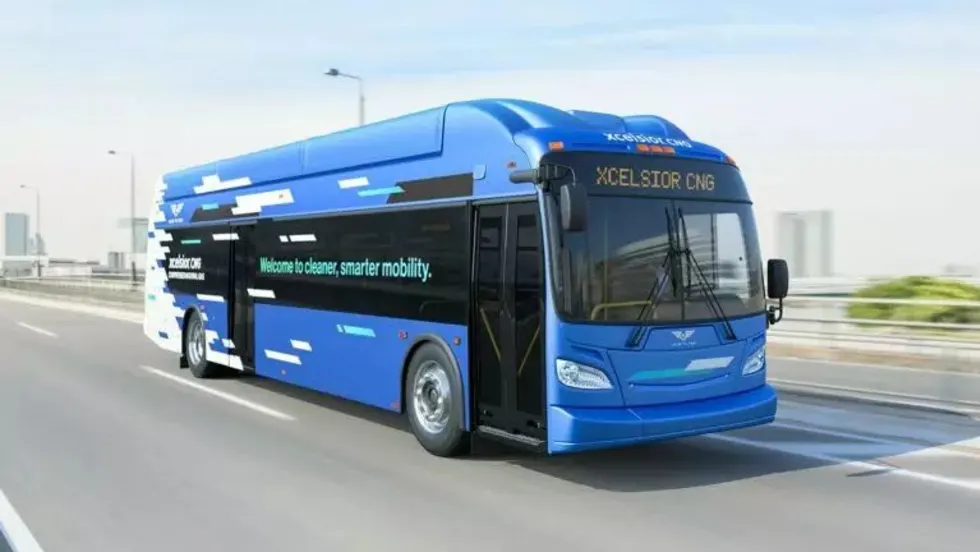
Biz Briefs: New Flyer Delivers in Columbus, Houston, Beep and Freebee Merge, and More
In this edition of Biz Briefs, we spotlight the latest developments shaping the future of mobility.
Read More →
People Movement: Dan Dipert Coaches Adds Third-Generation Leader, Keolis Names New Valley Metro VP/GM, and More
In this edition, we also cover recent appointments and announcements at the Wabtec, SilverRide, HNTB, and more, showcasing the individuals helping to shape the future of transportation.
Read More →
New York MTA Plans Largest Bus Fleet Upgrade in More Than a Decade
The agency is seeking manufacturers for 650 new CNG buses to replace aging vehicles, improve reliability, and advance its broader fleet modernization strategy.
Read More →
Building a Flexible Path to Transit Electrification
John Hroncich discusses BAE Systems’ modular and scalable approach, lessons learned from decades of real-world operations, and how agencies can identify electrification strategies that fit their fleets.
Read More →
Bus Tech Talk: Keeping Transit Technicians Ahead of the Technology Curve
LA Metro’s Obed Mejia discusses technician training, evolving maintenance technology, fleet replacement, and strategies for getting the most out of today’s transit fleets.
Read More →
Biz Briefs: RIPTA Unveils New Frontrunners, Clevland RTA Adds New Siemens, and More
In METRO's latest installment, we take a look at recent news from Siemens, Prevost, Dodge, and more partnerships making headlines across the transportation sector.
Read More →
People Movement: Holly Arnold Joins Transdev and More
In this edition, we also cover recent appointments and announcements at Pace, CamTran, MCI, and more, showcasing the individuals helping to shape the future of transportation.
Read More →
The High Cost of Transit Buses: Industry Leaders Look to Procurement Reform
Transit leaders and policymakers examine how standardized bus designs, streamlined procurement, and predictable funding could help agencies stretch budgets and deliver better service.
Read More →
The Business Voice Behind Public Transportation
As chair of APTA’s Business Members Board of Governors, Ray Melleady explains how more than 850 business members are partnering with transit agencies to advance funding, innovation, and industry-wide collaboration.
Read More →