



N.Y. unveils proposal to increase fares, tolls
The increases come during an era of successful and unprecedented MTA management actions to cut controllable expenses. In fact, the MTA will spend less in 2012 on its controllable costs than it did in 2011. Year-over-year controllable costs are lower by 0.3%.

The New York Metropolitan Transportation Authority (MTA) unveiled proposals that would increase fares and tolls to raise additional, vitally needed revenue to support the New York region's transportation system.
The increases come during an era of successful and unprecedented MTA management actions to cut controllable expenses. In fact, the MTA will spend less in 2012 on its controllable costs than it did in 2011. Year-over-year controllable costs are lower by 0.3%.
“Costs that the MTA does not exercise control over, namely those for debt service, pensions, energy, paratransit, and employee and retiree health care, continue to increase beyond the rate of inflation,” said MTA Chairman/CEO Joseph J. Lhota. “We are grappling with long-term measures to reduce these frustrating and difficult non-discretionary expenses, but today, they are the drivers of the need for a fare and toll increase.”
The fare and toll proposals will be the subject of a geographically diverse, multi-platform public review process that starts today and lasts through mid-December. The proposals will be subject to modification after the public review process and will be considered for adoption by the MTA board at its December 19 meeting. The new fare and toll rates would go into effect on or about March 1, 2013.
“The public will have significant input into our decision-making process. In the spirit of transparency, the public will assist in shaping our fare policy,” said Chairman Lhota. “These proposals have been designed to balance our need for revenue with public involvement. We need to hear from the public. Feedback evaluating the specific alternatives we've put forward is particularly useful, but we value all our customers' input, and we'll consider changes to our proposals based on what we hear and read.”
More Bus

Improving Transit Safety and Reliability Through AI
Hayden AI’s Chief Growth Officer, Charley Territo, discusses how AI-powered camera enforcement is helping transit agencies keep bus lanes and stops clear, improve accessibility, and move from pilot programs to full-scale deployments.
Read More →
Castro to Lead RTC of Southern Nevada and More in People Movement
In this edition, we also cover recent appointments and announcements at the STV, MCI, and more, showcasing the individuals helping to shape the future of transportation.
Read More →
Study: Denver RTD Generates $2.1 Billion in Annual Economic Activity
An economic impact study finds the agency supports approximately 17,500 jobs, delivers $1.6 billion in annual community and mobility benefits, and generates $2.42 in economic value for every dollar invested.
Read More →
Mark Aesch Nominated to Lead Federal Transit Administration
The former Rochester transit chief and TransPro founder, who has also contributed to METRO Magazine, brings decades of industry experience and a focus on performance, accountability, and financial sustainability to the nomination.
Read More →
Pierce Transit Moves to Expand Fleet Following Proposition 1 Approval
The agency authorized the purchase or refurbishment of up to 60 buses to support a 47% service expansion, as voters nationwide approved billions in new transit funding.
Read More →
Transit Expands Agency Partnerships, Reaching 200 Official App Partners
COO Jake Sion discusses Transit’s growth, the success of its Transit Royale program, and how technology is helping agencies improve the rider experience.
Read More →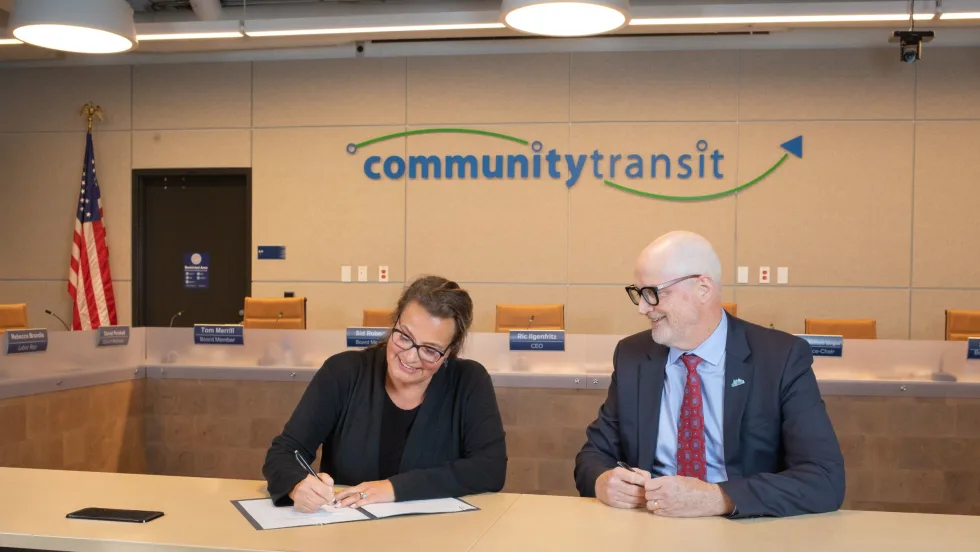
Everett Transit, Community Transit Approve Consolidation of Services
The agreement will bring Everett Transit into Community Transit’s network in April 2027, with plans to increase bus service by 50% by 2031 and expand regional connections.
Read More →
Brian Dickson on Building Stronger, More Resilient Transportation Organizations
Bus Business Consultants Founder Brian Dickson discusses the leadership principles, operational discipline, and strategic planning that separate transportation companies positioned for long-term success from those stuck in survival mode.
Read More →
LA Metro Breaks Ground on Vermont BRT Project
The 12.4-mile corridor is projected to serve 66,200 daily riders, reduce travel times by up to 24%, and create the nation's busiest bus rapid transit corridor.
Read More →
Roman Cornell on ABC Companies’ Evolution and the Future of Passenger Transportation
The company’s CEO discusses carrying forward a third-generation family legacy, ABC’s continued evolution in passenger transportation, support for increasingly complex fleets, and how technology and continued investment could help operators improve uptime.
Read More →