



NASA, Unimodal partner for advanced transport vehicle
Small vehicles running on elevated, maglev guideways,will eventually travel up to 150 mph and move 14,000 people per hour, both locally and regionally.


Photo courtesy Unimodal Systems LLC.
[IMAGE]SkyTran-full.jpg[/IMAGE]NASA officials have signed an agreement with Unimodal Systems LLC to collaborate on the use of NASA-developed control software and human factors techniques to evaluate acceleration, jerk and vibration of an advanced transportation vehicle system.
"The control software was originally designed to control robots and other applications. The collaboration will help NASA better understand the software's usefulness, human performance and safety. This collaborative effort is anticipated to help NASA with its aeronautics and space activities, while Unimodal gets to develop the next generation high-speed transportation system," said Jeffery Smith, deputy chief of the Entrepreneurial Initiatives Division at NASA Ames Research Center, Moffett Field, Calif. "NASA will receive valuable feedback from our systems software usage."
Per the agreement, Unimodal will contribute its SkyTran vehicle, currently located at NASA Research Park, and its advanced transportation technology; NASA will provide its Plan Execution Interchange Language (PLEXIL) and Universal Executive (UE) software to control the vehicle.
In the future, SkyTran will use small vehicles running on elevated, magnetically levitated (maglev) guideways, which distinguishes it from other railed systems. The vehicles are lightweight, personal compartments that can transport up to three passengers. Travelers board the pod-like vehicles and type their destinations into a small computer. Using intelligent control system software, SkyTran will run non-stop point-to-point service without interrupting the flow of traffic.
These vehicles will eventually travel up to 150 mph and move 14,000 people per hour, both locally and regionally. SkyTran will serve as a feeder system to other transit systems, such as BART and high-speed rail.
"SkyTran's personal rapid transit has generated serious interest with local, regional and state transportation leaders who are considering funding the building of the Unimodal maglev PRT system in the NASA Research Park," said Michael Marlaire, director of NASA Research Park at Ames. "This construction and new R&D partnership may usher a new green technology maglev PRT system into Silicon Valley."
"We're working with NASA and aerospace engineers to ensure aerospace-level standards that exceed the safety records of current transportation systems," explained Christopher Perkins, chief executive officer of Unimodal Systems LLC, based in NASA Research Park.
Both organizations will mutually benefit. NASA will receive feedback on its software's
usefulness in ground-based propulsion systems, while Unimodal will develop a
transportation system designed to eliminate traffic congestion, mitigate greenhouse gases and reduce dependence on foreign oil.
"For cities across the nation, SkyTran will create greentech jobs and launch a new era of public-private partnerships that will make public transit affordable to install, and profitable to operate," said Perkins.
For more information about Unimodal SkyTran, visit: http://www.unimodal.com/
For more information about NASA's Innovative Partnerships Program, and NASA
technology infusion activities, visit: http://ipp.nasa.gov
More Rail

OCTA Declares Emergency to Protect Rail Corridor From Coastal Erosion
The California agency is accelerating shoreline protection and plans to place approximately 690,000 cubic yards of sand along the San Clemente coast to protect a key passenger and freight rail link.
Read More →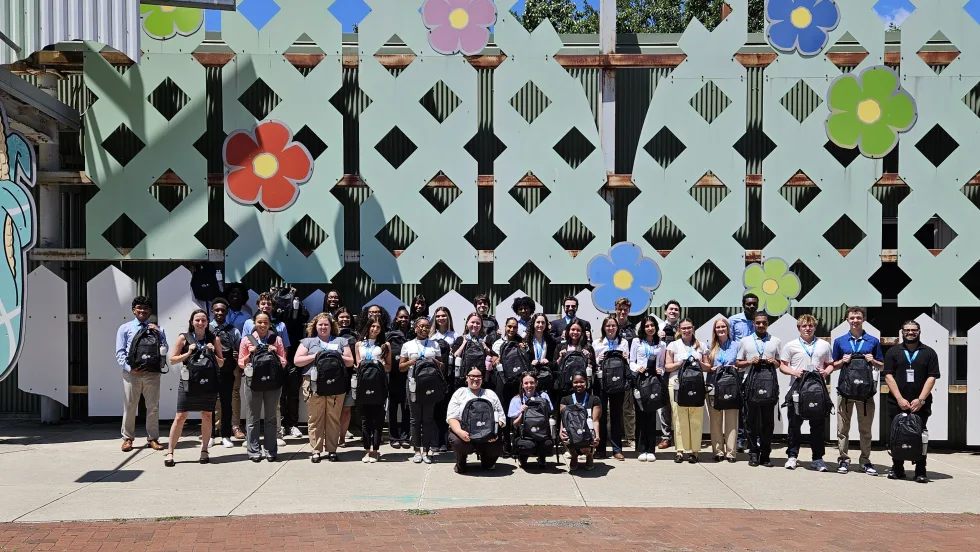
More Than a Summer Job: Building the Next Generation of Transit Talent
The Delaware River Port Authority and PATCO have transformed their internship program into a hands-on professional development experience that introduces students to the breadth of transportation careers — and creates a pipeline for future employees.
Read More →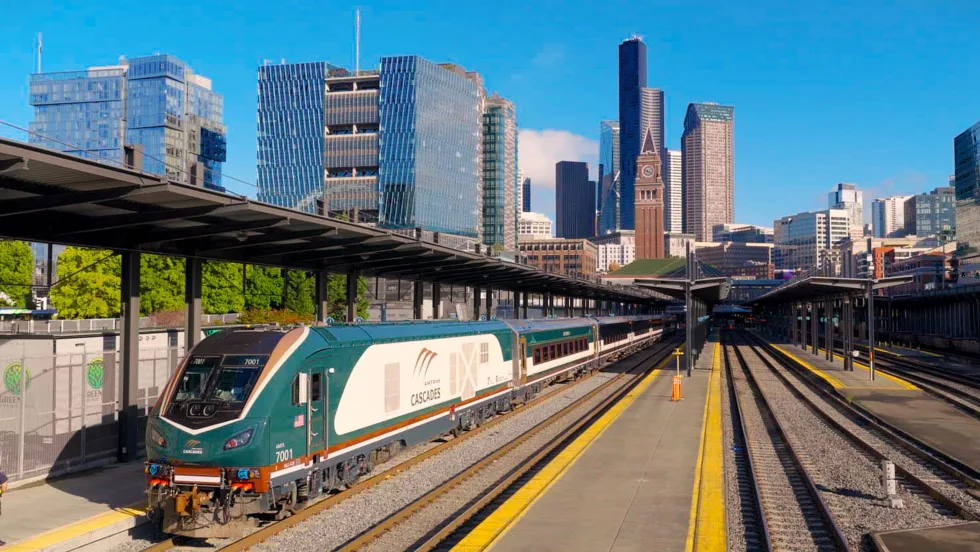
Airo Trains Make Their Amtrak Cascades Debut in the Pacific Northwest
Effective immediately, two cutting-edge Airo trainsets will join the Amtrak Cascades route, operating four daily trips between Vancouver, B.C., Seattle, Portland, and Eugene, Oregon, marking the first introduction of Airo trains into passenger service anywhere in the country.
Read More →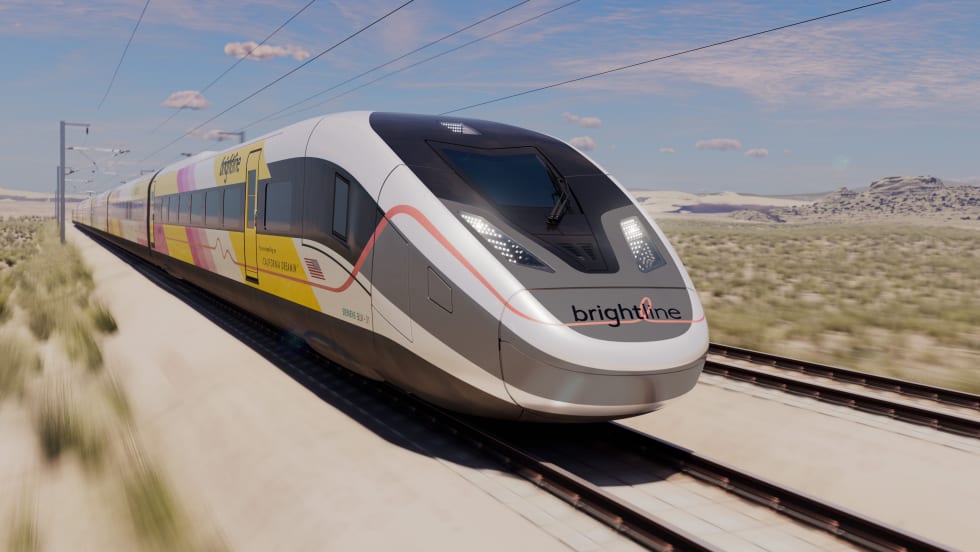
Florida's Brightline Announces Financial Restructuring
Brightline Florida says train operations will continue as normal as certain parent entities enter Chapter 11 and financial stakeholders provide $490 million in new long-term capital.
Read More →
ENC Lands MATA Contract and More in Biz Briefs
In this edition of Biz Briefs, we spotlight the latest developments shaping the future of mobility.
Read More →
Strada360’s Steve Lassey on Turning Transit Data Into Better Decisions
From breaking down data silos to preparing for AI, Strada360 CEO Steve Lassey discusses how transit agencies can use technology to improve operations, customer information, and long-term decision-making.
Read More →
SEPTA Details Accelerate Vision for Transit System
The plan outlines investments in trolley modernization, new Metro and Regional Rail vehicles, accessible stations, and more frequent bus and rail service.
Read More →
FTA Ends Direct Oversight of MBTA Safety Actions
The federal agency closed its remaining special directive to the Massachusetts Department of Public Utilities following a safety review that began in 2022.
Read More →
Amtrak, CN Reach Agreements to Strengthen Passenger Rail Service, Safety
The agreement resolves a more than decade-long proceeding before the Surface Transportation Board concerning the terms and conditions for Amtrak services, such as the City of New Orleans, Illini/Saluki, and Wolverine.
Read More →
New York MTA Advances Final Contract for Second Avenue Subway Expansion
Contract Four is the largest in the Second Avenue Subway Phase 2 project and includes construction of station infrastructure, tracks, and signals for the subway expansion, MTA officials said. Work on Contract Four will begin in 2027.
Read More →