



New APTA Report Reveals How Public Transit Users Can Save Money
According to APTA’s Fare Database, monthly public transit fare prices have not increased since 2020 while prices for new and used cars have increased since the pandemic, and financing costs have increased due to interest rate hikes.

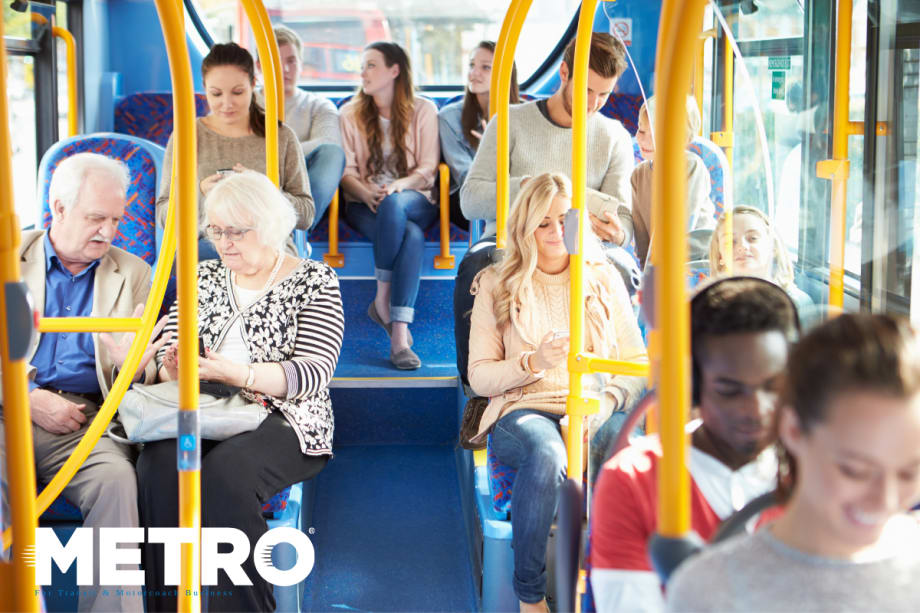
By eliminating one car and taking public transportation instead of driving, a saving of 30% of carbon dioxide emissions can be realized.
Photo: Canva
The American Public Transportation Association's (APTA) most recent Transit Savings report shows that individuals who ride on public transportation instead of driving can save more than $13,000 a year, or $1,100 a month, because of increases in auto costs and gasoline prices.
According to APTA’s Fare Database, monthly public transit fare prices have not increased since 2020 while prices for new and used cars have increased since the pandemic, and financing costs have increased due to interest rate hikes. Gasoline prices have also spiked due to constricted supply and added demand.
By eliminating one car and taking public transportation instead of driving, a saving of 30% of carbon dioxide emissions can be realized.
“As the rising cost of living continues to impact U.S. households, public transportation offers an economical and climate-friendly alternative to reduce daily expenses,” said APTA President/CEO Paul P. Skoutelas. “By choosing to ride public transit, individuals can significantly cut down on their monthly transportation expenses. Whether it’s commuting to work, running errands, or keeping appointments, public transit is a practical and budget-friendly choice.”
More Details from APTA Report
Since 2019, the average transaction price of purchasing a new car has risen by more than $11,000, an increase of more than 30%. For used cars, the average price has risen over $8,000, or 40%.
Gasoline prices are also having an impact. In 2023, gas prices have risen 25% to $4.00 per gallon, as of Sept. 18.
These savings calculations are predicated upon a comprehensive analysis comparing the costs associated with commuting via public transportation versus the expenses linked to vehicle ownership, vehicle operation, and parking costs.
Factors considered include the national and state average gasoline price per gallon as reported by AAA.
More Management

NITA Names New Leadership, Expands Reduced-Fare Program at First Board Meeting
The new regional transit authority appointed its first board chair and interim executive director while extending reduced fares across CTA, Metra, and Pace for eligible riders.
Read More →
Beyond the Checklist: A Structured Approach to Transit Maintenance
Reliability-Centered Maintenance helps transit agencies move beyond routine checklists to focus limited resources on the assets and failures that have the greatest impact on safety, reliability, and service.
Read More →
APTA 2026 Nominating Committee Selects Leadership Slate, Names Chair and Vice Chair Nominees
Leadership changes will help shape the association’s priorities and its representation of the transportation industry during the 2026–2027 term.
Read More →

DART Launches Major Security, Fare Enforcement Initiative
The 90-day demonstration will deploy coordinated security teams at five light rail stations while testing controlled access and gathering data to guide future investments.
Read More →
Advancing Fare Collection Through Technology and Innovation
Learn about delivering 1300 gates at 91 stations while managing fare evasion. Explore the large scale deployment, solution customization and real-world results that affect the region. Prepare for deployment in your region now.
Read More →
Game Day in Motion: Moving Millions During the 2026 World Cup
Between packed transit stations and team motorcoaches, see how agencies and operators across North America tackled the transportation demands of the 2026 FIFA World Cup.
Read More →
Surface Transportation Extension Averts Shutdown, Leaves Transit Funding Gap
The stopgap keeps federal transportation programs moving, but missing advance funding could complicate the transit and rail projects agencies are planning next.
Read More →
Bus Tech Talk: Keeping Transit Technicians Ahead of the Technology Curve
LA Metro’s Obed Mejia discusses technician training, evolving maintenance technology, fleet replacement, and strategies for getting the most out of today’s transit fleets.
Read More →
Why Simulating Pedestrian Movement Has Become Essential for Modern Rail Stations
Pedestrian microsimulation is helping rail planners identify bottlenecks, test station designs, and prepare complex transit hubs for growing passenger volumes.
Read More →
People Movement: Holly Arnold Joins Transdev and More
In this edition, we also cover recent appointments and announcements at Pace, CamTran, MCI, and more, showcasing the individuals helping to shape the future of transportation.
Read More →