



New Data Tracks 26% Growth of Zero-Emission Bus, Truck Availability
The new data was unveiled by CALSTART’s Global Commercial Vehicle Drive to Zero program and campaign.
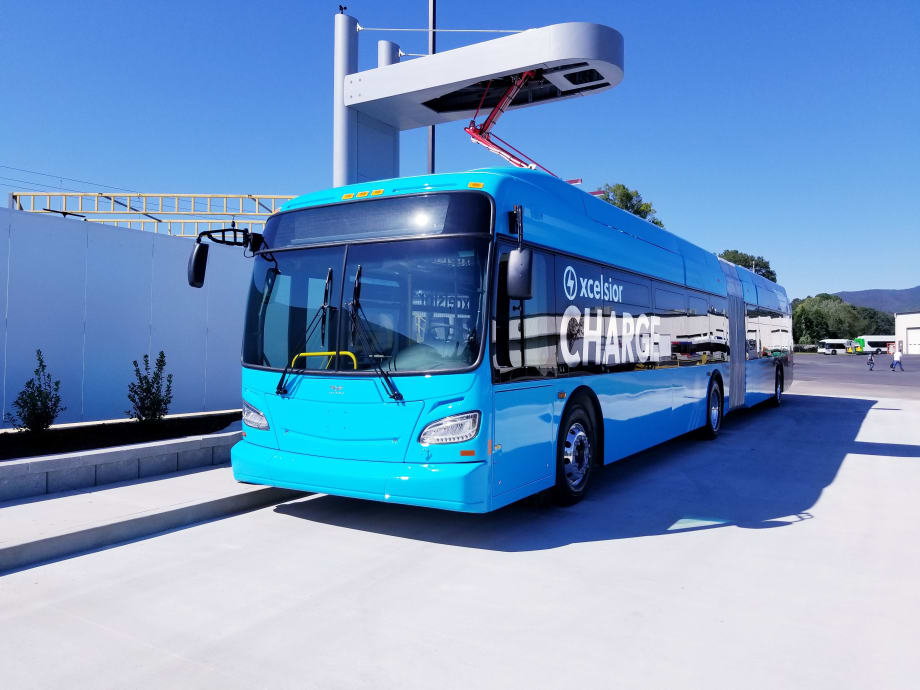
Roughly half of zero-emission transit buses available in 2022 have a manufacturer-reported range of 135.5 miles and 241.2 miles, sufficient for many transit operations.
New Flyer
Model availability and driving ranges of zero-emission trucks (ZETs) and zero-emission buses (ZEBs) continue to grow globally during economic and supply chain challenges brought on by COVID. New data shows the number of zero-emission truck and bus models on the market now or in the near future will grow nearly 26% from 2020 until the end of 2022 (from 433 models to 544 models) in key global markets. The new data was unveiled by CALSTART’s Global Commercial Vehicle Drive to Zero program and campaign (Drive to Zero).
“Seeing a healthy increase in model availability during a time of instability and heavily challenged supply chains confirms the commitment from several top manufacturers for zero-emission vehicles,” said Dr. Cristiano Façanha, CALSTART’s global director and lead of Drive to Zero. “We cannot afford to hit the pause button on these vehicles, they are critical to achieving global net-zero by 2050 goals.”
Globally, the strongest model availability growth rates are being tracked in the zero-emission school buses and medium-duty step vans vehicle types. Zero-emission medium-duty step vans are tracking 120% growth (10 models to 22) from 2020 to 2022. Over the same time, zero-emission school buses — of note for the North American market — rose 143% (seven models in 2020 to 17 models by 2022). Heavy-duty trucks are tracking 56% growth from 2020 to 2022 (39 models to 61 models).
By far the overall model leader and the most established zero-emission application, zero-emission transit buses are expected to end 2022 with 262 available models (up from 247 in 2020) — a steady 6% rise between 2020 and 2022, the majority of which are available in the Chinese market.
In addition to model availability, driving ranges for zero-emission trucks (ZETs) are improving year-to-year. Medium-duty ZETs, medium-duty step vans, and cargo vans on the market in 2022 come in with median ranges of 153 miles, 133 miles, and 146 miles respectively, according to manufacturer data. This allows zero-emission trucks to meet a growing variety of delivery duty cycles. According to manufacturer data, heavy-duty ZETs on the market in 2022 now boast a median range of 186 miles and will soon include a mix of battery electric and hydrogen fuel-cell electric options.
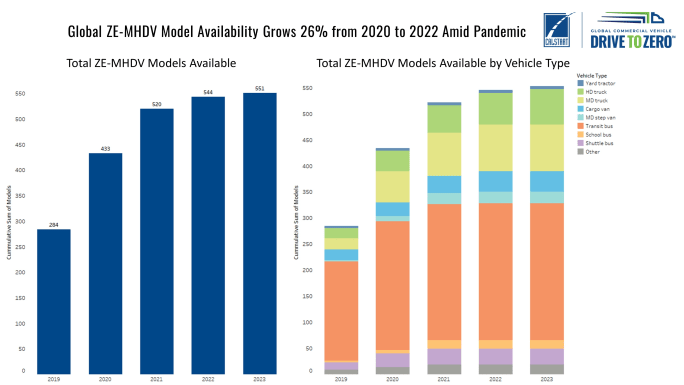
Breaking down the zero-emission truck and bus segment by vehicle type, the highest number of manufacturers can be found in the ZE transit bus, MD truck, and HD truck vehicle types.
Calstart
ZEB ranges are also on the rise. According to manufacturer data, zero-emission transit buses on the market in 2022 have a median range of 175 miles with a number of manufacturers reporting ranges greater than 185 miles. Roughly half of zero-emission transit buses available in 2022 have a manufacturer-reported range of 135.5 miles and 241.2 miles, sufficient for many transit operations.
Breaking down the zero-emission truck and bus segment by vehicle type, the highest number of manufacturers can be found in the ZE transit bus, MD truck, and HD truck vehicle types. This concentration of manufacturers around these foundational zero-emission vehicle technologies is encouraging. Drive to Zero’s Beachhead Strategy outlines the importance of growing the markets for these vehicle types because the components that go into these zero-emission vehicles can be used in other vehicles.
When comparing ZE model availability by region, the new data suggests the U.S. and Canada combined appear to rival global zero-emission vehicle leader China in terms of model availability. However, China represents most of the ZEB market globally by deployments. China far exceeds North America in adoption with an estimated more than 400,000 ZEBs operating in the nation. The U.S. records just 3,533 ZEBs and 1,215 ZETs in the nation, with a large portion of those vehicles on the road in California.
A recent CALSTART paper highlights the technical feasibility of nations adopting a 100% zero-emission commercial new vehicle sales target by the year 2040. “The United States is falling far short of what is needed in terms of sales if we hope to reach ambitious 30% zero-emission truck and bus sales by 2030 and 100% zero-emission sales by 2040, which has been adopted by a number of leading nations,” said MacDonnell. To reach the 30% zero-emission truck and bus sales target by 2030 the U.S. would have to leap from fewer than five thousand ZETs and ZEBs in the nation to a sales target of 593,303 zero-emission medium-and heavy-duty vehicles by 2030.
The new data comes from Drive to Zero’s Zero-Emission Technology Inventory (ZETI), an interactive online tool that tracks the growth of the ZE commercial vehicles globally, as measured by model availability. Drive to Zero also launched a newly updated version of ZETI, which aims to provide fleets, governments and the public with comprehensive information including vehicle-specific specs, regions where zero-emission brands are available for purchase, and the timeline over which additional models are expected to become available. The updated tool allows users to view and “cut” the data in a number of new ways including viewing model availability by technology type as well as region. It will also enable users to compare various models and their features like range, payload, and more.
Additional ZETI Analytics charts and explainers can be found here.
More Zero Emissions
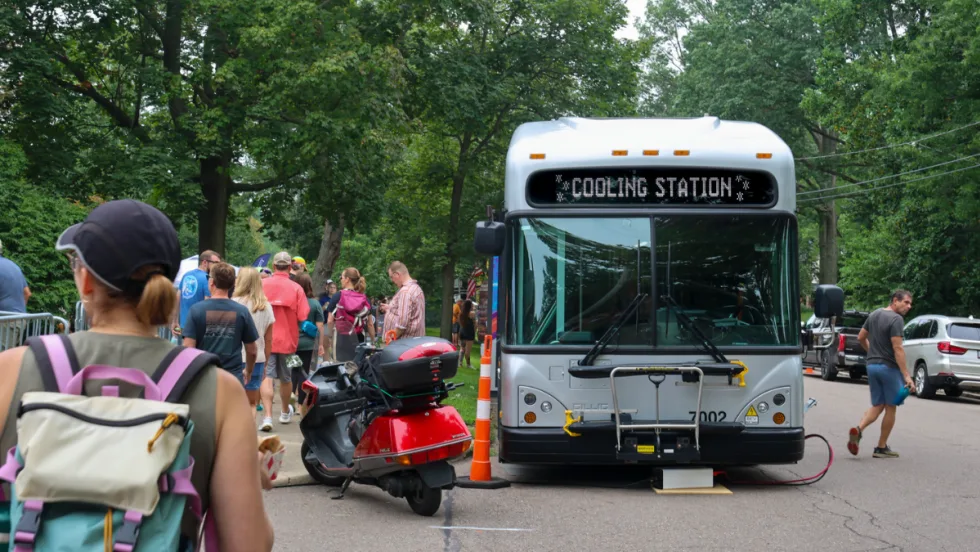
Ohio’s METRO RTA Turns Electric Buses into Mobile Power Sources at PorchROKR
See how three Gillig battery-electric buses powered festival stages while the agency’s new Park & Ride service carried approximately 1,000 attendees, demonstrating another potential use for transit agencies’ electric fleets.
Read More →
CALSTART and Forth Combine to Form Catalyst Mobility
The new name represents a renewed vision for the nonprofit focused on advancing clean, equitable, and affordable transportation solutions that move people and goods.
Read More →
Building a Flexible Path to Transit Electrification
John Hroncich discusses BAE Systems’ modular and scalable approach, lessons learned from decades of real-world operations, and how agencies can identify electrification strategies that fit their fleets.
Read More →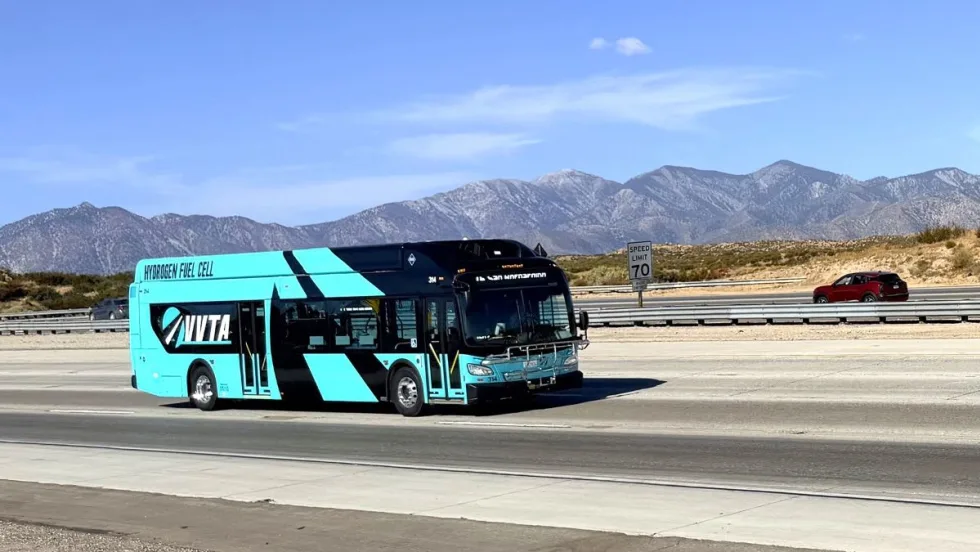
California's VVTA Begins Phased Rollout of Hydrogen Fuel Cell Buses
The agency is introducing 13 zero-emission buses into revenue service while evaluating performance across its urban, rural, and long-distance routes.
Read More →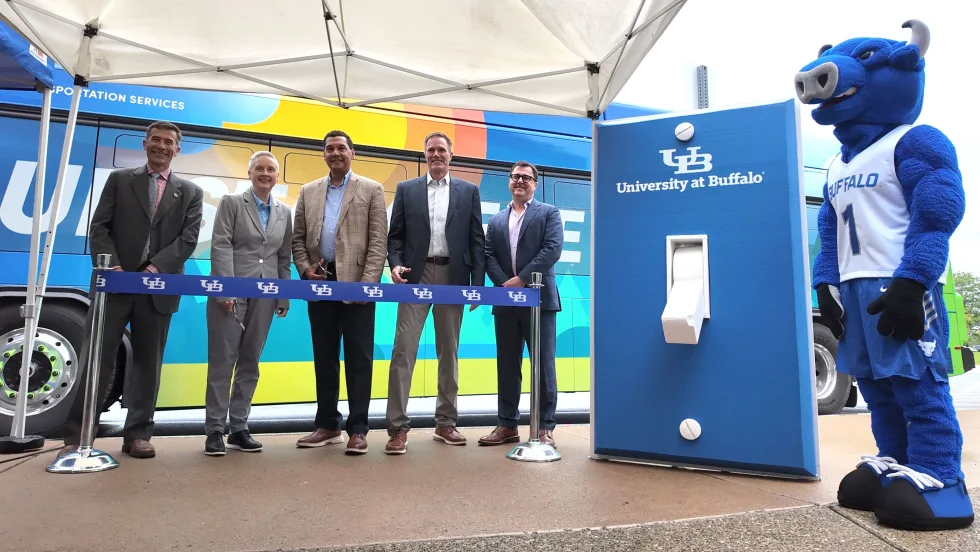
Inside Look: University at Buffalo Puts First 8 Electric Buses Into Stampede Service
UB, transportation solutions provider WeDriveU, and fleet electrification specialist Zenobē marked the deployment in the presence of students, university administrators, and local officials.
Read More →
Biz Briefs: OCTA Taps Clean Energy for Hydrogen Station, Stadler to Supply Via Rail Vehicles, and More
From manufacturers and suppliers to transit agencies and motorcoach operators, these updates offer a snapshot of the projects, partnerships and business moves driving the industry forward.
Read More →
AC Transit’s Cecil Blandon on Building the Next Generation of Transit Maintenance Leaders
The agency’s maintenance chief discusses leadership, workforce development, zero-emission technology, and preparing technicians for the future of public transportation.
Read More →
CTDOT Taps STV for Electric Bus Facility Design
The firm will work with CTDOT and RVT to define the facility layout, operational requirements, and long-term flexibility for RVT’s growing electric fleet.
Read More →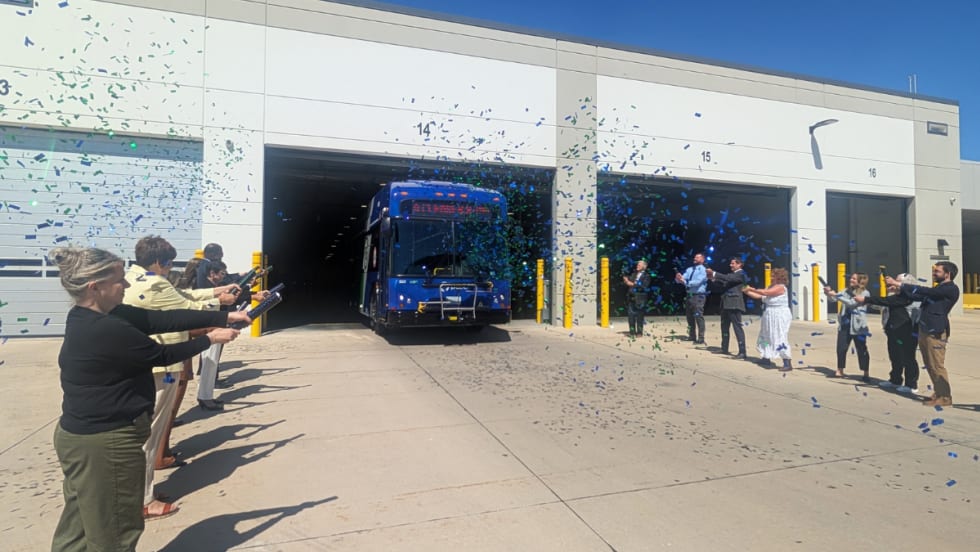
Chicago’s Pace Deploys 24 Hybrid-Electric Buses in Will County
The new buses reduce emissions and fuel consumption while advancing the agency's long-term goal of transitioning to a fully zero-emission fleet.
Read More →
DASH Breaks Ground on First On-Route Electric Bus Chargers in D.C. Region
The fast-charging infrastructure will help extend electric bus range, improve fleet utilization, and support DASH's goal of transitioning to a fully zero-emission fleet.
Read More →