



New Flyer to focus heavy-duty platform on Xcelsior brand
The company will phase out production of its North American Bus Industry LFW and BRT models.

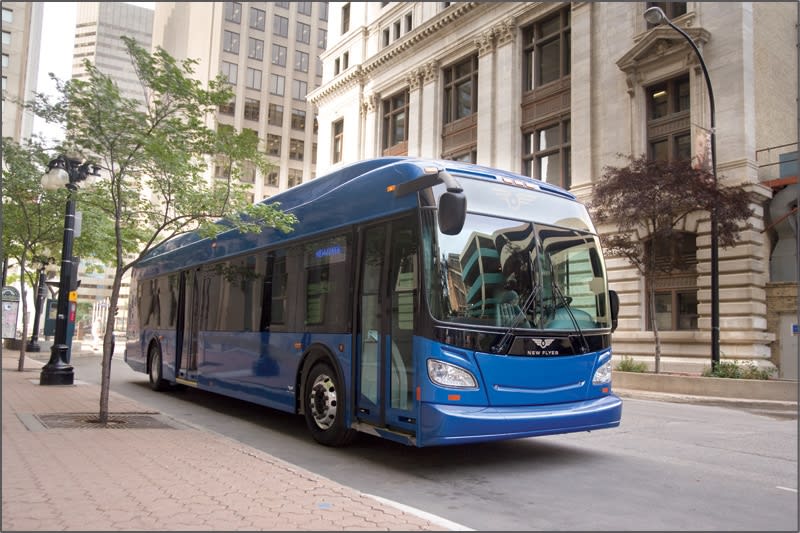
New Flyer Industries Inc., the leading manufacturer of heavy-duty transit buses in Canada and the U.S., announced today plans to focus on a single heavy-duty transit and BRT bus platform that features its Xcelsior brand.
Xcelsior comes with a variety of propulsion options including clean diesel, natural gas, diesel-electric hybrid, electric-trolley, and now, zero-emission battery-electric.
Similar to New Flyer’s previous bus models, Xcelsior is customized and configured to meet each customer’s unique specifications. New Flyer plans to further enhance its BRT styling options for the Xcelsior platform by building on NABI’s extensive BRT experience and New Flyer’s customer input.
RELATED:New Flyer opens new Calif. facility
“New Flyer has made significant investments to make Xcelsior a world-class product. Our focus on a single heavy-duty bus platform enhances our ability to innovate, optimize our supply chain, improve product quality and enhance our competiveness,” said Paul Soubry, New Flyer’s President/CEO. “We will transition production at NABI in Anniston, Ala. from the LFW and BRT to Xcelsior, which enables us to avoid redundant product upgrade costs and duplicate support infrastructure and demonstrates our continued investment in New Flyer’s future.”
Through the transition, New Flyer expects to:
• Improve its competiveness in the U.S. and Canadian markets by leveraging its combined bus volume, production, and purchasing for greater efficiencies,
• Streamline design, sourcing, standardization, and overhead for better product control (such as eliminating redundancy and future costs in designing products, including refreshing bus and propulsion platforms, testing and engineering), and
• Make product enhancements and optimize aftermarket support to better serve customer needs.
“New Flyer acquired North American Bus Industries Inc. in June 2013 to broaden our market position, to improve our technology leadership and to expand our aftermarket parts business, while providing public transit operators with long-term stability and excellence in product support. Today’s announced plan is the natural evolution and optimization of product lines at New Flyer and NABI,” Soubry explained.
New Flyer expects to deliver orders as previously committed and to provide support for NABI customers of the LFW and BRT products for as long as those buses are in service. A number of NABI customers have already indicated an interest in transitioning to Xcelsior. The Company believes customers will benefit from the enhancements that result from its focus on a single heavy-duty platform.
“With the transition of the Anniston facility, we will manage the potential people impact over the coming months through redeployment, retirements and job attrition, where possible,” Soubry said. “We truly appreciate our employees’ dedication, hard work and ongoing efforts at New Flyer and NABI and for their focused commitment to our customers each and every day.”
During this transition period, management expects to invest approximately $20 million in direct operating costs and capital expenditures to complete the transition, utilizing operating cash flow and current credit facilities. Management anticipates these direct operating and capital expenditures will be paid back through captured cost reductions and synergies within approximately two to three years.
More Bus

New York MTA Plans Largest Bus Fleet Upgrade in More Than a Decade
The agency is seeking manufacturers for 650 new CNG buses to replace aging vehicles, improve reliability, and advance its broader fleet modernization strategy.
Read More →
Building a Flexible Path to Transit Electrification
John Hroncich discusses BAE Systems’ modular and scalable approach, lessons learned from decades of real-world operations, and how agencies can identify electrification strategies that fit their fleets.
Read More →
Bus Tech Talk: Keeping Transit Technicians Ahead of the Technology Curve
LA Metro’s Obed Mejia discusses technician training, evolving maintenance technology, fleet replacement, and strategies for getting the most out of today’s transit fleets.
Read More →
Biz Briefs: RIPTA Unveils New Frontrunners, Clevland RTA Adds New Siemens, and More
In METRO's latest installment, we take a look at recent news from Siemens, Prevost, Dodge, and more partnerships making headlines across the transportation sector.
Read More →
People Movement: Holly Arnold Joins Transdev and More
In this edition, we also cover recent appointments and announcements at Pace, CamTran, MCI, and more, showcasing the individuals helping to shape the future of transportation.
Read More →
The High Cost of Transit Buses: Industry Leaders Look to Procurement Reform
Transit leaders and policymakers examine how standardized bus designs, streamlined procurement, and predictable funding could help agencies stretch budgets and deliver better service.
Read More →
The Business Voice Behind Public Transportation
As chair of APTA’s Business Members Board of Governors, Ray Melleady explains how more than 850 business members are partnering with transit agencies to advance funding, innovation, and industry-wide collaboration.
Read More →
From Surviving to Thriving: Building Stronger Transportation Organizations
Bus Business Consultants founder Brian Dickson shares lessons on leadership, organizational health, and creating options for long-term success in a changing transportation industry.
Read More →
Finding the ‘Happy Medium’: Optimizing Maintenance Without Sacrificing Reliability
The key to maintenance optimization isn’t doing less work—it’s doing the right work at the right time on the right assets.
Read More →
LA Metro, City of West Hollywood, and Partners Advance Smarter Bus Lane Enforcement
The award-winning partnership combines AI-powered detection with human oversight to improve bus reliability, accessibility, and enforcement efficiency.
Read More →