



New standards promise stronger wheelchair tiedowns, increased safety
To comply with the new voluntary industry standard known as WC18, wheelchair tiedowns or other securement devices must pass two different dynamic strength tests.

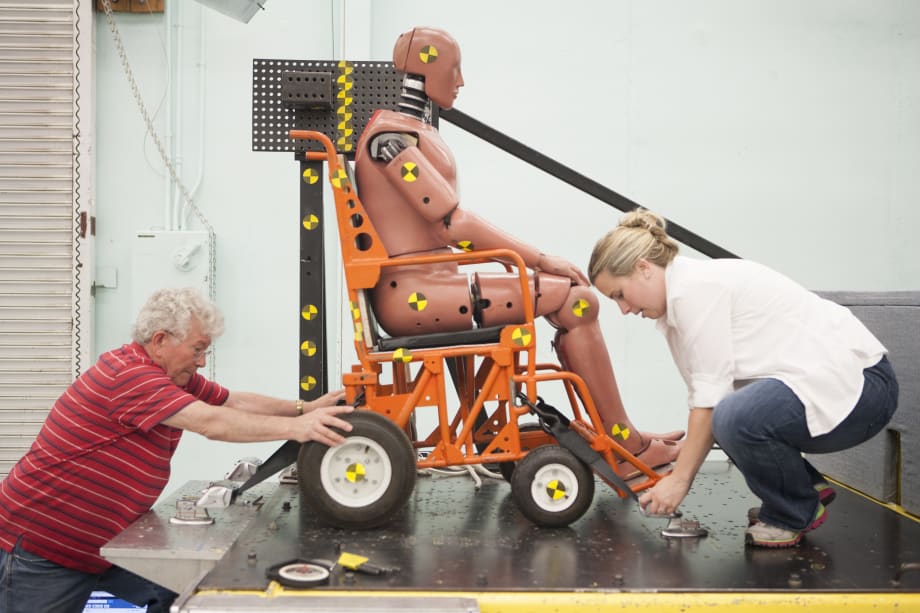
New safety standards for wheelchairs and tie downs promise to improve transportation safety for people who must use their wheelchair as the passenger seat when riding in a car, van or bus. Some of these new product design and crash test requirements have already gone into effect, while additional ones will not be in effect until December of 2015. In advance of this deadline, innovators of wheelchair tie down systems are already striving to implement upcoming safety improvements for today’s passengers.
To comply with the new industry standards published in Wheelchairs and Transportation, Volume 4 of Rehabilitation Engineering and Assistive Technology Society of North America (RESNA) wheelchair standards (commonly referred to as WC18), wheelchair tie downs or other securement devices must pass two different dynamic strength tests. Both of the impact sled tests subject the tie downs to a 30 mph, 20-g crash using a “surrogate” wheelchair and average weight dummy. What differs between the first test requirements that are already in effect and those requirements coming in December 2015, is how the occupant belts are installed.
In the current WC18 requirement, the lap and shoulder belt is installed in such a way that the entire load of the occupant is applied to the vehicle during impact, effectively separating the wheelchair and occupant loads from each other. The second test requirement, as stated in WC19, places the occupant’s lap belt onto the wheelchair frame itself, therefore, transferring a majority of that force onto the tie downs, thus providing additional safety to the passenger.
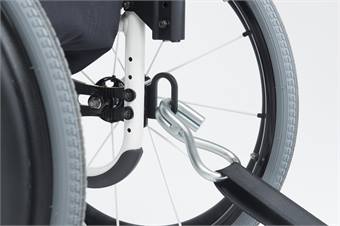
The previous standards were implemented in 2002 and RESNA’s recent changes to both the WC18 and WC19 standards reflect 10 years of real world experience of passengers, wheelchairs, and securement systems in both crash and non-crash events. Building on the success of the previous requirements, the new standards will provide additional precautions based on today’s transportation environments to further ensure passenger safety.
Lessons learned from the past ten years have reinforced the need for an anchored lap belt for providing a safe and respectful transportation experience for the wheelchair-dependent passenger. Among its many benefits, the wheelchair-anchored lap belt:
Provides a better fit low on the passenger’s pelvis, the safest and most secure belt location.
Eliminates interference from wheelchair components, such as armrests, as can happen with a lap belt anchored to the vehicle floor.
Reduces invasion of the passenger’s personal space by the vehicle operator or other attendant who would otherwise be securing straps around the passenger’s body because the passenger would already be wearing the belt.
Reduces the time required to secure the lap-shoulder belt.
These benefits address not only improved passenger safety, but also a more efficient and independent securement process. Thus, manufacturers see real value for their customers, and riders and drivers alike are eager to see the new improvements implemented rapidly.
“The revised standards pose a design challenge, however, we recently announced our new QRT-360 retractor that is fully compliant with the WC18 standard and will be available early 2014,” assures Bob Joseph, VP, business development at Q’Straint. “Q’Straint is pleased to offer improved wheelchair restraint safety to passengers well ahead of the December 2015 deadline.”
RELATED: "Q'Straint debuts new wheelchair retractor."
Story courtesy Q'Straint
More Paratransit

Biz Briefs: RIPTA Unveils New Frontrunners, Clevland RTA Adds New Siemens, and More
In METRO's latest installment, we take a look at recent news from Siemens, Prevost, Dodge, and more partnerships making headlines across the transportation sector.
Read More →
King County Metro Makes ADA Paratransit Easier to Navigate
METRO's Innovative Solutions Award winner replaces complex service-area descriptions with an accessible, interactive map that puts paratransit information directly in customers’ hands.
Read More →
Jacksonville’s NAVI Project Charts a New Course for Autonomous Public Transportation
Through its NAVI program, JTA is showing how autonomous vehicles, intelligent infrastructure, and coordinated operations can work together to deliver everyday public transportation.
Read More →
Driving Smarter Paratransit
John Hanlon shares how AlphaRoute is leveraging AI-powered technology to help paratransit providers optimize operations, support frontline staff, and enhance the rider experience.
Read More →
METRO Magazine Announces 2026 Innovative Solutions Awards Winners
Projects Recognized for Advancing Mobility Through Technology, Accessibility, Workforce Innovation, and Operational Excellence
Read More →
Biz Briefs: STV teams with Amtrak, Motorcoach Operators Boost Fleet and Land Contracts, and More
From manufacturers and suppliers to transit agencies and motorcoach operators, these updates offer a snapshot of the projects, partnerships and business moves driving the industry forward.
Read More →
Biz Briefs: Masabi Teams with St. Louis Metro and More
In METRO's latest installment, we take a look at recent news from Transdev, Hitachi, and more partnerships making headlines across the transportation sector.
Read More →
New York MTA Leverages Zoning Program to Advance Station Accessibility
Accessibility enhancements at Nevins St Station will be financed through a development agreement tied to the MTA's Zoning for Accessibility initiative.
Read More →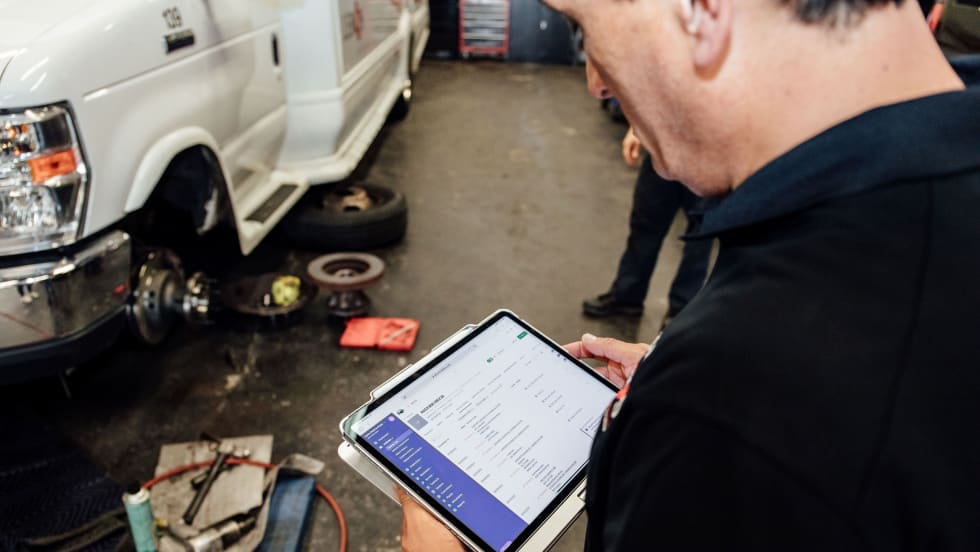
Reinventing Fleet Maintenance with Real-time Visibility and AI
Transit leaders need to know what needs fixing, where to look, who is responsible, when work is completed, and what it costs without having to chase information across disconnected systems.
Read More →
SamTrans Sets Priorities for Potential Connect Bay Area Revenue
The board-approved framework allocates future funding to maintaining service, rider improvements, equity initiatives, and infrastructure repairs.
Read More →