New York Details Projects at Risk Due to Congestion Pricing Lawsuits
Without the funding Congestion Pricing will provide, the projects to make the transit system safer, more reliable, accessible, and equitable are at risk, according to the MTA.
Without congestion pricing, the MTA runs the risk of falling behind on repair work necessary to update aging infrastructure and assets critical to the reliability of the system.
Photo: Patrick Cashin
4 min to read
New York’s Metropolitan Transportation Authority (MTA) detailed projects across the subway system, buses, Metro-North Railroad, and the Long Island Rail Road (LIRR) at risk due to the lawsuits against congestion pricing.
Anticipated congestion pricing bond proceeds of $15 billion make up more than 50% of the remaining funds in the MTA’s 2020-2024 Capital Program. As a result, the MTA Capital Program must be largely placed on hold, halting advertisement of nearly all new construction contracts and moving forward only with limited, urgent exceptions.
Ad Loading...
Without the funding Congestion Pricing will provide, the projects to make the transit system safer, more reliable, accessible, and equitable are at risk, according to the MTA.
“Congestion Pricing is foundational to the MTA Capital Program,” said MTA Construction & Development President Jamie Torres-Springer. “With the lawsuits challenging the program, critical projects to maintain and improve our transit system and more than 20,000 jobs are at risk of delay or disruption.”
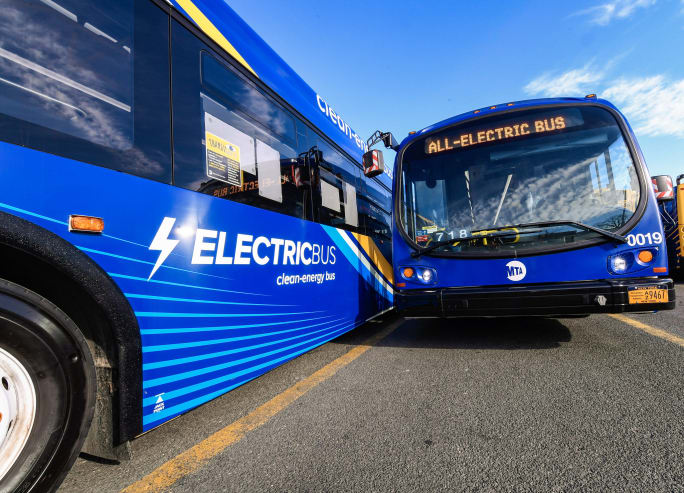
Funds from congestion pricing would enable purchase of more than 250 new electric buses and 11 bus depots across all five boroughs to operate and maintain electric bus fleets.
Photo: Marc A. Hermann
Congestion Pricing Investments
Investments supported by congestion pricing funds are essential in advancing projects that would create a more efficient and sustainable transit system that meets the needs of New Yorkers today and in the future.
Impacted projects include:
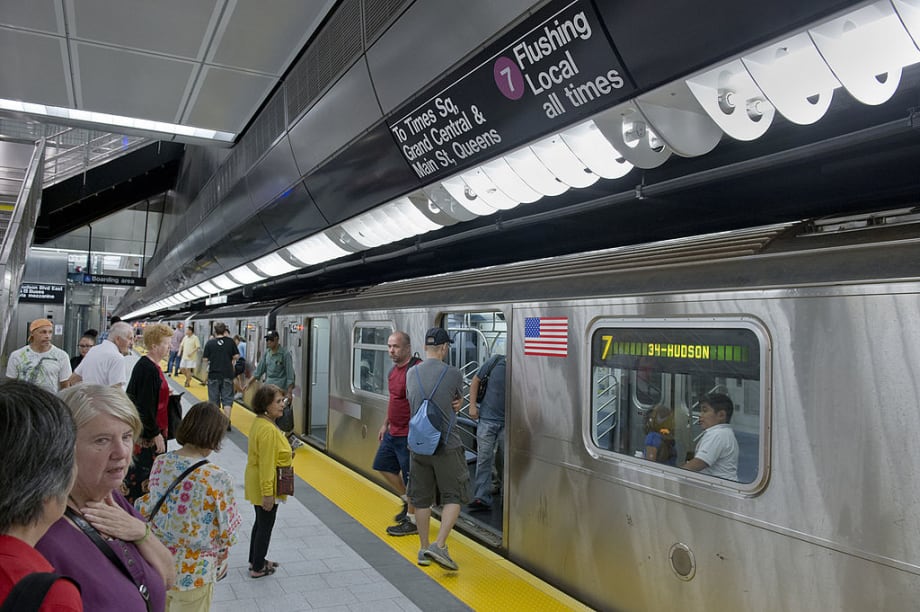
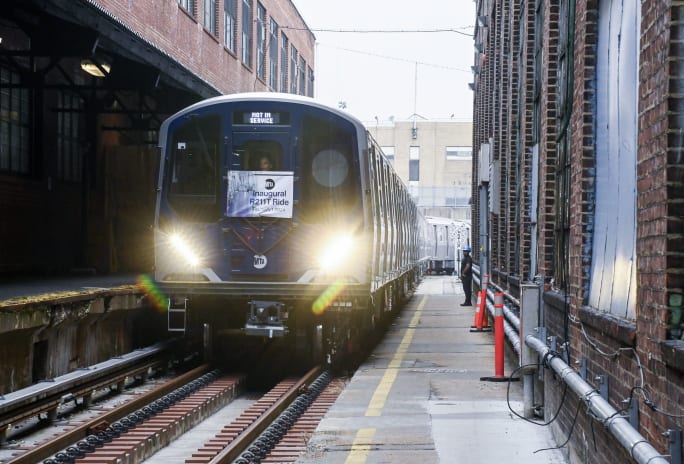
1) Reliability. Congestion pricing revenue will contribute $1 billion to purchase new subway cars, new M9A cars for the LIRR and Metro-North, and new locomotives for the LIRR, which would reduce emissions and improve reliability for LIRR. Additionally, vital signal modernization projects on the Fulton Line in Brooklyn and 6 Av Line in Manhattan have already been placed on hold. These projects would benefit more than 1.6 million daily riders and include installation of communication-based train control (CBTC) and replacement of 70 switches and 17 interlockings dating back to the 1930s.
Ad Loading...
2) Accessibility and Station Modernization. Since 2020, the MTA is delivering projects to make stations accessible five times faster. However, this pace is at risk as station accessibility upgrades and station renewals across all five boroughs may be delayed. In addition, station renewals at 7 Av, East 149 St, 179 St, Briarwood, 3 Av-138 St, Brook Av, and upgrades to the public announcement system at more than 70 stations across the lettered lines are at risk.
3) Equity and Sustainability. Funds from congestion pricing would enable purchase of more than 250 new electric buses and 11 bus depots across all five boroughs to operate and maintain electric bus fleets. The electrification plan prioritizes environmental justice communities so bus depots in historically underserved communities will be the first to replace diesel and hybrid buses with electric. Three depots would also receive critical HVAC repairs.
Future contracts to advance Second Avenue Subway Phase 2 rely on funding from congestion pricing. This project, long overdue for the residents and businesses of transit-dependent East Harlem, will create three brand-new accessible stations at 106 St, 116 St, and 125 St and increase transit connectivity at the 125 St station, with connections to Metro-North trains and M60 Select Bus Service to LaGuardia Airport.
4) State of Good Repair. Without congestion pricing, the MTA runs the risk of falling behind on repair work necessary to update aging infrastructure and assets critical to the reliability of the system. These assets, often hidden from the public eye, are essential and lack of investment could lead to disruptive outages, including:
Repairs and overcoating to keep our elevated lines structurally sound.
Substation repairs and renewals to keep power running.
Repairs to emergency exits and fan plants to keep customers safe in an emergency.
Shop and yard repairs across the system are necessary to keep facilities running.
Water remediation at LIRR Atlantic Terminal and rehabilitation of Ronkonkoma’s LIRR parking garage.
Ad Loading...
In addition to Metro-North's state-of-good repair work, efforts to advance West of Hudson investments and electrification of the Hudson Line south of Croton-Harmon are also impacted.
Congestion pricing revenue will contribute $1 billion to purchase new subway cars, new M9A cars for the LIRR and Metro-North, and new locomotives for the LIRR, which would reduce emissions and improve reliability for LIRR.
Photo: Marc A. Hermann
Additional Impacts
All the projects outlined are not only critical to New Yorkers, but for the thousands of workers and businesses that depend on these projects for their livelihoods.
The capital program is estimated to support 57,400 jobs — 23,000 of which are at risk. This has an impact on the economy at every level, especially for minority-owned, women-owned, and federally designated disadvantaged businesses, as well as businesses owned by veterans disabled in the line of service. Last year, the MTA paid $833 million across more than 500 different firms in these categories.
Contract Four is the largest in the Second Avenue Subway Phase 2 project and includes construction of station infrastructure, tracks, and signals for the subway expansion, MTA officials said. Work on Contract Four will begin in 2027.
The new regional transit authority appointed its first board chair and interim executive director while extending reduced fares across CTA, Metra, and Pace for eligible riders.
Reliability-Centered Maintenance helps transit agencies move beyond routine checklists to focus limited resources on the assets and failures that have the greatest impact on safety, reliability, and service.
The 90-day demonstration will deploy coordinated security teams at five light rail stations while testing controlled access and gathering data to guide future investments.
Learn about delivering 1300 gates at 91 stations while managing fare evasion. Explore the large scale deployment, solution customization and real-world results that affect the region. Prepare for deployment in your region now.
Between packed transit stations and team motorcoaches, see how agencies and operators across North America tackled the transportation demands of the 2026 FIFA World Cup.
The stopgap keeps federal transportation programs moving, but missing advance funding could complicate the transit and rail projects agencies are planning next.