



Officials: MBTA Orange Line Work 82% Complete
Crews have worked tirelessly to finish tie replacement work between the Dana Bridge and Community College station with current tie replacement work taking place at the North Station portal, which began on September 9.
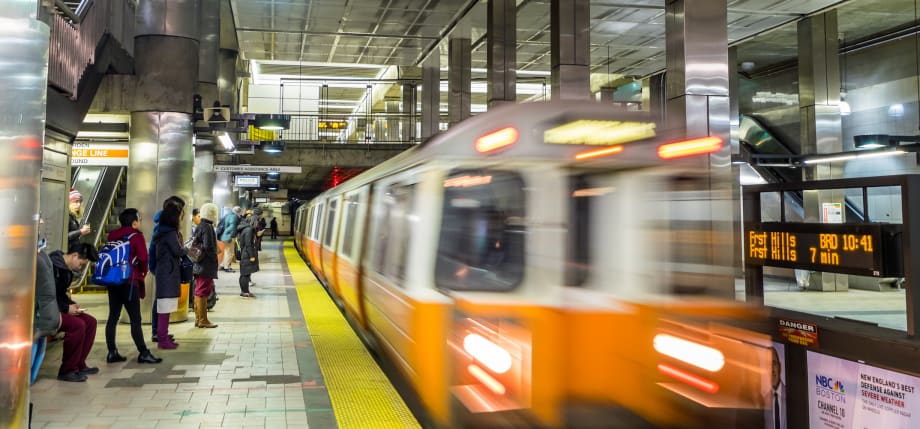
As of this week’s reporting, 82% of the planned work on the MBTA's Orange Line has been completed.
MBTA
Boston’s MBTA GM Steve Poftak announced 82% of the work taking place along the Orange Line is complete and track work taking place between Dana Bridge and North Station will allow for the removal of three more slow zones, which will bring the total number of slow zones removed to five.
Work taking place in this area includes track and tie replacement, rail installation, track alignment, and tamping. Crews have worked tirelessly to finish tie replacement work between the Dana Bridge and Community College station with current tie replacement work taking place at the North Station portal, which began on September 9. Tie replacement work involves crews operating hi-rail heavy equipment to remove old ties and install new ties. The critical tie replacement will remove three of the six slow zones that the T aims to address during the shutdown. Crews have already completed work to remove slow zones at Jackson Square and between Downtown Crossing and State. Finishing this important work and removing these slow zones allows for faster, more reliable service for Orange Line riders.
MBTA is letting Orange Line riders know that, when Orange Line trains begin running again on Monday, September 19, slow zones will continue to be in place temporarily for about one week where the work was performed. In the rail industry, after new track and ballast installation, and due to the amount of track area disturbed during work, it is a given that slow zones need to temporarily remain in place. This is because it takes time for the new track and ballast to “settle” as trains repeatedly run over these areas.
Additionally, 64 new Orange Line cars are now available when service resumes, supporting riders during peak commuting periods. This is up from 30 cars when the Orange Line shutdown first started. This is also over a full complement of new Orange Line cars ready to serve riders.
As of this week’s reporting, 82% of the planned work has been completed.
Overall, teams have completed approximately 65% of rail replacement and 90% of track replacement. The full depth track replacement includes the ballast, ties, and rail.
About 99% of the special track work is complete. The special track renewal work includes replacing things like crossover areas.
About 99% of Cologne eggs and rail fastener work is finished near Tufts Medical Center station. Cologne eggs are the fasteners that allow crews to directly affix rail to the concrete pads, which are also utilized on certain parts of the Orange Line. The MBTA is in the process of installing the final five new eggs with 395 fully complete.
There has also been excellent progress on the ongoing signal testing at Oak Grove and Malden Center stations with about 84% of these signal upgrades complete.
More Rail

New York MTA Advances Final Contract for Second Avenue Subway Expansion
Contract Four is the largest in the Second Avenue Subway Phase 2 project and includes construction of station infrastructure, tracks, and signals for the subway expansion, MTA officials said. Work on Contract Four will begin in 2027.
Read More →
San Diego MTS Breaks Monthly Trolley Ridership Record
Agency officials said July’s ridership indicates MTS’s continued recovery from the pandemic.
Read More →
Report Examines NJ TRANSIT Reliability, Funding Challenges
The Garden State Initiative analysis examines the roles of Amtrak infrastructure, fleet management, and agency operations while recommending a more performance-based approach to improving reliability.
Read More →
Stadler, CapMetro Sign Long-Term Rail Fleet Support Agreement
Beginning in 2027, Stadler will provide on-site technical expertise, spare parts support, training, and obsolescence management to help extend the reliability and longevity of CapMetro’s GTW fleet.
Read More →
Biz Briefs: Alstom Lands Canadian Contract, LYT to Supply California TSP, and More
In METRO's latest installment, we take a look at recent news from Complete Coach Works, Beep, FlixBus, and more partnerships making headlines across the transportation sector.
Read More →
CATS Gold Line Marks 5 Years of Service, 2.8M Passenger Trips
With a six-mile expansion planned, the Charlotte streetcar is positioned to connect more neighborhoods and major transit hubs across the region.
Read More →
Why Simulating Pedestrian Movement Has Become Essential for Modern Rail Stations
Pedestrian microsimulation is helping rail planners identify bottlenecks, test station designs, and prepare complex transit hubs for growing passenger volumes.
Read More →
Amtrak Begins Major Construction at New York’s Sunnyside Yard
The new maintenance facility will support Amtrak’s Airo trainsets while improving maintenance efficiency and turnaround times in New York.
Read More →
Chicago Leaders Unveil Plans for O’Hare Airport Express Train
The privately developed project would offer a 15-minute trip between downtown and O’Hare’s Terminal 2, with trains operating every 15 minutes on a dedicated track. The service would use battery-electric trains and three existing freight rail rights-of-way.
Read More →
OCTA Maps Out 30-Year Strategy to Protect Coastal Rail Corridor
The draft feasibility report identifies strategies to protect the coastal rail line for decades as the agency continues near-term stabilization and sand placement efforts.
Read More →