



Paratransit Vehicle Pilot Leads to All-Propane Autogas Fleet
Delaware Transit Corp. provides over 10.6 million rides per year, including about one million passenger trips through its DART paratransit service.
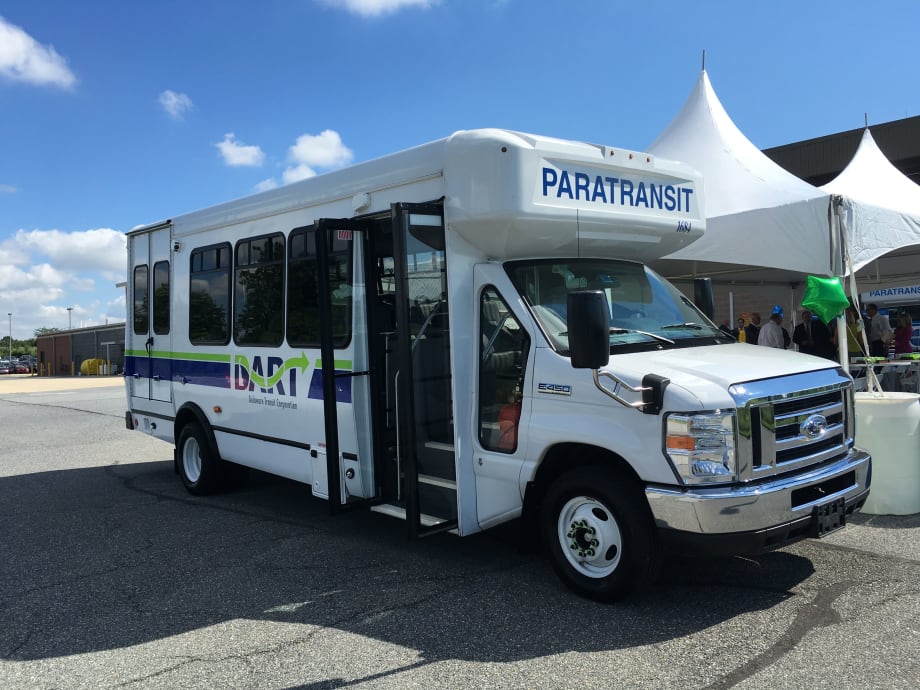
DART’s success led the transit agency to purchase a total of 165 propane autogas shuttles — over one-half of the entire paratransit fleet.
DART
DART’s success led the transit agency to purchase a total of 165 propane autogas shuttles — over one-half of the entire paratransit fleet.
DART
Delaware Transit Corp. provides over 10.6 million rides per year, including about one million passenger trips through its DART paratransit service. The transit agency runs a shared-ride program with advanced reservation trips for people with disabilities, who are unable to use regular fixed-route public transportation.
The agency, which operates the largest self-managed paratransit fleet in the nation, took on a two-year pilot program testing five propane autogas paratransit buses in 2014. The agency chose to pilot two different types of vehicles, dedicated (only operating on propane) and dual-fuel (operating on gasoline or propane).
The program’s success led the transit agency to purchase a total of 165 propane autogas shuttles — over one-half of the entire DART paratransit fleet. Each of these vehicles is built on the Ford E-450 chassis with 6.8L V10 engine, and equipped with a ROUSH CleanTech-dedicated propane autogas fuel system. ROUSH CleanTech has deployed more than 18,000 fleet vehicles fueled by propane autogas, including about 1,200 in the transit industry.
This propane vehicle has completed Federal Transit Administration’s New Model Bus Testing Program (Altoona Testing) and is certified for sale in all 50 states by the California Air Resources Board and Environmental Protection Agency.
“Our first five propane-fueled buses collectively traveled 450,000 miles with no fuel system-related failures, and saved $15,000 in fuel costs alone,” said John T. Sisson, CEO of Delaware Transit Corp. “That, combined with the reduction in greenhouse gas emissions, made it an easy decision to expand the propane program with our new private fuel stations and expansion of the propane fleet.”
Environmental Savings
Kept in operation for five years, each DART paratransit bus travels between 35,000 and 40,000 miles annually. Every paratransit bus consumes about 7,275 gallons of propane autogas, annually, saving about 6,250 gallons of gasoline. More than 90% of the U.S. propane autogas supply is produced domestically, with an additional 7% from Canada.
The propane autogas paratransit buses are each emitting 91,000 fewer pounds of carbon-dioxide emissions over its lifetime, compared to the agency’s gasoline models — or 15 million pounds for the entire propane fleet. Propane autogas is a low-carbon fuel that reduces greenhouse gases by up to 25%, with 60% less carbon monoxide and fewer particulate emissions, compared with gasoline.
Cost Savings
To track costs, the transit agency runs a weekly report based on the number of vehicles in service, their total mileage, and gallons of propane autogas used. Based on the current price of propane autogas and gasoline, the agency then calculates its weekly savings.
In March 2018, savings averaged $76 per bus per week. The Delaware Transit Corp. is saving about $11,000 per week by operating a propane autogas paratransit bus fleet, equaling more than $500,000 annually in fuel expenses alone. The agency has calculated a 36% cost-per-mile fuel savings, with 19 cents for its propane shuttles, compared with 30 cents for its gasoline shuttles. Historically, propane autogas costs 40% less than gasoline and up to 50% less than diesel.
DART also has experienced maintenance savings due to the fuel’s clean-burning properties. “We’ve seen a significant reduction in engine-related problems. Overall performance of the vehicles is greater, and we have experienced far fewer engine-related breakdowns,” said Richard Walters, DART’s fleet and contract operations director.
Essential to daily operations, the transit agency installed private fueling infrastructure. DART worked with Sharp Energy, a local propane provider, to install two low-cost refill stations at different, convenient locations. Propane autogas fueling infrastructure costs less than any other transportation energy source — conventional or alternative. Sharp Energy provides the propane for the DART paratransit buses, along with technical and maintenance support for the vehicles and fueling stations.
Best Practices in Action
According to Walters, the agency drivers have found the switch to propane to be an “easy one, and have commented that the only difference is propane autogas has better acceleration and more power than gasoline or diesel.”
DART tested both dual-fuel and dedicated propane autogas vehicles before making the decision to purchase only dedicated vehicles. “We found the dedicated system far superior to the dual-fuel system,” said Walters, who recommends that other transit agencies learn from their experience.
Delaware Transit Corp. is realizing the economic and environmental savings that comes with adopting propane autogas. And, the agency expects that momentum to continue as it plans to convert its entire paratransit fleet to propane autogas by 2020.
Todd Mouw is president of ROUSH CleanTech.
More Bus

New York MTA Plans Largest Bus Fleet Upgrade in More Than a Decade
The agency is seeking manufacturers for 650 new CNG buses to replace aging vehicles, improve reliability, and advance its broader fleet modernization strategy.
Read More →
Building a Flexible Path to Transit Electrification
John Hroncich discusses BAE Systems’ modular and scalable approach, lessons learned from decades of real-world operations, and how agencies can identify electrification strategies that fit their fleets.
Read More →
Bus Tech Talk: Keeping Transit Technicians Ahead of the Technology Curve
LA Metro’s Obed Mejia discusses technician training, evolving maintenance technology, fleet replacement, and strategies for getting the most out of today’s transit fleets.
Read More →
Biz Briefs: RIPTA Unveils New Frontrunners, Clevland RTA Adds New Siemens, and More
In METRO's latest installment, we take a look at recent news from Siemens, Prevost, Dodge, and more partnerships making headlines across the transportation sector.
Read More →
People Movement: Holly Arnold Joins Transdev and More
In this edition, we also cover recent appointments and announcements at Pace, CamTran, MCI, and more, showcasing the individuals helping to shape the future of transportation.
Read More →
The High Cost of Transit Buses: Industry Leaders Look to Procurement Reform
Transit leaders and policymakers examine how standardized bus designs, streamlined procurement, and predictable funding could help agencies stretch budgets and deliver better service.
Read More →
The Business Voice Behind Public Transportation
As chair of APTA’s Business Members Board of Governors, Ray Melleady explains how more than 850 business members are partnering with transit agencies to advance funding, innovation, and industry-wide collaboration.
Read More →
From Surviving to Thriving: Building Stronger Transportation Organizations
Bus Business Consultants founder Brian Dickson shares lessons on leadership, organizational health, and creating options for long-term success in a changing transportation industry.
Read More →
Finding the ‘Happy Medium’: Optimizing Maintenance Without Sacrificing Reliability
The key to maintenance optimization isn’t doing less work—it’s doing the right work at the right time on the right assets.
Read More →
LA Metro, City of West Hollywood, and Partners Advance Smarter Bus Lane Enforcement
The award-winning partnership combines AI-powered detection with human oversight to improve bus reliability, accessibility, and enforcement efficiency.
Read More →