



Plans at State, Local Levels Look to Spur Rail Investment
Legislation introduced at both state and federal levels of government in the U.S. propose to spend billions to fund intercity and urban rail upgrades over the next decade.

Legislation introduced at both state and federal levels of government in the U.S. propose to spend billions to fund intercity and urban rail upgrades over the next decade. Much of this legislation has a good chance of passage and becoming law this year, observers point out, because of election-year pressures working in the bills’ favor. Take that introduced by U.S. Congressman Bob Clement (D-Tenn.), a member of the House Transportation and Infrastructure Committee. In May, he introduced H.R. 4507, the Transit Rail Access Improvement and Needs Act for the 21st Century, (TRAIN 21). It would give cities and communities negotiating with freight railroads that want to provide passenger rail service for their communities the same advantages enjoyed by Amtrak. “There is no doubt that we are facing a critical problem nationally concerning the challenge of reaching an agreement with the local freight railroads to share rights-of-way and trackage for passenger, light, and commuter rail,” said Clement. “This legislation will encourage freight railroads to carefully examine what is in the best interest of the community and public good, not just the ‘bottom line.’” Specifically, the measure would give local transit authorities the option to take disputes over rights-of-way and other problems to the Surface Transportation Board (STB), just like Amtrak does now when they have a dispute. Currently, local transit authorities do not have that option. “Nearly 200 rail transit projects were authorized to proceed to construction during the life of the Transportation Equity Act for the 21st Century (TEA-21),” Clement said. “Unfortunately, as local transit authorities have worked to enter into agreements with the freight railroads, it has become increasingly difficult for them to reach any kind of economical or reasonable deal. In fact, in many communities the goal of providing transportation alternatives is increasingly becoming frustrated or comes at such a high cost that the project can never proceed to construction. The source of this frustration is the unwillingness of the major freight railroad operators to engage in meaningful negotiations. When impasse occurs, the local community has no recourse at the present time other than simply to watch the project languish and die.” Clement added: “We are at a crossroads in public transportation in America. It is time to level the playing field for commuter and passenger rail access as we work to address crucial growth and traffic congestion issues in order to improve our quality of life and meet the needs of our growing communities.” Another measure gaining steam is for increasing investment in high-speed rail corridors. Retiring New Jersey Senator Frank Lautenberg has introduced the High-Speed Rail Investment Act, which would allow Amtrak to sell $10 billion in bonds for the development of high-speed rail corridors across the nation. Up to ten percent of the funds would be available to improve non-high-speed rail service nationwide. “Overcrowding on our highways and in our skies is almost at the crisis point,” he said. “We’re spending billions of dollars each year in wasted gas and wasted time because there are fewer and fewer ways to get somewhere quickly and comfortably. We’re not going to solve that problem by simply building new roads or airports. People don’t want airports in their backyards, and there just isn’t enough space in many parts of the country for new roads. Besides, new airports and new roads cost billions. And they become obsolete almost as quickly as we build them.” He noted that more than three out of four airports listed as overcrowded or expected to become so in the next decade are located on a high-speed rail corridor. Lautenberg’s bill is designed to ensure that Amtrak will work in partnership with the states and invest these funds in only the most economically viable projects. States would be required to match at least 20% of Amtrak’s share. These funds would be managed by an independent trustee and used to redeem the bonds. The repayment of bond principal by the trust would be assured by a separate guaranteed investment contract. State funds contributed in excess of the 20% minimum could go directly towards funding projects. The bill does have a small cost to the federal Treasury. Because it provides tax credits to bondholders in lieu of interest payments, it would decrease federal revenues by $782 million over five years and $3.3 billion over ten years. However, this is not seen as a liability because of the expected budget surplus, projected to exceed $20 billion in Fiscal Year 2000 alone. “The beauty of this approach is that it is a dedicated funding source for capital improvements for the next 10 years,” said Amtrak President George Warrington. He gives another good reason for its likely passage this year: Lautenberg’s Senate colleagues are eager to leave him a legacy before his retirement. Currently the bill has 44 Senate and 89 House cosponsors, with very little opposition, Warrington added. Meanwhile in April, California Governor Gray Davis proposed an historic $5.3 billion Traffic Congestion Relief Plan, investing $3.1 billion in General Fund money and proposing a $2.2 billion General Obligation Bond. More than half of the money is to be used in non-highway projects, the majority of that in rail spending. One potential election-year pitfall the plan avoids is committing more public money in California to servicing the $2.2 billion in new bonds. Instead, Governor Davis proposes to dedicate $440 million in State gasoline sales tax to directly fund the transportation projects.
More Rail
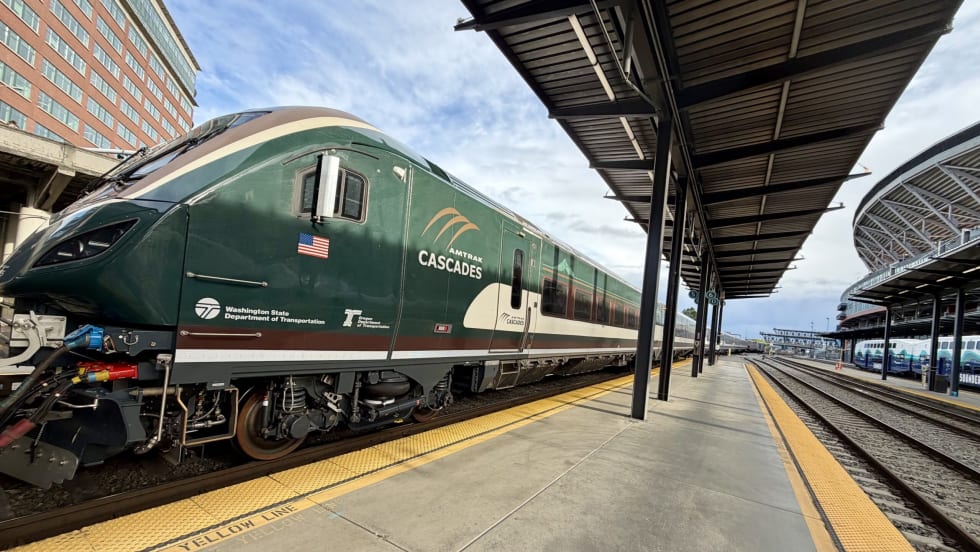
FRA Announces $5.3B in Rail Investments, Including $2B for Amtrak
Funding will support grade-crossing improvements, infrastructure upgrades, and new Amtrak equipment in 23 states.
Read More →
Finding the ‘Happy Medium’: Optimizing Maintenance Without Sacrificing Reliability
The key to maintenance optimization isn’t doing less work—it’s doing the right work at the right time on the right assets.
Read More →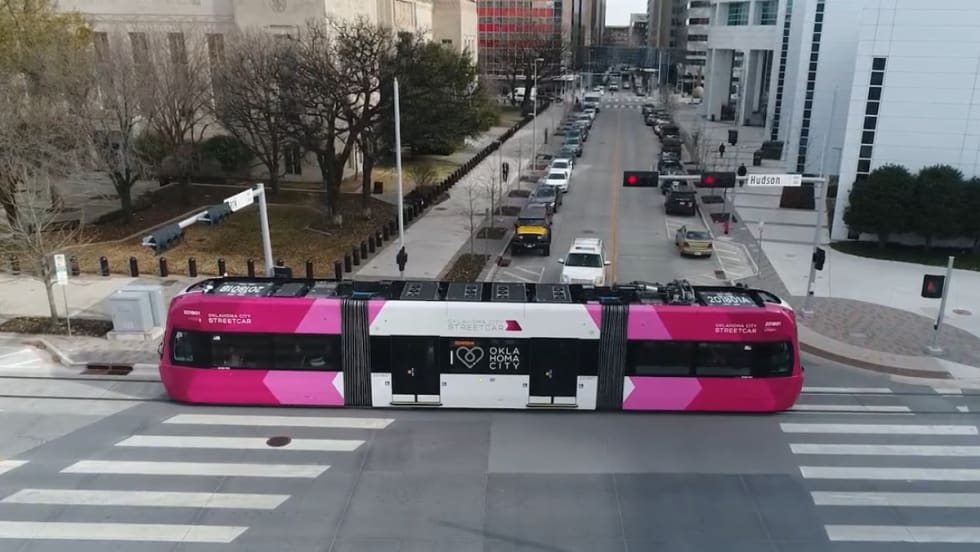
OKC Streetcar Makes Zero-Fare Service Permanent
Ridership increased an average of 71% compared with the same period a year earlier during the fare-free pilot.
Read More →
DART Customer Satisfaction Reaches Six-Year High
Overall satisfaction rose to 74.9%, while the agency’s Net Promoter Score reached a record 33.7.
Read More →
How DART's GoPass Is Redefining Regional Mobility
Serving 14 transit agencies, GoPass simplifies multimodal travel by allowing riders to plan, pay for, and manage an entire trip through one app.
Read More →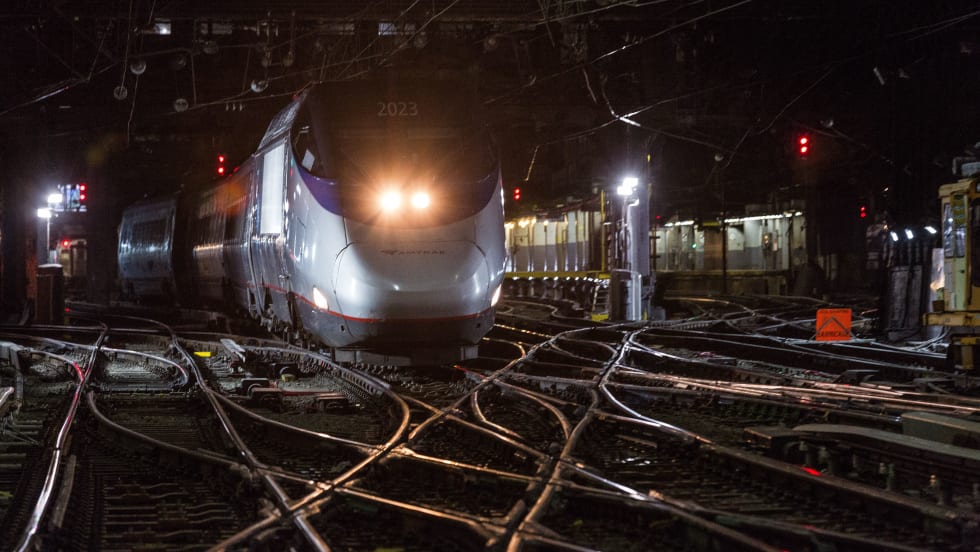
Amtrak Board Advances Plan to Restructure Organization, Seeks Public Input
The proposal, developed by Amtrak management and approved by the board for further consideration, is intended to modernize the organization's structure while improving accountability, operational efficiency, and customer service.
Read More →
Biz Briefs: STV teams with Amtrak, Motorcoach Operators Boost Fleet and Land Contracts, and More
From manufacturers and suppliers to transit agencies and motorcoach operators, these updates offer a snapshot of the projects, partnerships and business moves driving the industry forward.
Read More →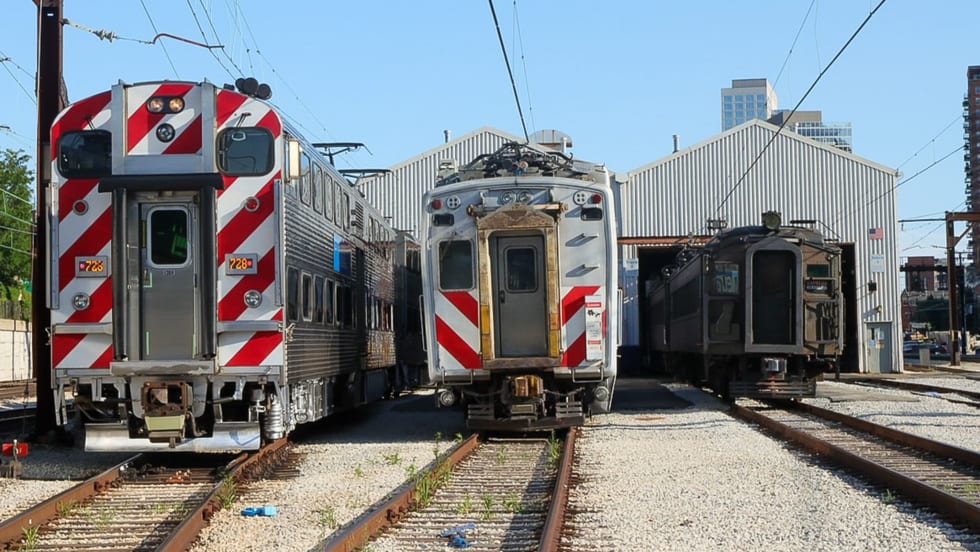
Metra Celebrates 100 Years of Electric Rail, Looks to the Future
The event was also a celebration of recent reforms to public transportation in the Chicago area, changes that could be as transformative in the future as the major civic achievement a century ago, said officials.
Read More →
LA Metro Marks Banner Year, Sets Ambitious Goals for New Fiscal Year
Incoming LA Metro Board Chair and Los Angeles Mayor Karen Bass joined outgoing Board Chair Fernando Dutra and LA Metro CEO Stephanie Wiggins to review accomplishments from fiscal year 2026, which included the opening of new rail extensions, advancement of major transit projects, expanded safety programs, and new rider amenities.
Read More →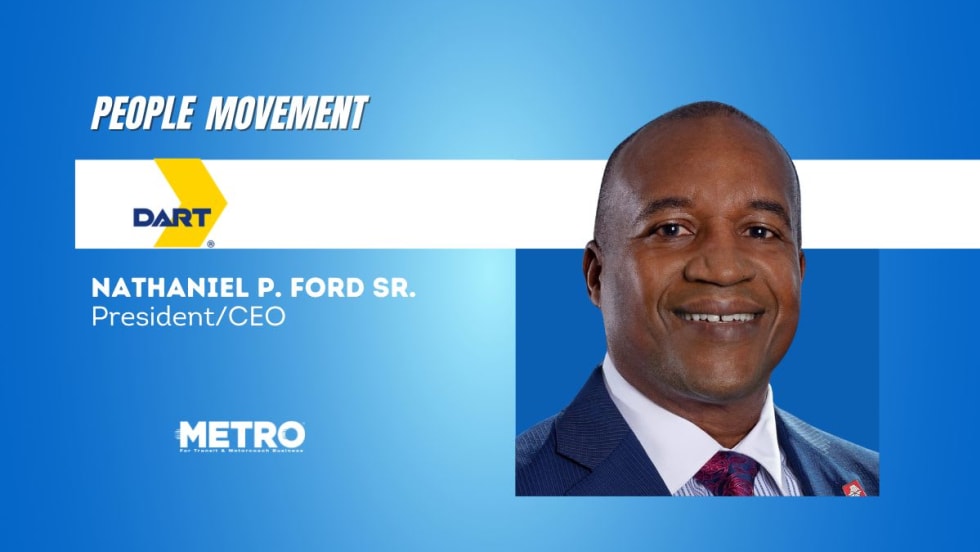
DART Taps Nathaniel P. Ford Sr. as Next President/CEO
Since 2012, Ford has served as the CEO of the Jacksonville Transportation Authority
Read More →