



Proterra Unveils Customizable Battery Pack for Range of Heavy-Duty Commercial Vehicles
The new, narrower H Series battery packs were designed to package into standard truck frame rails and increase packaging flexibility for Proterra-Powered customers.

Proterra unveiled its newest series of battery packs, the H Series, which offers a customizable energy storage system to power a wide range of heavy-duty commercial vehicles.
The new, narrower H Series battery packs were designed to package into standard truck frame rails and increase packaging flexibility for Proterra-Powered customers.
In addition to the new H Series, Proterra will continue to offer its S Series battery packs, which powers Proterra’s fleet of battery-electric transit buses and other Proterra Powered vehicles.
Proterra’s modular H Series and S Series battery packs are highly customizable, enabling a vehicle's energy storage system to be comprised of multiple packs. Proterra manufactured the more compact H Series battery packs with a width of 620 mm and the ability to hold 25to 75 kWh of energy storage capacity. S Series battery packs have a width of 860 mm and can contain up to 113 kWh of energy storage per pack.
Proterra’s flexible battery platform leverages industry-leading energy density manufactured for maximum range, a customizable design to fit within a variety of vehicles, and a ruggedized commercial grade housing to withstand harsh environments.
“Proterra’s safe, reliable battery technology has been proven in hundreds of vehicles that are on the road today. That’s why world-class manufacturers are choosing Proterra to power their school buses, coach buses, delivery vans, and other electric vehicles. Now, we are excited to extend our best-in-class battery platform to help power even more commercial vehicles and accelerate the transition to clean, quiet transportation for all,” said Proterra CEO and Chairman Jack Allen.
The H and S Series battery packs each leverages their own uniquely sized module. Both modules can be produced at four different voltage ratings, offering OEMs the flexibility to vary voltage and energy requirements to meet their individual needs. Utilizing top-tier NCM 811 lithium-ion cylindrical cells, Proterra’s battery platform is scalable in all dimensions and can support different vehicle voltages up to 1200 VDC and 6 MWh in size.
Proterra batteries feature patented passive and active safety features, liquid thermal conditioning, and adhere to state-of-the-art functional safety standards, including ISO 26262 (up to ASIL C). Passive Propagation Resistance, or PPR, is a foundational requirement of all Proterra battery packs. In the rare event of a latent cell failure, a localized thermal event is completely isolated and will not spread to neighboring battery cells. All Proterra battery products undergo rigorous testing to ensure they can withstand a full-service life under the toughest conditions, including extreme heat, cold, water submersion, vibration, and impact.
More Zero Emissions

Caltrain’s Electrification Drives a New Era of Ridership Growth
The railroad’s shift to electric service has brought more frequent trains, stronger customer satisfaction, and increased ridership, earning it APTA’s Outstanding Public Transportation System award.
Read More →
Building a Flexible Path to Transit Electrification with BAE's John Hroncich
John Hroncich discusses BAE Systems’ modular and scalable approach, lessons learned from decades of real-world operations, and how agencies can identify electrification strategies that fit their fleets.
Read More →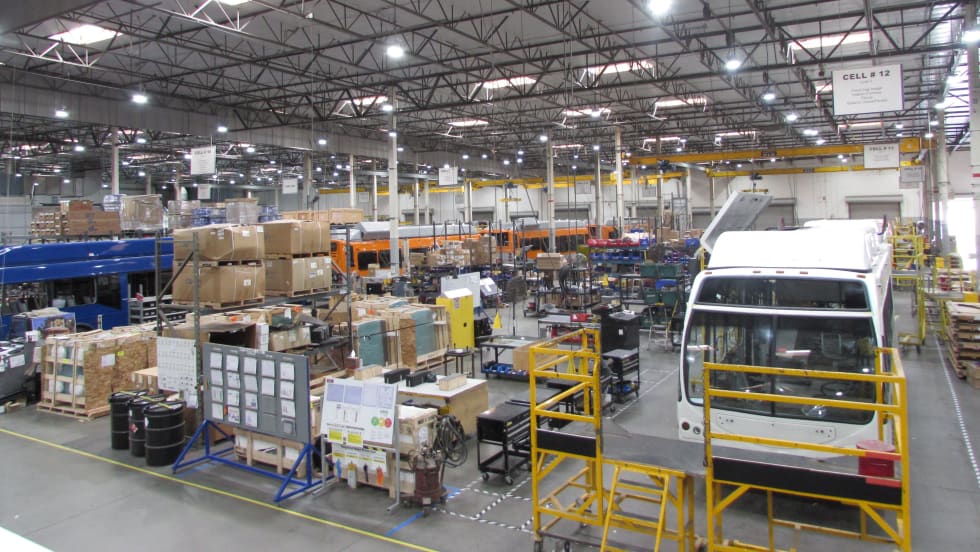
LA Metro Board Awards 220 Battery-Electric Bus Contract to ENC
The contract, which is the largest base award of battery-electric buses by a U.S. transit agency, will be built in Southern California, sustaining good jobs as LA prepares to welcome the world in 2028
Read More →
Public Transit Conference Returning to GFX in 2027, Call for Papers Now Open
The Call for Papers is now open, allowing transit agency professionals and industry experts to help shape the PTC educational program by submitting session ideas for consideration.
Read More →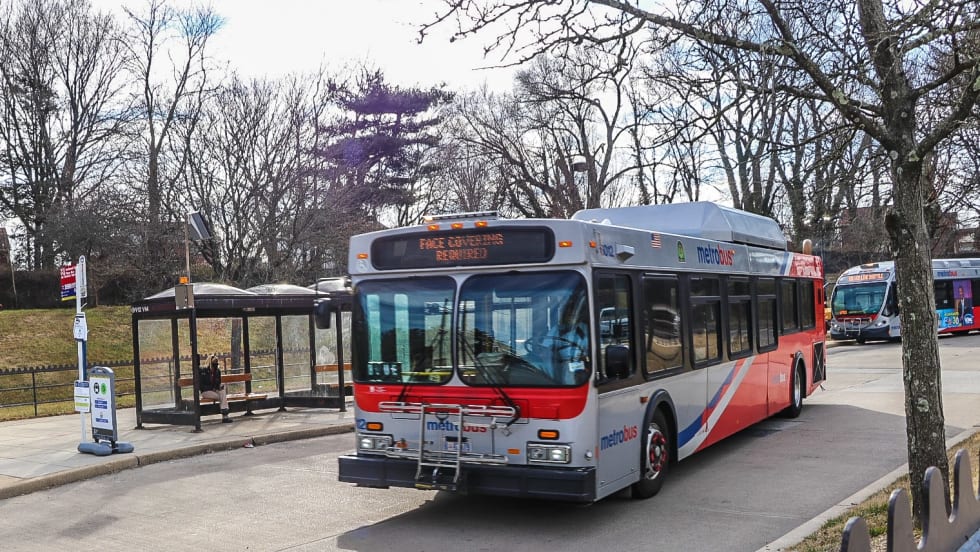
Report: Transit Bus Manufacturing Supports 34,100 Jobs, $5.1B in GDP
The “Buses Mean Business” report examines the transit bus manufacturing industry’s economic footprint, supply chain, and rising demand for vehicle replacements.
Read More →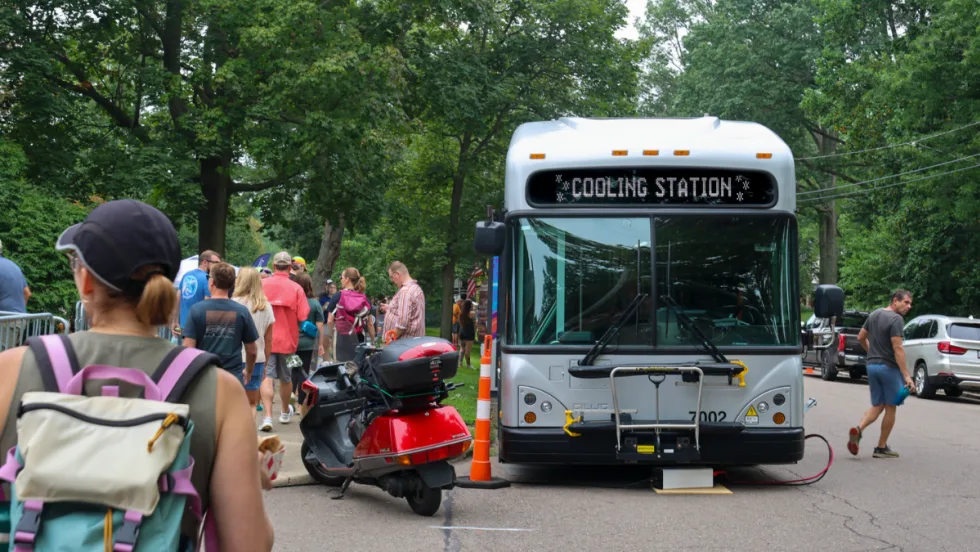
Ohio’s METRO RTA Turns Electric Buses into Mobile Power Sources at PorchROKR
See how three Gillig battery-electric buses powered festival stages while the agency’s new Park & Ride service carried approximately 1,000 attendees, demonstrating another potential use for transit agencies’ electric fleets.
Read More →
CALSTART and Forth Combine to Form Catalyst Mobility
The new name represents a renewed vision for the nonprofit focused on advancing clean, equitable, and affordable transportation solutions that move people and goods.
Read More →
Building a Flexible Path to Transit Electrification
John Hroncich discusses BAE Systems’ modular and scalable approach, lessons learned from decades of real-world operations, and how agencies can identify electrification strategies that fit their fleets.
Read More →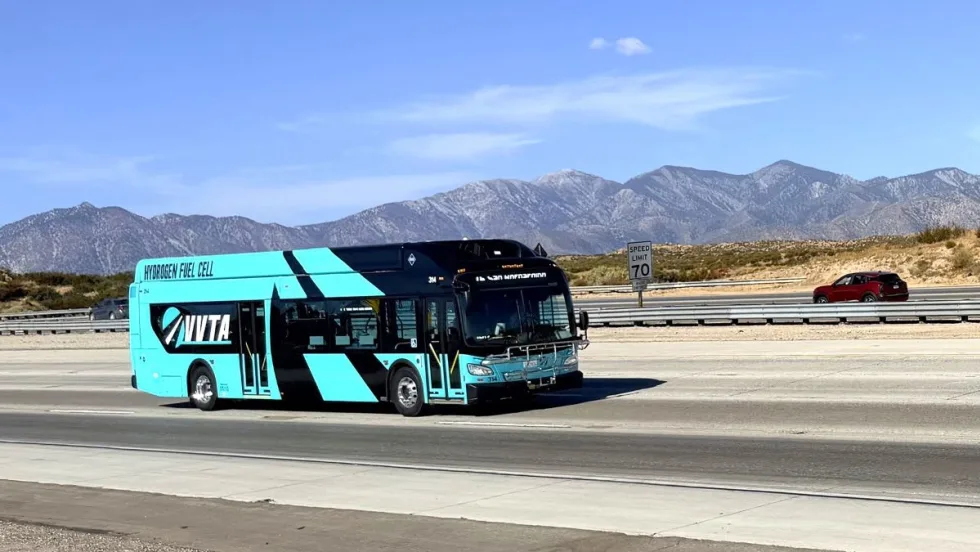
California's VVTA Begins Phased Rollout of Hydrogen Fuel Cell Buses
The agency is introducing 13 zero-emission buses into revenue service while evaluating performance across its urban, rural, and long-distance routes.
Read More →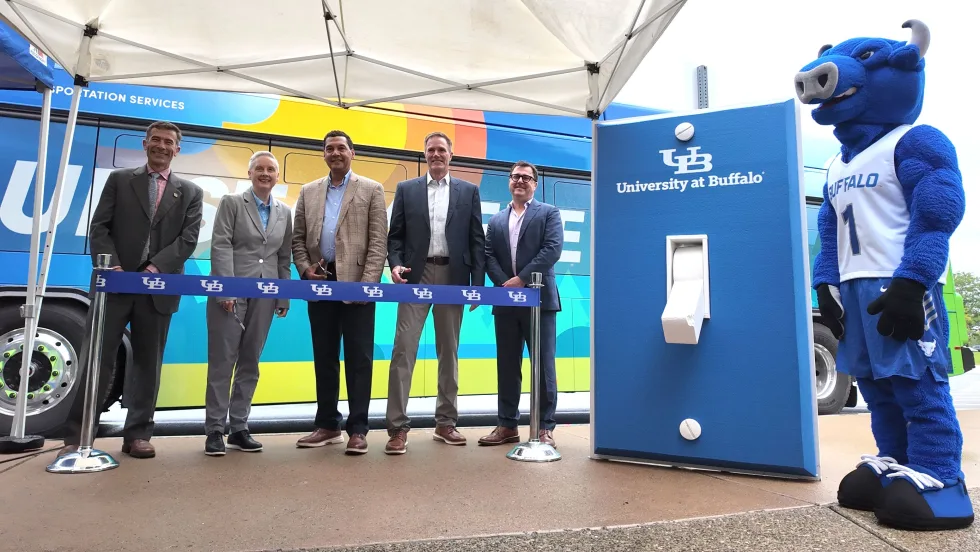
Inside Look: University at Buffalo Puts First 8 Electric Buses Into Stampede Service
UB, transportation solutions provider WeDriveU, and fleet electrification specialist Zenobē marked the deployment in the presence of students, university administrators, and local officials.
Read More →