



Public Transport in Good Funding Place, But Issues Loom
Congress is set to approve a record $6.3 billion for public transport assistance in Fiscal Year 2001, but the industry is not resting on its laurels.

Congress is set to approve a record $6.3 billion for public transport assistance in Fiscal Year 2001, but the industry is not resting on its laurels. Instead, it is fighting to preserve a key revenue source as well as trying to improve the tax-free pass benefit for commuters taking buses and trains to work. At the annual American Public Transit Association’s Legislative Conference held in Washington, D.C. this week, the industry applauded both President Clinton and Congress for unveiling draft budgets that would fund public transport programs at the levels guaranteed by the Transportation Equity Act for the 21st century (TEA 21). However, the industry would rather see the $50 million Clinton proposed beyond the TEA 21 guarantee to be funded out of general revenue by raising the spending caps on domestic programs. Clinton instead proposes to fund the $50 million out of faster than forecasted gas tax revenues, generated because of the hot economy. However, TEA 21 mandates that any additional gas taxes, called revenue-aligned budget authority (RABA), is to be put into the highway program. By designating some of the RABA funds to transit instead of highways, TEA 21 would be re-opened and the coalition that backed it could be jeopardized, say APTA leaders. Not that the industry thinks it doesn’t have a case for additional funds. In fact, transit officials want to see the spending caps raised so that next year's appropriation would be $7.3 billion, the full authorization level in TEA 21. Most Capitol Hill analysts do not give this prospect much chance, since there is no consensus between Congress and the administration for doing so for transportation programs. One way in which spending could wind up higher than the $6 billion-plus Congress and the president agree on is via the House-Senate appropriations conference committee this fall. Historically, appropriators have spent more than either chamber enacted because conferees want to see their pet projects funded. Currently, APTA estimates that more than 70 cities are either building or planning rail projects; the FTA envisions funding only 12 this year. Moreover, the association projects that bus capital needs exceed available federal funds by a factor of four. Meanwhile, the industry faces other legislative and regulatory challenges. Some in Congress want to bow to highway user groups and temporarily roll back 4.3 cents of the federal gas tax to help ease the pain of recent gas and diesel price hikes. Because transportation and energy officials in both political parties have counseled against the move because it would jeopardize infrastructure projects throughout the country, the proposal is not given much chance of passage. Another tax measure detrimental to transit is, however. A bill in each legislative chamber proposes to eliminate vouchers or other proof of payment in the tax break employers get for giving their workers help with transit fares. They propose to allow companies to give their employees cash instead. APTA is against the idea, on the grounds that there is less of a guarantee that a cash-based system would actually go to transit fares.
More Management
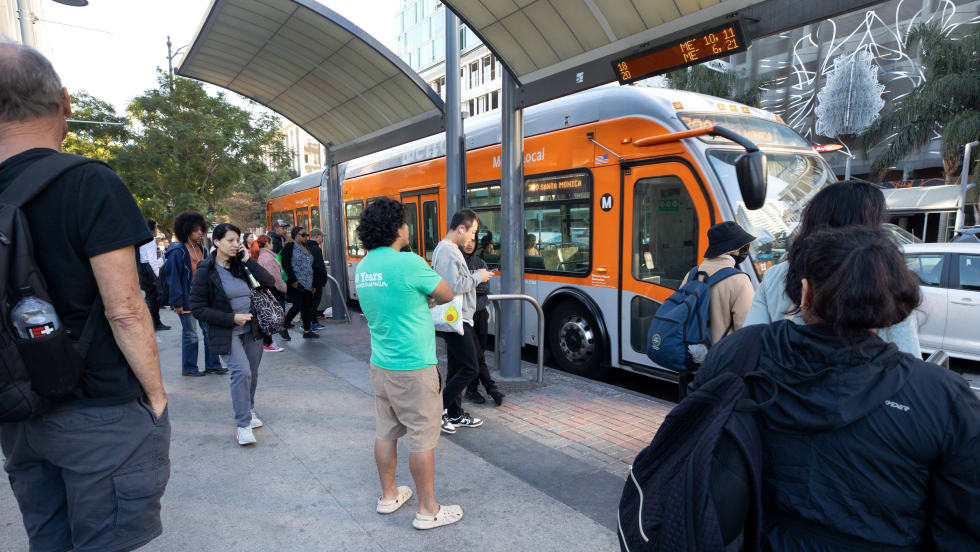
LA Metro Ridership Continues Growth as Rail Gains Accelerate
New rail connections and major events help drive continued ridership gains, with Metro recording its eighth consecutive month of year-over-year rail growth.
Read More →
TransDASH Summit Focuses on Measuring What Matters in Transit
Transit agencies unveil a national performance platform designed to benchmark customer experience, safety, community value, and other outcomes.
Read More →
Jacksonville’s NAVI Project Charts a New Course for Autonomous Public Transportation
Through its NAVI program, JTA is showing how autonomous vehicles, intelligent infrastructure, and coordinated operations can work together to deliver everyday public transportation.
Read More →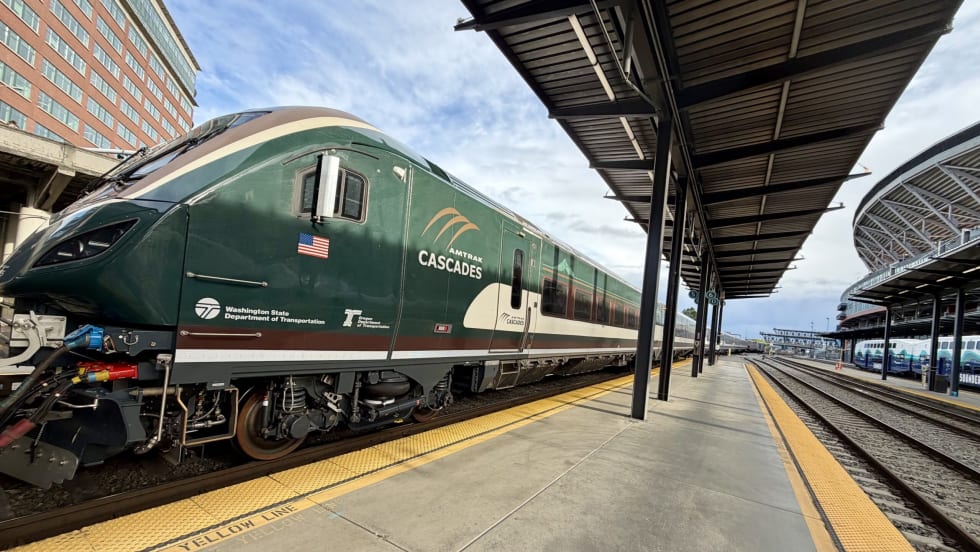
FRA Announces $5.3B in Rail Investments, Including $2B for Amtrak
Funding will support grade-crossing improvements, infrastructure upgrades, and new Amtrak equipment in 23 states.
Read More →
Finding the ‘Happy Medium’: Optimizing Maintenance Without Sacrificing Reliability
The key to maintenance optimization isn’t doing less work—it’s doing the right work at the right time on the right assets.
Read More →
People Movement: MARTA Drops Interim Tag on GM/CEO Hunt and More
In this edition, METRO covers recent appointments and announcements at the FMCSA, HDR, SilverRide, and more, showcasing the individuals helping to shape the future of transportation.
Read More →
VIA Metropolitan Transit Reports 2 Million More Passenger Trips as Better Bus Plan Gains Momentum
San Antonio's transit agency said accelerated service improvements are driving ridership growth, offering another example of how increased frequency and workforce investments can translate into stronger transit performance.
Read More →
ABAF Study Reveals Growing Insurance Crisis for Motorcoach Operators
Preliminary findings show 98% of operators faced premium increases over the past five years, while shrinking insurer participation is putting added pressure on businesses and customers.
Read More →
PSTA Modernizes Workforce Management with Digital Bidding System
The award-winning Workforce Transit Modernization project replaced paper bidding with a transparent digital platform, cutting administrative effort while improving access for operators.
Read More →
Chicago to Host Public Transportation's Biggest Gathering at APTA TRANSform & EXPO 2026
North America’s largest public transportation gathering returns to Chicago, connecting transit decision-makers with the technologies, ideas, and partnerships driving the industry forward.
Read More →