



Report: Competition Key to Revitalizing U.S. Passenger Rail
The report was written by Chapman and Ray Chambers, head of the Association for Innovative Passenger Rail Operations and a Senior Fellow at the Discovery Institute.

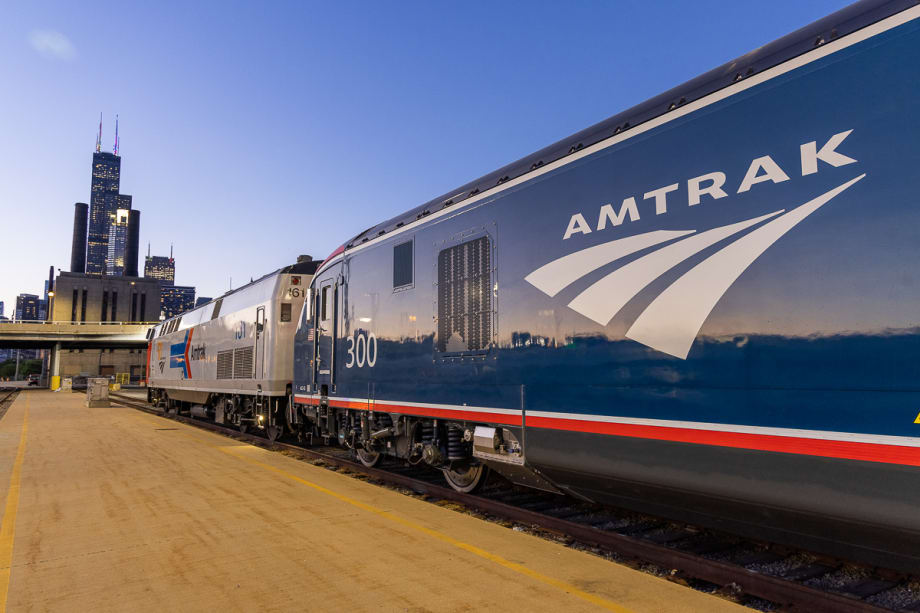
The authors of the Discovery Institute report propose eight reform goals, including a competitive access model, the separation of infrastructure and operations in the Northeast Corridor, a sustainable federal rail capital fund, and the creation of a national high-speed rail plan.
Photo: Amtrak
A new report from the Discovery Institute outlines a bold vision for restoring American passenger rail through competition, private sector innovation, and targeted infrastructure investment.
The report was written by Chapman and Ray Chambers, head of the Association for Innovative Passenger Rail Operations and a Senior Fellow at the Discovery Institute.
Report Findings
Titled "Competition Will Put Passenger Rail on the Right Track," the report argues that the time is ripe for meaningful reform.
With Congressional reauthorization of transportation policy on the horizon and growing interest from private operators like Brightline and Texas Central, the authors propose a Passenger Rail Authority to restructure the national system and open the door for public-private partnerships.
The authors propose eight reform goals, including a competitive access model, the separation of infrastructure and operations in the Northeast Corridor, a sustainable federal rail capital fund, and the creation of a national high-speed rail plan. They also call for state-level management of short-distance routes and safeguards for labor rights during the transition.
"The future of passenger rail is not about dismantling Amtrak — it's about modernizing it and allowing private innovation to thrive alongside it," said Chambers.
The report highlights successful private rail models such as Brightline in Florida and recommends leveraging infrastructure grants to stimulate further private investment and improve service quality nationwide.
About the Discovery Institute
Discovery Institute is a non-profit educational and research organization whose mission is to advance a culture of purpose, creativity, and innovation. It sponsors programs in areas such as economics, education, science and technology, bioethics, and artificial intelligence.
Bruce Chapman is the founder and board chair of the Discovery Institute and a former member of the Amtrak Reform Council. Ray Chambers is a longtime rail advocate and a Senior Fellow at the Discovery Institute, and leads the Association for Innovative Passenger Rail Operations.
More Rail

New York MTA Advances Final Contract for Second Avenue Subway Expansion
Contract Four is the largest in the Second Avenue Subway Phase 2 project and includes construction of station infrastructure, tracks, and signals for the subway expansion, MTA officials said. Work on Contract Four will begin in 2027.
Read More →
San Diego MTS Breaks Monthly Trolley Ridership Record
Agency officials said July’s ridership indicates MTS’s continued recovery from the pandemic.
Read More →
Report Examines NJ TRANSIT Reliability, Funding Challenges
The Garden State Initiative analysis examines the roles of Amtrak infrastructure, fleet management, and agency operations while recommending a more performance-based approach to improving reliability.
Read More →
Stadler, CapMetro Sign Long-Term Rail Fleet Support Agreement
Beginning in 2027, Stadler will provide on-site technical expertise, spare parts support, training, and obsolescence management to help extend the reliability and longevity of CapMetro’s GTW fleet.
Read More →
Biz Briefs: Alstom Lands Canadian Contract, LYT to Supply California TSP, and More
In METRO's latest installment, we take a look at recent news from Complete Coach Works, Beep, FlixBus, and more partnerships making headlines across the transportation sector.
Read More →
CATS Gold Line Marks 5 Years of Service, 2.8M Passenger Trips
With a six-mile expansion planned, the Charlotte streetcar is positioned to connect more neighborhoods and major transit hubs across the region.
Read More →
Why Simulating Pedestrian Movement Has Become Essential for Modern Rail Stations
Pedestrian microsimulation is helping rail planners identify bottlenecks, test station designs, and prepare complex transit hubs for growing passenger volumes.
Read More →
Amtrak Begins Major Construction at New York’s Sunnyside Yard
The new maintenance facility will support Amtrak’s Airo trainsets while improving maintenance efficiency and turnaround times in New York.
Read More →
Chicago Leaders Unveil Plans for O’Hare Airport Express Train
The privately developed project would offer a 15-minute trip between downtown and O’Hare’s Terminal 2, with trains operating every 15 minutes on a dedicated track. The service would use battery-electric trains and three existing freight rail rights-of-way.
Read More →
OCTA Maps Out 30-Year Strategy to Protect Coastal Rail Corridor
The draft feasibility report identifies strategies to protect the coastal rail line for decades as the agency continues near-term stabilization and sand placement efforts.
Read More →