



SamTrans Completes Transit Signal Prioritization Pilot Project
The pilot, which was conducted on SamTrans Route 281 along University Avenue, reduced northbound intersection delays by 45%.

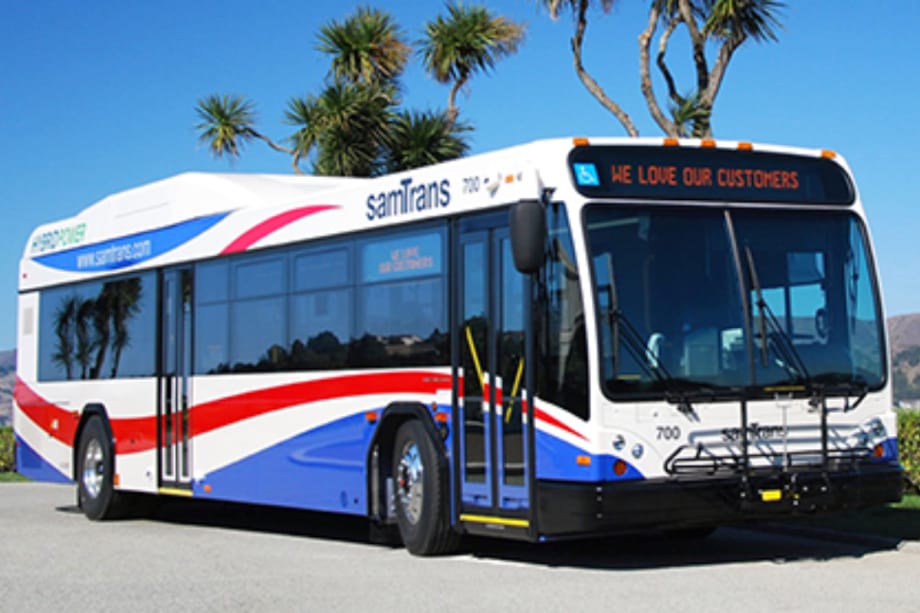
iTSP predicts the arrival time of buses using advanced machine-learning algorithms based on historical travel time and real-time traffic conditions.
Photo: SamTrans
SamTrans has successfully completed a pilot project for a cloud-based transit signal priority system (iTSP) in East Palo Alto, California, that allowed bus riders to move through the high traffic corridor more efficiently.
iTSP allows traffic lights to hold for a few additional seconds when a bus is coming, allowing it to pass through and stay on schedule, while also ensuring its passengers are not overly impacted by traffic. Traditional transit signal prioritization systems use sensors and transponders to determine when a prioritized vehicle is approaching an intersection, holding the light so it can pass through uninterrupted as the existing TSP system on El Camino Real does already.
By contrast, iTSP predicts the arrival time of buses using advanced machine-learning algorithms based on historical travel time and real-time traffic conditions, and communicates with signals using existing network infrastructure, requiring less hardware installation and lower costs.
The pilot, which was conducted on SamTrans Route 281 along University Avenue, reduced northbound intersection delays by 45%, while southbound intersection delays dropped 19%. This amounted to an 18% reduction in travel time for northbound buses and a 7% reduction for southbound buses. These are substantial improvements which would help to improve on-time performance and make buses more competitive with single occupancy vehicles for local transportation needs.
With over $178,000 of funding from the City/County Association of Governments of San Mateo County (C/CAG), SamTrans partnered with Sustainable Silicon Valley (SSV), and the city of East Palo Alto on this four-month pilot program, which ran from November 2021 through February 2022.
“We want to keep transit on the cutting edge of the latest technology,” said Pete Ratto, SamTrans Board chair. “iTSP has shown itself to be a great tool in accomplishing that goal.”
More Bus

Public Transit Conference Returning to GFX in 2027, Call for Papers Now Open
The Call for Papers is now open, allowing transit agency professionals and industry experts to help shape the PTC educational program by submitting session ideas for consideration.
Read More →
Indian River Transit’s Community-Focused Approach Earns National Recognition
Named APTA’s 2026 Outstanding Public Transportation System in its size category, Florida’s Indian River County transit system continues to grow ridership through fare-free service and a focus on evolving community needs.
Read More →
ENC Lands MATA Contract and More in Biz Briefs
In this edition of Biz Briefs, we spotlight the latest developments shaping the future of mobility.
Read More →
From Surviving to Thriving: Building Stronger Transportation Organizations
Bus Business Consultants founder Brian Dickson shares lessons on leadership, organizational health, and creating options for long-term success in a changing transportation industry.
Read More →
Everett Transit, Community Transit Outline Consolidation Agreement
The proposed agreement calls for a 50% increase in bus service in Everett, a new microtransit zone, continued paratransit service, and the transfer of Everett Transit operations to Community Transit.
Read More →
SEPTA Details Accelerate Vision for Transit System
The plan outlines investments in trolley modernization, new Metro and Regional Rail vehicles, accessible stations, and more frequent bus and rail service.
Read More →
Report: Transit Bus Manufacturing Supports 34,100 Jobs, $5.1B in GDP
The “Buses Mean Business” report examines the transit bus manufacturing industry’s economic footprint, supply chain, and rising demand for vehicle replacements.
Read More →
Biz Briefs: New Flyer Delivers in Columbus, Houston, Beep and Freebee Merge, and More
In this edition of Biz Briefs, we spotlight the latest developments shaping the future of mobility.
Read More →
People Movement: Dan Dipert Coaches Adds Third-Generation Leader, Keolis Names New Valley Metro VP/GM, and More
In this edition, we also cover recent appointments and announcements at the Wabtec, SilverRide, HNTB, and more, showcasing the individuals helping to shape the future of transportation.
Read More →
New York MTA Plans Largest Bus Fleet Upgrade in More Than a Decade
The agency is seeking manufacturers for 650 new CNG buses to replace aging vehicles, improve reliability, and advance its broader fleet modernization strategy.
Read More →