



Seattle's King County Lands $79.7M Federal Grant for BRT Line
The grant for the new RapidRide I Line, which will feature rebranded “green” hybrid electric buses, was funded by the Bipartisan Infrastructure Law.

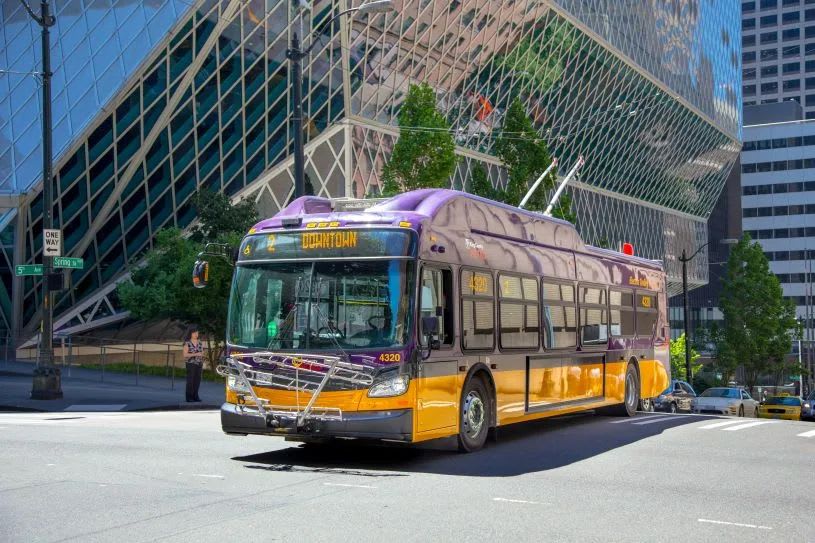
An estimated 50,000 jobs would be served by the King County Metro BRT project, including job centers in downtown Renton, Kent, and Auburn; two major medical centers; and the Auburn Municipal Airport.
Photo: King County Metro
The Federal Transit Administration (FTA) announced a $79.7 million construction grant award to Seattle’s King County Metro to support a bus rapid transit (BRT) line that will provide fast, frequent, and reliable service between the cities of Renton, Auburn, and Kent, located south of Seattle.
The grant for the new RapidRide I Line, which will feature rebranded “green” hybrid electric buses, was funded by the Bipartisan Infrastructure Law.
King County Metro’s New BRT Line
King County’s RapidRide I Line will improve travel times and the rider experience over a heavily traveled King County Metro bus line by providing nearly two miles of exclusive bus-only lanes and transit signal priority to speed riders on their way.
The BRT will also include off-board fare payment, all-door boarding, and weekday service every 10 to 15 minutes during the day.
The 17-mile route will have 41 new stations that include shelters, lighting, and real-time arrival information.
The RapidRide I Line will also improve rider connections in the regional system, including the RapidRide F Line, Sound Transit buses, and Sounder commuter rail.
The I Line will be the 10th to open as part of the RapidRide network, adding to a robust regional BRT system with current daily ridership of about 63,000 trips.
“King County has grown by nearly 20 percent since 2010, increasing the need for high-capacity transit. The RapidRide I Line will provide a cleaner, faster ride for thousands of riders in Southern King County, including in areas of the county with some of the highest proportions of low-income and minority residents,” said FTA Deputy Administrator Veronica Vanterpool. “We are pleased to continue our partnership with King County Metro to improve transit connections across the region, as communities across the country, such as King County, continue to benefit from America’s largest-ever investment in high-quality public transportation."
Benefits of the New Line
An estimated 50,000 jobs would be served by the project, including job centers in downtown Renton, Kent, and Auburn; two major medical centers; and the Auburn Municipal Airport.
Each city also plans transit-oriented development around key stations to facilitate growth and opportunity.
The federal support for the estimated $168.5 million project comes from FTA’s Capital Investment Grants (CIG) program, which helps communities carry out transformational transit projects.
More Bus

People Movement: Dan Dipert Coaches Adds Third-Generation Leader, Keolis Names New Valley Metro VP/GM, and More
In this edition, we also cover recent appointments and announcements at the Wabtec, SilverRide, HNTB, and more, showcasing the individuals helping to shape the future of transportation.
Read More →
New York MTA Plans Largest Bus Fleet Upgrade in More Than a Decade
The agency is seeking manufacturers for 650 new CNG buses to replace aging vehicles, improve reliability, and advance its broader fleet modernization strategy.
Read More →
Building a Flexible Path to Transit Electrification
John Hroncich discusses BAE Systems’ modular and scalable approach, lessons learned from decades of real-world operations, and how agencies can identify electrification strategies that fit their fleets.
Read More →
Bus Tech Talk: Keeping Transit Technicians Ahead of the Technology Curve
LA Metro’s Obed Mejia discusses technician training, evolving maintenance technology, fleet replacement, and strategies for getting the most out of today’s transit fleets.
Read More →
Biz Briefs: RIPTA Unveils New Frontrunners, Clevland RTA Adds New Siemens, and More
In METRO's latest installment, we take a look at recent news from Siemens, Prevost, Dodge, and more partnerships making headlines across the transportation sector.
Read More →
People Movement: Holly Arnold Joins Transdev and More
In this edition, we also cover recent appointments and announcements at Pace, CamTran, MCI, and more, showcasing the individuals helping to shape the future of transportation.
Read More →
The High Cost of Transit Buses: Industry Leaders Look to Procurement Reform
Transit leaders and policymakers examine how standardized bus designs, streamlined procurement, and predictable funding could help agencies stretch budgets and deliver better service.
Read More →
The Business Voice Behind Public Transportation
As chair of APTA’s Business Members Board of Governors, Ray Melleady explains how more than 850 business members are partnering with transit agencies to advance funding, innovation, and industry-wide collaboration.
Read More →
From Surviving to Thriving: Building Stronger Transportation Organizations
Bus Business Consultants founder Brian Dickson shares lessons on leadership, organizational health, and creating options for long-term success in a changing transportation industry.
Read More →
Finding the ‘Happy Medium’: Optimizing Maintenance Without Sacrificing Reliability
The key to maintenance optimization isn’t doing less work—it’s doing the right work at the right time on the right assets.
Read More →