



Siemens Launch New Siemens S700 Low-Floor Vehicles
The celebration marks a significant milestone in modernizing Sacramento’s transit system, enhancing accessibility, and improving the rider experience.

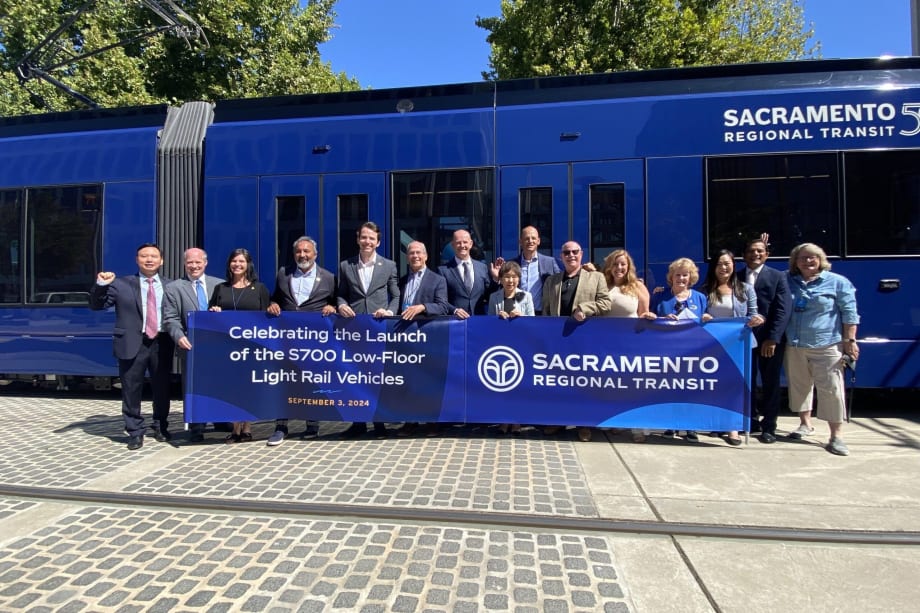
The new light rail vehicles, manufactured by Siemens Mobility, feature a low-floor design that allows easier boarding for seniors, persons with disabilities, and those with strollers or bicycles.
Photo: SacRT
California’s Sacramento Regional Transit District (SacRT) celebrated the launch of its new fleet of S700 low-floor light rail vehicles at a community celebration and press conference.
The celebration marks a significant milestone in modernizing Sacramento’s transit system, enhancing accessibility, and improving the rider experience.
SacRT’s New Siemens Railcars
The new light rail vehicles, manufactured by Siemens Mobility, feature a low-floor design that allows easier boarding for seniors, persons with disabilities, and those with strollers or bicycles.
The first of the new S700 trains began service on the Gold Line on Sept. 1, and on the Green Line Sept. 3.
Speaking at the event, many federal, state, and local elected officials highlighted the importance of this investment for Sacramento’s future.
“This is a historic moment for SacRT and the Sacramento region,” said SacRT GM/CEO Henry Li. “The launch of our new S700 light rail vehicles reflects our dedication to delivering safe, reliable, and accessible transit options. I want to thank all our partners, elected officials, and the entire SacRT team for their commitment to making this day a reality.”
Siemens’ Role
Siemens Mobility also played a key role in the project, providing advanced technology and design for the new light rail vehicles.
“Congratulations to the entire SacRT team for their relentless efforts in making this service launch a reality,” said Michael Cahill, president, rolling stock, Siemens Mobility North America. “Built by Siemens Mobility and our team of more than 2,400 in Sacramento, these trains and the connection they bring are a gateway to a future where transportation is seamlessly connected, and where our city can thrive.”
Key Features of the S700 Light Rail Vehicles:
One train car can fit up to 187 people sitting and standing.
At-platform boarding and easy access for all riders.
Allows for riders in mobility devices to board using deployable ramps at the two center doors.
Temperature control for a comfortable ride.
Digital signs inside the trains show the next station and update when approaching stations.
Audio announcements announce approaching stations.
SacRT’s Fleet Mix
For the first couple of weeks, SacRT will operate a mixed fleet of new low-floor and legacy high-floor trains on the Gold and Green lines as we complete the final testing phase of the new trains.
On the Blue Line SacRT will continue to operate the current high-floor trains, which still require riders in mobility devices and those unable to climb stairs to use the mini-high ramps at the end of the station platforms.
SacRT will begin construction on Blue Line platforms to meet the height requirements of the new low-floor trains in late September 2024. with.
Siemens Mobility Inc. will begin production on an additional eight low-floor trains later this year, which are expected to be delivered to SacRT in late 2025.
To date, SacRT has received funding for a total of 45 new low-floor trains, with a contract to order up to 76 new vehicles.
More Rail

New York MTA Advances Final Contract for Second Avenue Subway Expansion
Contract Four is the largest in the Second Avenue Subway Phase 2 project and includes construction of station infrastructure, tracks, and signals for the subway expansion, MTA officials said. Work on Contract Four will begin in 2027.
Read More →
San Diego MTS Breaks Monthly Trolley Ridership Record
Agency officials said July’s ridership indicates MTS’s continued recovery from the pandemic.
Read More →
Report Examines NJ TRANSIT Reliability, Funding Challenges
The Garden State Initiative analysis examines the roles of Amtrak infrastructure, fleet management, and agency operations while recommending a more performance-based approach to improving reliability.
Read More →
Stadler, CapMetro Sign Long-Term Rail Fleet Support Agreement
Beginning in 2027, Stadler will provide on-site technical expertise, spare parts support, training, and obsolescence management to help extend the reliability and longevity of CapMetro’s GTW fleet.
Read More →
Biz Briefs: Alstom Lands Canadian Contract, LYT to Supply California TSP, and More
In METRO's latest installment, we take a look at recent news from Complete Coach Works, Beep, FlixBus, and more partnerships making headlines across the transportation sector.
Read More →
CATS Gold Line Marks 5 Years of Service, 2.8M Passenger Trips
With a six-mile expansion planned, the Charlotte streetcar is positioned to connect more neighborhoods and major transit hubs across the region.
Read More →
Why Simulating Pedestrian Movement Has Become Essential for Modern Rail Stations
Pedestrian microsimulation is helping rail planners identify bottlenecks, test station designs, and prepare complex transit hubs for growing passenger volumes.
Read More →
Amtrak Begins Major Construction at New York’s Sunnyside Yard
The new maintenance facility will support Amtrak’s Airo trainsets while improving maintenance efficiency and turnaround times in New York.
Read More →
Chicago Leaders Unveil Plans for O’Hare Airport Express Train
The privately developed project would offer a 15-minute trip between downtown and O’Hare’s Terminal 2, with trains operating every 15 minutes on a dedicated track. The service would use battery-electric trains and three existing freight rail rights-of-way.
Read More →
OCTA Maps Out 30-Year Strategy to Protect Coastal Rail Corridor
The draft feasibility report identifies strategies to protect the coastal rail line for decades as the agency continues near-term stabilization and sand placement efforts.
Read More →