




Mission Accomplished: Siemens Mobility Celebrates Paris Metro Line 4 Automation
Siemens Mobility to Invest into North Carolina Facility
The facility will create more than 500 new jobs.
March 8, 2023
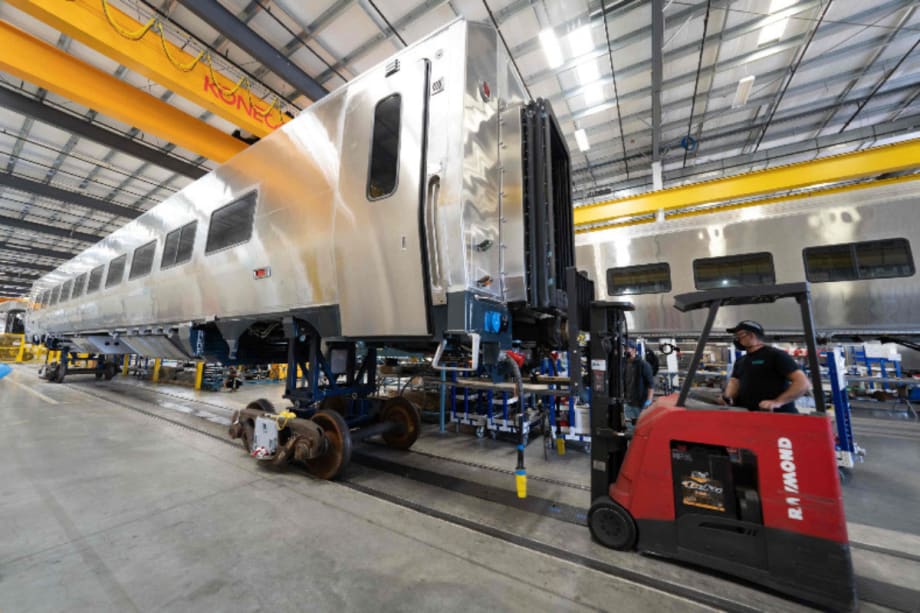
The passenger coach manufacturing factory will be on a 200-acre site allowing for future facility expansion.
Photo: Siemens Mobility
2 min to read
Siemens Mobility announced it will expand its manufacturing footprint by building a $220 million advanced manufacturing and rail services facility in Lexington, N.C.
The facility will create more than 500 new jobs, according to Siemens Mobility's news release.
“America’s investing in rail – and we are investing in America,” said Dr. Roland Busch, CEO of Siemens AG. “Siemens has invested $3 billion in manufacturing expansions and M&A activities in the U.S. over the past four years alone, including nearly $400 million to grow its U.S. manufacturing footprint and over two and half billion dollars in strategic U.S. acquisitions. This latest facility will build rail technology to help transform the everyday for millions of passengers around the country, particularly as the country sees a resurgence in public transit and intercity travel.”
The passenger coach manufacturing factory will be on a 200-acre site allowing for future facility expansion. When it starts operations in 2024, it will incorporate some of the latest technologies found in the Sacramento facility including robotic welding, 3D printing, and Virtual Reality welder training. In addition, when fully operational the facility will be carbon neutral.
"Leading global companies like Siemens Mobility continue to choose North Carolina to build the next generation in innovative clean transportation,” said Gov. Roy Cooper. “Thanks to our state’s skilled workforce, and the proven education and training systems that help people maintain and build those skills, North Carolina is the number one state for manufacturing.”
Lexington is in Davidson County and home to nearly 20,000 people. It is located in the Piedmont Triad. Siemens Mobility will be receiving a Job Development Investment Grant from the state of North Carolina. Over the 12-year term of this grant, the facility is estimated to grow the state’s economy by $1.6 billion.
Lexington’s sister site will be the 60-acre, solar-powered, rolling stock facility in Sacramento, which has been manufacturing vehicles for more than 30 years and has delivered more than 3,000 locomotives, passenger coaches, and light rail vehicles.
The Buy America-compliant vehicles are built by 2,500 employees in Sacramento, with the support of American suppliers across 40 states. More than 40 transit agencies across the U.S. and Canada benefit from Siemens Mobility’s portfolio of light rail vehicles, locomotives, passenger coaches, components, and automation systems, moving millions of passengers every year.
More Rail

New York MTA Advances Final Contract for Second Avenue Subway Expansion
Contract Four is the largest in the Second Avenue Subway Phase 2 project and includes construction of station infrastructure, tracks, and signals for the subway expansion, MTA officials said. Work on Contract Four will begin in 2027.
Read More →
San Diego MTS Breaks Monthly Trolley Ridership Record
Agency officials said July’s ridership indicates MTS’s continued recovery from the pandemic.
Read More →
Report Examines NJ TRANSIT Reliability, Funding Challenges
The Garden State Initiative analysis examines the roles of Amtrak infrastructure, fleet management, and agency operations while recommending a more performance-based approach to improving reliability.
Read More →
Stadler, CapMetro Sign Long-Term Rail Fleet Support Agreement
Beginning in 2027, Stadler will provide on-site technical expertise, spare parts support, training, and obsolescence management to help extend the reliability and longevity of CapMetro’s GTW fleet.
Read More →
Biz Briefs: Alstom Lands Canadian Contract, LYT to Supply California TSP, and More
In METRO's latest installment, we take a look at recent news from Complete Coach Works, Beep, FlixBus, and more partnerships making headlines across the transportation sector.
Read More →
CATS Gold Line Marks 5 Years of Service, 2.8M Passenger Trips
With a six-mile expansion planned, the Charlotte streetcar is positioned to connect more neighborhoods and major transit hubs across the region.
Read More →
Why Simulating Pedestrian Movement Has Become Essential for Modern Rail Stations
Pedestrian microsimulation is helping rail planners identify bottlenecks, test station designs, and prepare complex transit hubs for growing passenger volumes.
Read More →
Amtrak Begins Major Construction at New York’s Sunnyside Yard
The new maintenance facility will support Amtrak’s Airo trainsets while improving maintenance efficiency and turnaround times in New York.
Read More →
Chicago Leaders Unveil Plans for O’Hare Airport Express Train
The privately developed project would offer a 15-minute trip between downtown and O’Hare’s Terminal 2, with trains operating every 15 minutes on a dedicated track. The service would use battery-electric trains and three existing freight rail rights-of-way.
Read More →
OCTA Maps Out 30-Year Strategy to Protect Coastal Rail Corridor
The draft feasibility report identifies strategies to protect the coastal rail line for decades as the agency continues near-term stabilization and sand placement efforts.
Read More →