



Masabi Fare Collection in Kauaʻi, STV in D.C. Top Biz Briefs
Biz Briefs covers the latest supplier news in the motorcoach and public transit industries.

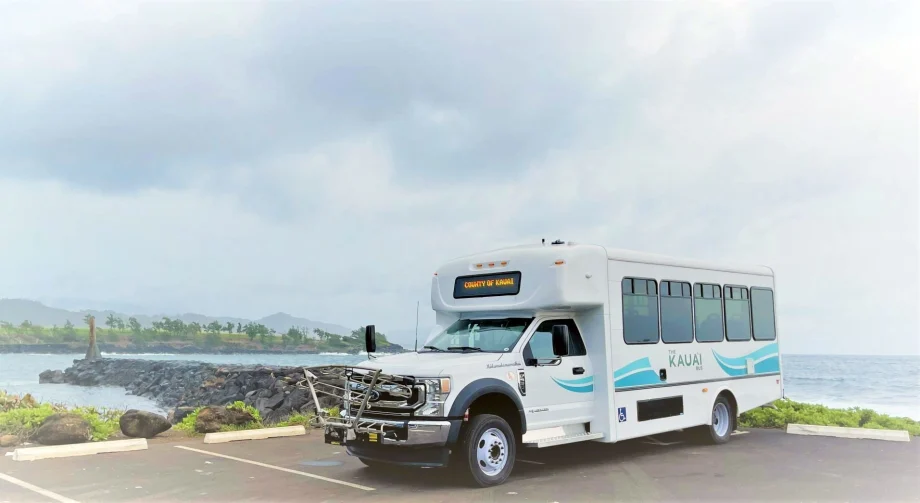
Open Payments also makes it significantly easier for Kauaʻi’s many visitors to use public transit.
Photo: Masabi/The Kauaʻi Bus
In METRO's latest installment, we take a look at the latest news from suppliers including STV, Masabi, and more.
Photo: METRO
Biz Briefs covers the latest supplier news in the motorcoach and public transit industries.
In METRO's latest installment, we take a look at the latest news from suppliers including STV, Masabi, and more.
STV to Design Amtrak’s Ivy City Yard in Washington, D.C.
Amtrak selected STV to provide comprehensive design services for upgrades at the Ivy City Yard in Washington, D.C. In the most significant overhaul of Amtrak’s repair shops in its 54-year history, these upgrades will improve service reliability, enable more efficient maintenance practices, and support projected ridership growth.
As part of a Clark-Herzog design-build team, STV will serve as the lead designer for the $480 million upgrade at Ivy City Yard, where Northeast Regional and Acela trains undergo routine servicing, inspections, and repairs. The yard also serves Maryland Area Rail Commuter and Virginia Railway Express commuter trains.
STV will provide design management, design quality management, structural, site/civil, geotechnical, electrical, communications, fire alarm, utilities, industrial engineering, and architectural design services. The firm will also provide design services during construction, offering ongoing support to resolve design challenges and streamline the processing of submittal reviews and requests for information.
The project’s scope of work includes demolishing and replacing portions of the outdated primary maintenance structure at Ivy City Yard, constructing a new dedicated train servicing structure, relocating tracks, and converting storage areas into service tracks. Structures built in the mid-1980s will be rebuilt with raised roofs to allow for more overhead space for machinery, the addition of a catenary system, and space to safely allow workers underneath, inside, and atop trains.
Fuel stations will also be added for Amtrak’s new dual-power (electric and diesel) Airo trains, which will reduce the amount of time needed to transition from electrified service in the Northeast Corridor to non-electrified territory south of Washington.
CCW to Supply, Install Wabtec vShield Driver Barriers for C-TRAN
Complete Coach Works (CCW) was awarded a contract by C-TRAN, the public transportation agency serving Clark County, Washington.
Under the agreement, CCW will supply and install driver barriers across a portion of the agency’s fixed-route fleet to enhance operator safety and security.
The project scope includes the purchase and installation of Vapor Driver Barriers customized for C-TRAN’s specific bus models. These barriers are designed to reduce operator exposure to public health risks and physical threats while maintaining clear visibility and accessibility.
Work will be performed at C-TRAN’s facility in Vancouver, Washington, where CCW teams will ensure each barrier meets C-TRAN’s specifications, transit industry safety standards, and installation deadlines.
The Kauaʻi Bus Launches Open Payments with Masabi
The Kauaʻi Bus and Masabi launched Open Payments across the island’s transit network. Riders can now pay for journeys by tapping their contactless credit or debit card, or mobile wallet, such as Apple Pay or Google Pay, on any bus operated by Kaua‘i Bus. This offers a simple, cash-free way to ride with the reassurance of automatic daily and monthly fare capping.
The launch follows the successful introduction of mobile ticketing in January 2025 and Account-Based Ticketing (ABT) with the Holomua smartcard in May 2025, making Kauaʻi Bus a leading example of how agencies can modernize fare collection using a phased approach. With the addition of Open Payments, launched in just five months, riders now have the flexibility to pay using their preferred method—mobile app, smart card, or contactless bank card—while still receiving the best possible fare.
Open Payments also makes it significantly easier for Kauaʻi’s many visitors to use public transit. Tourists can tap and go using the card in their wallet or the card stored on their phone. For regular riders, the launch will reduce reliance on cash, speed up boarding times, and lower system costs, helping Kauaʻi Bus deliver more efficient and reliable service, according to Masabi.
The launch also features Account Linking, enabling riders to link their payment card to a single transit account. This functionality allows reduced fares to be assigned to the payment card, while also granting the rider access to their trip history and other account-based benefits.
Smith System Acquires Utilimarc
Smith System announced the acquisition of Utilimarc, a Minneapolis-based company specializing in fleet analytics and benchmarking. Together, the companies create the industry's most comprehensive platform — unifying driver training with deep fleet analytics to deliver safer, more innovative, and more cost-efficient operations, according to company officials.
Founded in 2001, Utilimarc has developed a powerful business intelligence platform that integrates data across telematics, fleet management information systems (FMIS), maintenance software, and safety cameras. By combining these insights with Smith System's training and driver risk expertise, customers gain a single partner to improve driver behavior, optimize fleet assets, and validate measurable performance gains.
With both companies now operating as one, customers benefit from:
Enhancing the 5Keys with Deep Fleet Analytics: A closed-loop solution that connects driver behavior, operational data, and benchmarking — delivering improvements that are both measurable and sustainable.
One Source for Safer, Smarter Fleets: A unified view of drivers, vehicles, and operations that enables precise interventions, cost reductions, and stronger compliance outcomes.
A Broader Data and Safety Ecosystem: Building on Smith System's recent Brightmile acquisition, the combined company brings together mobile telematics, advanced analytics, and behavior-based training into one seamless platform — further strengthening the connection between data insights and driver safety.
Smith System’s officials stated that the combined company now stands alone in the market, as no other provider integrates analytics, benchmarking, telematics, and behavior-based training into a single solution.
More Technology
California Law Extends AC Transit’s Bus Lane Camera Enforcement
The new law allows AC Transit to continue using forward-facing bus cameras to enforce parking violations in bus-only lanes and at bus stops.
Read More →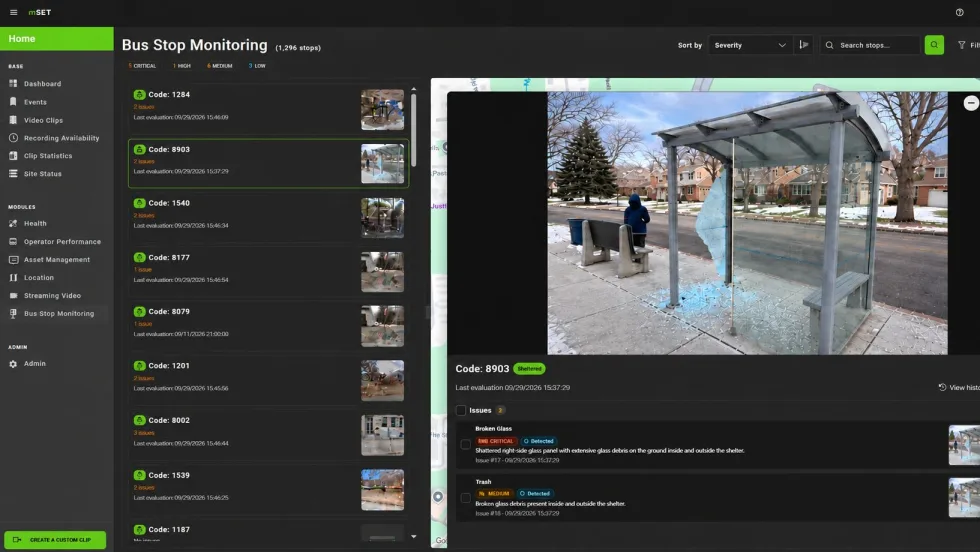
Biz Briefs: Luminator Launches AI Technology to Monitor Bus Stop Conditions and More
In METRO's latest installment, we also take a look at recent news from Masabi, Troman Industries, ioki, CCW, and more partnerships making headlines across the transportation sector.
Read More →
Public Transit Conference Returning to GFX in 2027, Call for Papers Now Open
The Call for Papers is now open, allowing transit agency professionals and industry experts to help shape the PTC educational program by submitting session ideas for consideration.
Read More →

ENC Lands MATA Contract and More in Biz Briefs
In this edition of Biz Briefs, we spotlight the latest developments shaping the future of mobility.
Read More →
Strada360’s Steve Lassey on Turning Transit Data Into Better Decisions
From breaking down data silos to preparing for AI, Strada360 CEO Steve Lassey discusses how transit agencies can use technology to improve operations, customer information, and long-term decision-making.
Read More →
Almaviva Looks to Open Architecture to Advance Transit Technology
Eric Reese discusses how interoperability, open architecture, and modular design can help transit agencies control costs, reduce vendor lock-in, and upgrade technology without starting over.
Read More →
Driving Smarter Paratransit
John Hanlon shares how AlphaRoute is leveraging AI-powered technology to help paratransit providers optimize operations, support frontline staff, and enhance the rider experience.
Read More →
From Hardware to Digital Partner: Luminator Charts Its Next Chapter
CEO Magnus Friberg discusses Luminator’s shift toward becoming a digital partner, the growing importance of software and interoperability, and how AI can help agencies improve operations and passenger experience.
Read More →
Beyond the Checklist: A Structured Approach to Transit Maintenance
Reliability-Centered Maintenance helps transit agencies move beyond routine checklists to focus limited resources on the assets and failures that have the greatest impact on safety, reliability, and service.
Read More →
NJ TRANSIT Advances Bus Technology Upgrades Across Statewide Fleet
More than 1,500 buses now feature upgraded technology designed to improve arrival predictions and provide free Wi-Fi, with deployment expected to reach nearly 2,000 buses by the end of 2026.
Read More →