



Spare Introduces AI Voice
Addressing a common preference for booking with an agent rather than using a digital app, AI Voice allows riders to have intuitive, accessible, and engaging conversations without needing to wait for a human agent.

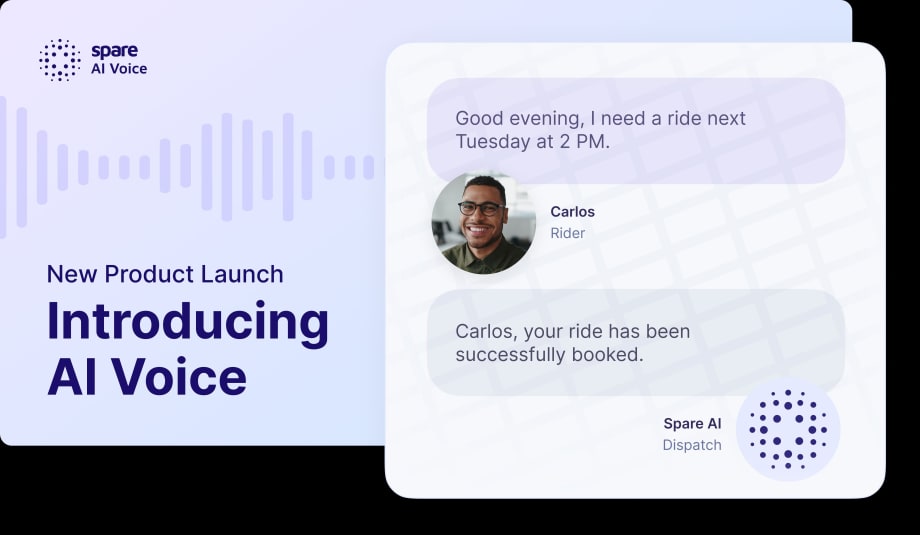
Leaders in transit innovation like Minnesota Valley Transit Authority, Auburn Transit, Milton Transit, and CapMetro are currently implementing Spare's AI Voice.
Photo: Spare
Spare is introducing AI Voice — an advanced conversational agent designed to enhance customer interactions for riders calling in for support with paratransit services.
Addressing a common preference for booking with an agent rather than using a digital app, AI Voice allows riders to have intuitive, accessible, and engaging conversations without needing to wait for a human agent.
Transit Adopting AI Voice
By tackling challenges, such as 24/7 service availability, high call volumes, or staff shortages, AI Voice transforms customer service with an intuitive conversational experience that improves customer satisfaction while lowering wait times.
Leaders in transit innovation like Minnesota Valley Transit Authority, Auburn Transit, Milton Transit, and CapMetro are currently implementing AI Voice.
At one such agency, the deployment of AI Voice within the first week led to an 85% reduction in wait times. The significant improvement demonstrates AI Voice's ability to enhance rider experiences while boosting operational efficiency and service capacity compliance for agencies, said Spare.
"AI Voice is transforming transit call centers by making trip booking more equitable and accessible," said Josh Andrews, COO of Spare. "Many paratransit riders prefer to call in rather than book through an app. This technology meets them where they are, providing prompt and natural service that offers the immediacy and familiarity of human interaction without the wait."
Benefits of AI Voice
AI Voice replaces traditional Interactive Voice Response (IVR) systems with a more natural, accessible, and conversational experience.
Utilizing the latest advancements in artificial intelligence, AI Voice listens to spoken words, converts them to text, processes this text to understand the caller’s request, and responds clearly and informatively.
Designed to handle interruptions and sudden changes in conversation, AI Voice ensures a more fluid interaction not possible with traditional IVR systems.
Key use cases for AI Voice include:
Extending Service Hours: Providing service outside of regular call center hours, ensuring riders can get the information they need at any time.
Reducing Call Volumes: Handling routine inquiries, allowing human agents to focus on more complex issues and significantly reducing wait times.
Ensuring Reliability: Offering continuous service during peak times, staff shortages, and emergencies, ensuring reliable and efficient customer service.
Improving Accessibility: Making it easier for riders — specifically those with cognitive or communication disabilities — to book trips, cancel reservations, and check ETAs without navigating complex menus.
More Technology

From Hardware to Digital Partner: Luminator Charts Its Next Chapter
CEO Magnus Friberg discusses Luminator’s shift toward becoming a digital partner, the growing importance of software and interoperability, and how AI can help agencies improve operations and passenger experience.
Read More →
Beyond the Checklist: A Structured Approach to Transit Maintenance
Reliability-Centered Maintenance helps transit agencies move beyond routine checklists to focus limited resources on the assets and failures that have the greatest impact on safety, reliability, and service.
Read More →
NJ TRANSIT Advances Bus Technology Upgrades Across Statewide Fleet
More than 1,500 buses now feature upgraded technology designed to improve arrival predictions and provide free Wi-Fi, with deployment expected to reach nearly 2,000 buses by the end of 2026.
Read More →

Building a Flexible Path to Transit Electrification
John Hroncich discusses BAE Systems’ modular and scalable approach, lessons learned from decades of real-world operations, and how agencies can identify electrification strategies that fit their fleets.
Read More →
Biz Briefs: Alstom Lands Canadian Contract, LYT to Supply California TSP, and More
In METRO's latest installment, we take a look at recent news from Complete Coach Works, Beep, FlixBus, and more partnerships making headlines across the transportation sector.
Read More →
From Legacy Silos to Conversational Intelligence
What if transit leaders could ask any operational question and get a trusted answer in seconds? Conversational AI is transforming how agencies use their data.
Read More →
USDOT Announces Rail Vehicle Replacement Grants, Chattanooga AV Shuttle Funding
More than $191 million in federal funding will help three transit agencies replace aging rail vehicles and support a new autonomous shuttle service in Chattanooga.
Read More →
Bus Tech Talk: Keeping Transit Technicians Ahead of the Technology Curve
LA Metro’s Obed Mejia discusses technician training, evolving maintenance technology, fleet replacement, and strategies for getting the most out of today’s transit fleets.
Read More →
Biz Briefs: RIPTA Unveils New Frontrunners, Clevland RTA Adds New Siemens, and More
In METRO's latest installment, we take a look at recent news from Siemens, Prevost, Dodge, and more partnerships making headlines across the transportation sector.
Read More →
Why Simulating Pedestrian Movement Has Become Essential for Modern Rail Stations
Pedestrian microsimulation is helping rail planners identify bottlenecks, test station designs, and prepare complex transit hubs for growing passenger volumes.
Read More →