




RELATED: How cities around the globe approach 'new mobility'
Study examines how to integrate air mobility into urban environments
The key to unlocking this potential lies largely in vertiports, landing hubs that integrate the aerial network
March 9, 2020
© MVRDV
3 min to read
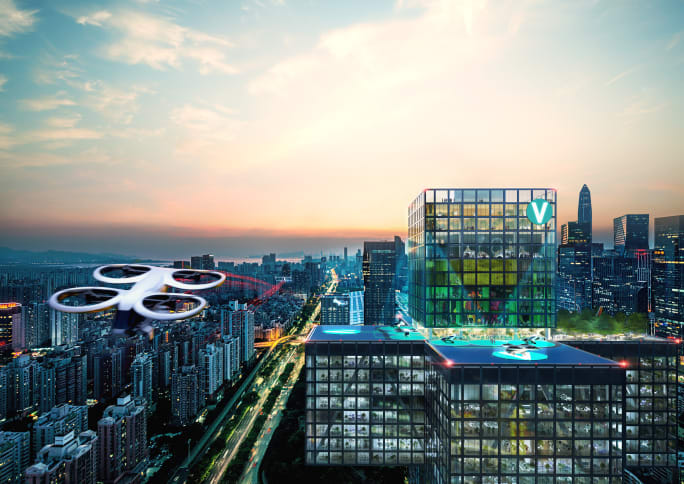
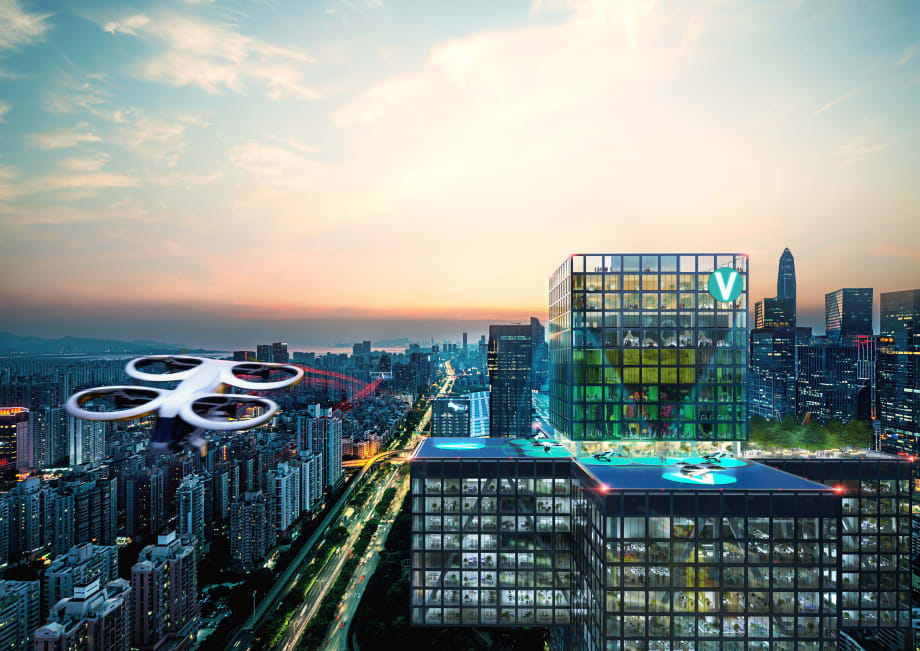
Urban air mobility should not seek to replace cities’ existing transport infrastructure. Rendering of vertiport atop buildings. © MVRDV
New research highlights how, when implemented with urban principles in mind, urban air mobility (UAM) can reconnect territories with minimal impact, and deliver a multi-modal system that is accessible to, and beneficial for, people of all backgrounds.
Partners in the study include, Airbus, which operates on-demand helicopter service Voom and MVRDV, a design firm, which supported Airbus in exploring strategic urban development scenarios that leverage UAM as an opportunity to grow cities around the globe into thriving urban regions.
The key to unlocking this potential lies largely in vertiports, landing hubs that integrate the aerial network with the existing and future ground transportation system. The research findings envisaged vertiports of various types and sizes, just like traditional transport stops, stations, and terminals.
However, unlike stations for other urban transport options such as trains, metros, or buses, the network does not require any linear infrastructure in between.
No tracks, tunnels or roads are required, saving energy, natural resources, and land. This allows designers to adapt the vertiports to a variety of different locations, plugging into and enhancing existing urban scenarios with a number of different configurations.

UAM can be used to facilitate access to temporary events such as the music festivals like Coachella (rendering pictured). © MVRDV
The vertiports have been designed as catalysts for urban improvement by addressing the question of resources and impact as a foundational step in their integration process. Vertiports are thought of not just as stations, but also as hubs of renewable energy, data, and public amenities, that can scale while remaining sustainable and resilient. Air transport incentivizes an ecologically responsible contribution to the local smart grids of energy and data.
The research also considered the principles of transit-oriented development, not only by bringing airborne transport links, but also by integrating with other multimodal transport options to serve local surroundings and solve the problem of the “last mile.”
In locations that are underdeveloped, vertiports can be designed as opportunity hubs with educational and healthcare facilities, or business incubators, for example, while in areas fractured by infrastructure such as roads or railway tracks, a vertiport can serve as a bridge connecting neighbourhoods.
“As cities become denser and technologies improve, it becomes increasingly clear that the truly three-dimensional city — one that includes flying vehicles — is surely one of the city models of the future… a city where my mobility is at my balcony.” says Winy Maas, founding partner of MVRDV.
On a broader scale, the research investigates the potential of future UAM networks within cities. It recognizes that UAM should not seek to replace cities’ existing transport infrastructure, and acknowledges the short-term business case for UAM as a service that connects major transportation hubs such as airports with business centers. However, it also looks towards a more mature stage in the technology’s implementation. The research concludes that once UAM is well established with an extensive network of vertiports, it could serve as an interesting contributor to a mobility system of discrete and distributed modes that complement rail or road infrastructure.
A mature network of vertiports could:
serve to connect disadvantaged areas of cities and remote areas without the need for expensive infrastructure;
could vastly improve emergency response times;
and could even allow ‘technological leapfrogging’ in developing countries, providing a transit network that is relatively inexpensive to create in cities that never developed extensive metro or tram systems.
Together these benefits can give cities the accessibility that is needed to attract new economic opportunities.
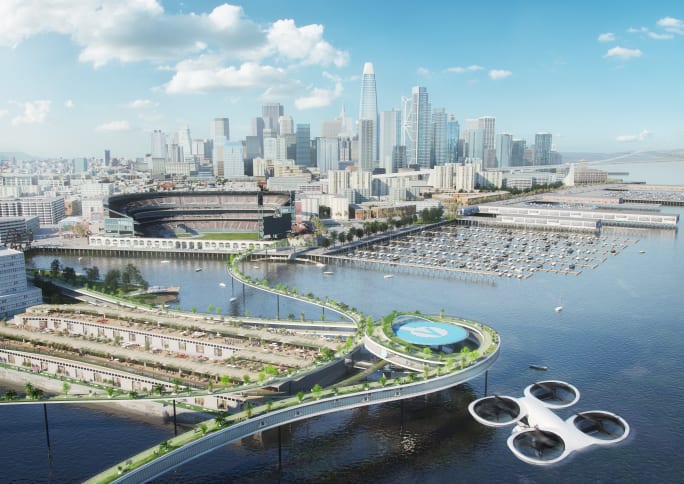
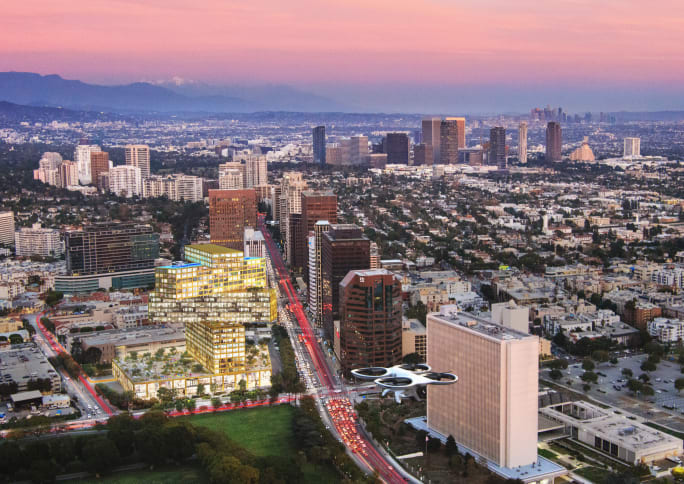
Communicating this nuanced vision for a connected future to the public requires an approach that spans multiple forms of media. In order to create a tangible vision of what such a future might look like, MVRDV and Airbus developed a number of scenarios based on cities around the world that show how vertiports could be integrated into a variety of urban scenarios.
© MVRDV
© MVRDV
More New Mobility

From Hardware to Digital Partner: Luminator Charts Its Next Chapter
CEO Magnus Friberg discusses Luminator’s shift toward becoming a digital partner, the growing importance of software and interoperability, and how AI can help agencies improve operations and passenger experience.
Read More →
Biz Briefs: Alstom Lands Canadian Contract, LYT to Supply California TSP, and More
In METRO's latest installment, we take a look at recent news from Complete Coach Works, Beep, FlixBus, and more partnerships making headlines across the transportation sector.
Read More →
CharterUP’s Armir Harris on Technology, AI, and the Future of Group Mobility
In a recent episode of METROspectives, CharterUP Founder/CEO Armir Harris discussed the company’s evolution from an online charter bus marketplace into a technology platform supporting public- and private-sector mobility and much more.
Read More →
Jacksonville’s NAVI Project Charts a New Course for Autonomous Public Transportation
Through its NAVI program, JTA is showing how autonomous vehicles, intelligent infrastructure, and coordinated operations can work together to deliver everyday public transportation.
Read More →
Biz Briefs: Luminator Marks Milestone and More
From manufacturers and suppliers to transit agencies and motorcoach operators, these updates offer a snapshot of the projects, partnerships and business moves driving the industry forward.
Read More →
New Tricks for Old Bureaucracies: Joshua Schank on Making Transit Innovation Stick
Former LA Metro Chief Innovation Officer Joshua Schank discusses why good ideas aren't enough, how transit agencies can overcome resistance to change, and why today's challenges demand more innovation.
Read More →
How DART's GoPass Is Redefining Regional Mobility
Serving 14 transit agencies, GoPass simplifies multimodal travel by allowing riders to plan, pay for, and manage an entire trip through one app.
Read More →
Biz Briefs: OCTA Taps Clean Energy for Hydrogen Station, Stadler to Supply Via Rail Vehicles, and More
From manufacturers and suppliers to transit agencies and motorcoach operators, these updates offer a snapshot of the projects, partnerships and business moves driving the industry forward.
Read More →CharterUP Expands Into New Mobility and Autonomous Transportation
Vice President of New Mobility Stephen Joos discusses how CharterUP is leveraging its nationwide transportation network, technology platform, and autonomous vehicle partnerships to expand into workforce mobility, campus shuttles, and transit solutions.
Read More →
METRO Magazine Announces 2026 Innovative Solutions Awards Winners
Projects Recognized for Advancing Mobility Through Technology, Accessibility, Workforce Innovation, and Operational Excellence
Read More →