




The New York Transit Museum is the largest museum in the U.S. devoted to urban public transportation history and one of the premier institutions of its kind in the world.
Subway construction photos provide view of 'old New York'
Many of the photographs were made with an 8 x10 camera and glass plates, which were considered the height of image-making technology.
February 19, 2020
New York Transit Museum
3 min to read
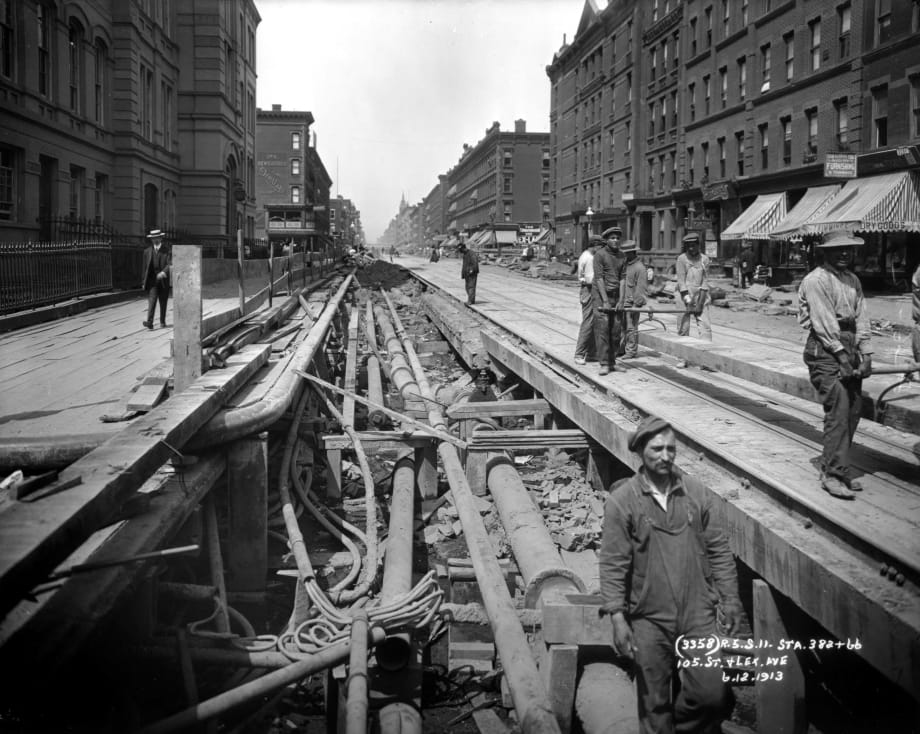
Lexington Avenue, between 105th and 106th Streets, Manhattan, 1913. New York Transit Museum
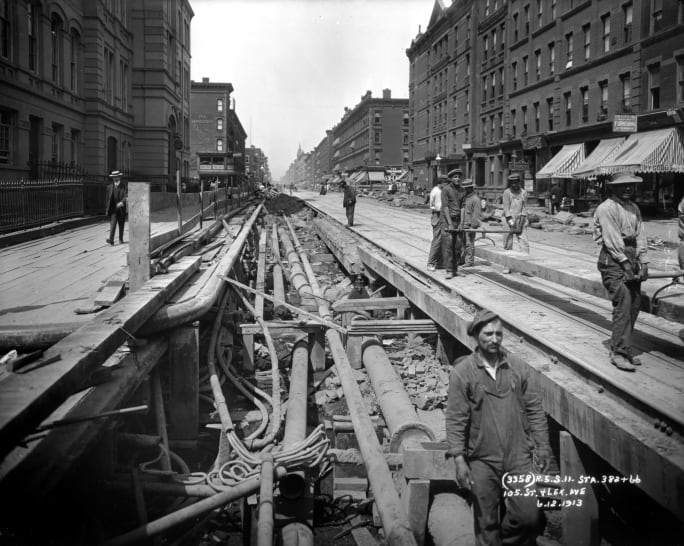
As New York’s subway system was being planned at the turn of the 20th century, transit officials did what any large construction company would do today: hired an official photographer to take survey photographs and provide precise documentation of an area prior to — and during — construction. Pierre and Granville Pullis created a body of work that transcends this original purpose. Intended to be seen as 8 x 10 prints, the photographs show New York changing on a daily basis as a result of the subway. On closer inspection, especially when enlarged, they reveal architectural and cultural details of a city that would otherwise be long forgotten (see additional photos below).
A new exhibit at the New York Transit Museum, Streetscapes & Subways: Photographs by Pierre P. and Granville W. Pullis provides a rare view of “old New York” through the lenses of two of the earliest photographers of subway construction.
The New York Transit Museum’s collection of subway construction photographs is an important document of the changing city, especially in the years between 1900 and 1940. The Pullises’ lenses captured the beginnings of modern New York City as well as the last days of “old New York.”
Many of the photographs were made with an 8 x 10 camera and glass plates, which were considered the height of image-making technology, and superior to sheet film for survey photographs because they were more stable and less likely to bend. These prints, called contact prints, were made by laying the negative directly onto a piece of photographic paper. Glass negatives were often washed of their images and re-used, so the fact that any of Pierre’s estimated 100,000 8 x 10-inch glass negatives made prior to 1925 survived is unusual.
What is striking about the Pullis Brothers’ photographs is how they manage to capture New York’s daily life as well as the structural conditions they were meant to document. Men congregate outside taverns, women push prams, children play, merchants sell their wares. In many of the photographs, workers or passers-by often look directly into the camera. Since the subway construction photographs were made at a time when the medium was becoming more popular, it is possible that this might have been some people’s first encounter with a camera.
The exhibit is open to the public through January 17th 2021 at the New York Transit Museum in Downtown Brooklyn. For more information, visit nytransitmuseum.org/visit.
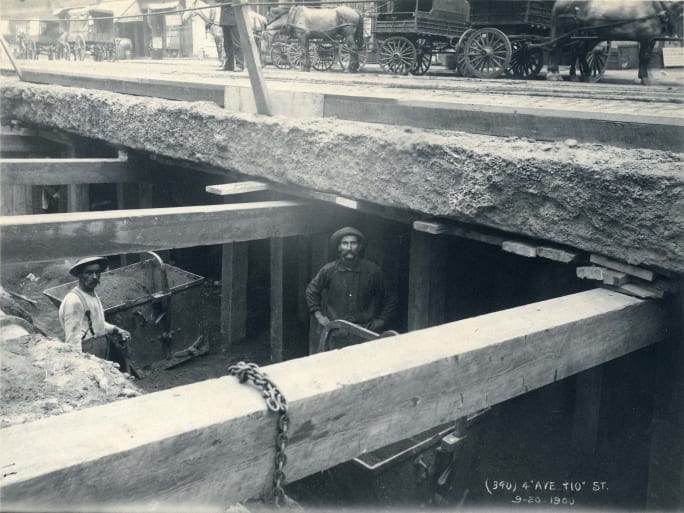
(above) 4th Avenue & 10th Street, Manhattan, 1900. New York Transit Museum
7th Avenue and 42nd Street, Manhattan, 1914. New York Transit Museum
9th Street subway entrance, Brooklyn, 1910. New York Transit Museum
Ashland Place & Lafayette Avenue, Brooklyn, 1911. New York Transit Museum
East RiverTunnel Construction1907. New York Transit Museum
Lexington Avenue, between 105th and 106th Streets, Manhattan, 1913. New York Transit Museum
Willets Point Station, Queens, 1927. New York Transit Museum
Workers in pump chamber, The Bronx, 1916. New York Transit Museum
Workers in the Greenpoint Tube, 1929. New York Transit Museum
More Rail

New York MTA Advances Final Contract for Second Avenue Subway Expansion
Contract Four is the largest in the Second Avenue Subway Phase 2 project and includes construction of station infrastructure, tracks, and signals for the subway expansion, MTA officials said. Work on Contract Four will begin in 2027.
Read More →
San Diego MTS Breaks Monthly Trolley Ridership Record
Agency officials said July’s ridership indicates MTS’s continued recovery from the pandemic.
Read More →
Report Examines NJ TRANSIT Reliability, Funding Challenges
The Garden State Initiative analysis examines the roles of Amtrak infrastructure, fleet management, and agency operations while recommending a more performance-based approach to improving reliability.
Read More →
Stadler, CapMetro Sign Long-Term Rail Fleet Support Agreement
Beginning in 2027, Stadler will provide on-site technical expertise, spare parts support, training, and obsolescence management to help extend the reliability and longevity of CapMetro’s GTW fleet.
Read More →
Biz Briefs: Alstom Lands Canadian Contract, LYT to Supply California TSP, and More
In METRO's latest installment, we take a look at recent news from Complete Coach Works, Beep, FlixBus, and more partnerships making headlines across the transportation sector.
Read More →
CATS Gold Line Marks 5 Years of Service, 2.8M Passenger Trips
With a six-mile expansion planned, the Charlotte streetcar is positioned to connect more neighborhoods and major transit hubs across the region.
Read More →
Why Simulating Pedestrian Movement Has Become Essential for Modern Rail Stations
Pedestrian microsimulation is helping rail planners identify bottlenecks, test station designs, and prepare complex transit hubs for growing passenger volumes.
Read More →
Amtrak Begins Major Construction at New York’s Sunnyside Yard
The new maintenance facility will support Amtrak’s Airo trainsets while improving maintenance efficiency and turnaround times in New York.
Read More →
Chicago Leaders Unveil Plans for O’Hare Airport Express Train
The privately developed project would offer a 15-minute trip between downtown and O’Hare’s Terminal 2, with trains operating every 15 minutes on a dedicated track. The service would use battery-electric trains and three existing freight rail rights-of-way.
Read More →
OCTA Maps Out 30-Year Strategy to Protect Coastal Rail Corridor
The draft feasibility report identifies strategies to protect the coastal rail line for decades as the agency continues near-term stabilization and sand placement efforts.
Read More →