



Artist captures animal-human hybrids riding New York subway
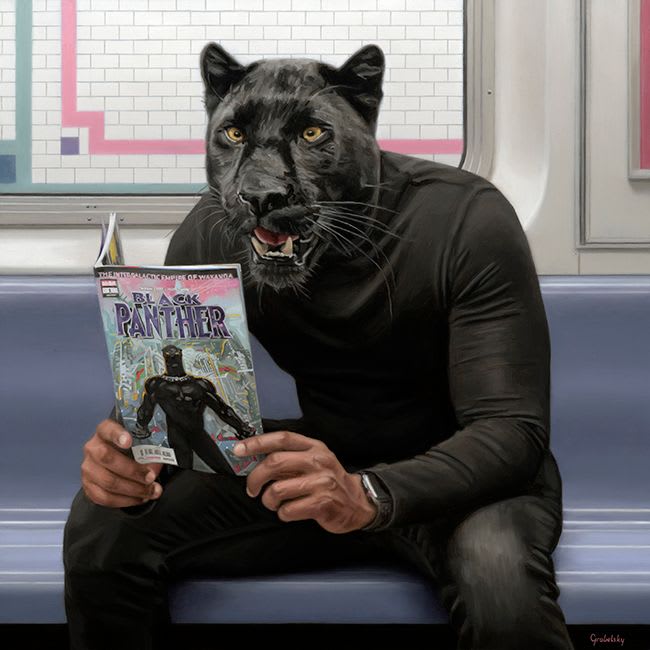
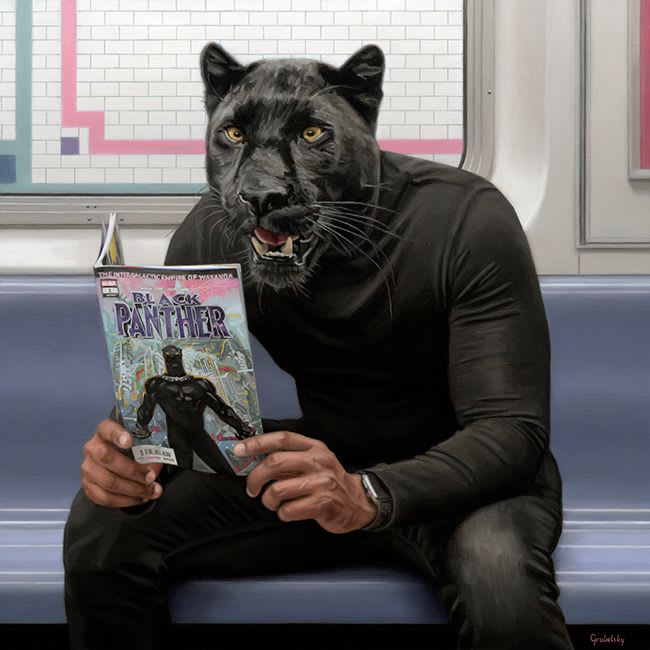
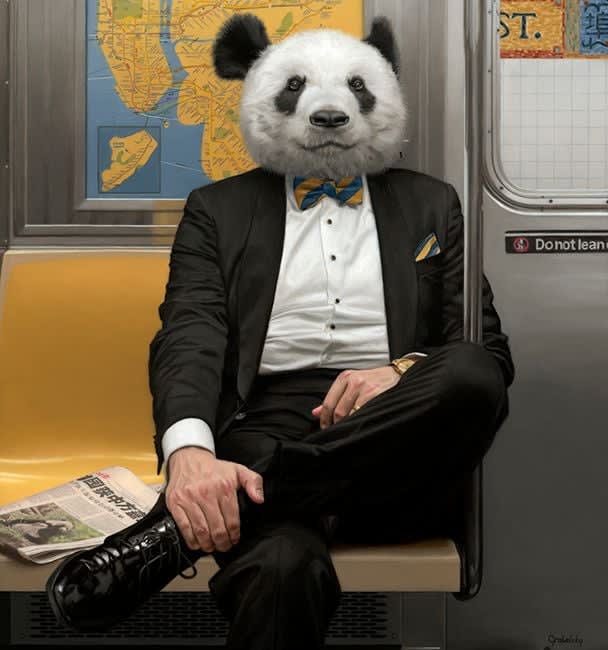
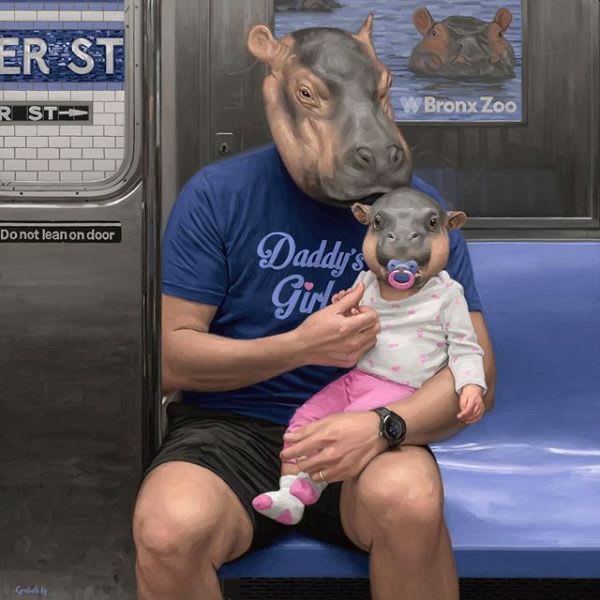
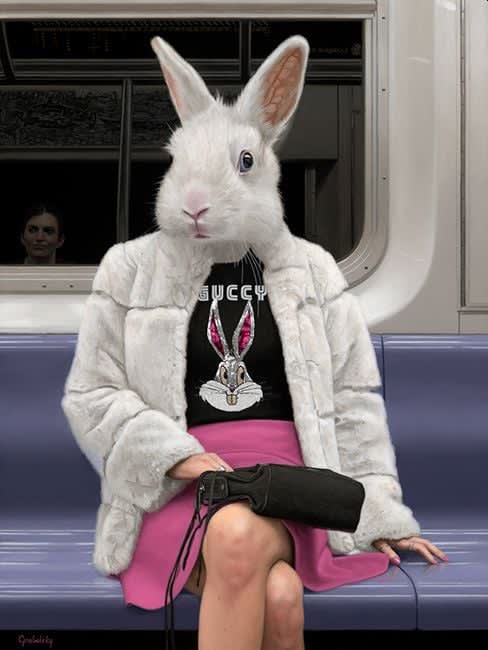
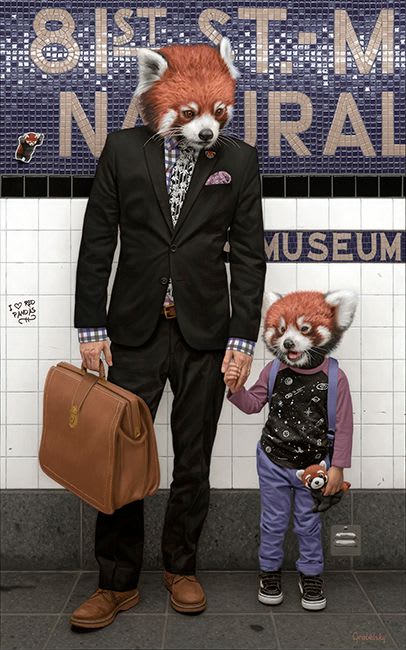
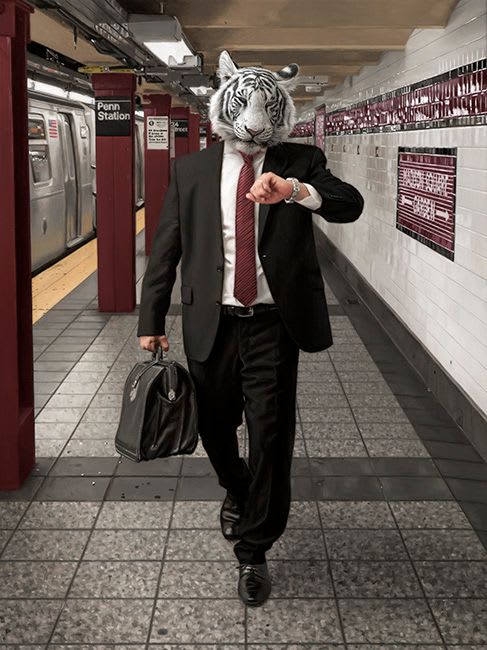
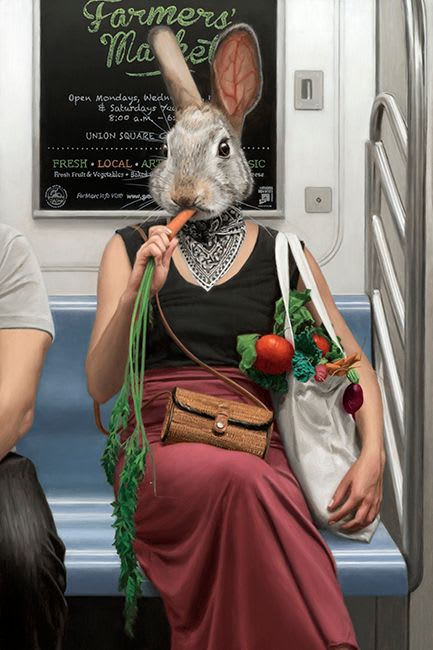
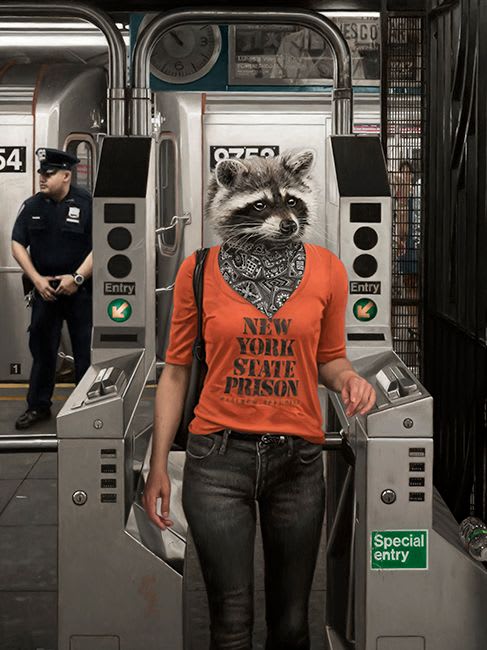
LA-based artist brings animals to the subway in a playful way with his hyperrealistic paintings featuring humans with animal heads.

Matthew Grabelsky
All images courtesy Matthew Grabelsky, used with permission.
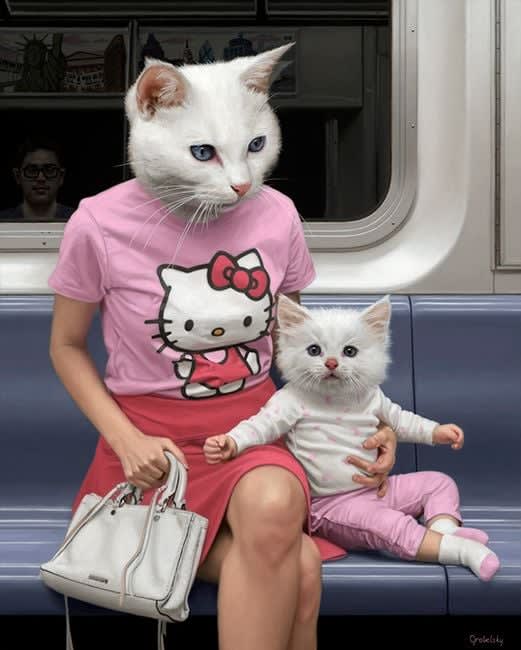
Los Angeles-based artist Matthew Grabelsky brings animals to the New York City subway in an entertaining fashion with his hyperrealistic paintings featuring humans with animal heads, including cats, hippos, and rabbits.
Grabelsky’s new collection of oil paintings are inspired by the years he spent riding the subways in New York as a kid and by his early fascination with Greek mythology, according to Colossal.
Technically inspired by 19th Century academic and naturalist painters, Grabelsky creates these unlikely, surreal scenes with a staggering degree of realistic detail.
Enjoy!
METRO Magazine Executive Editor Janna Starcic spoke to Grabelsky about his work and his process.
What inspired you to develop the series of paintings based on the subway?
I painted my first subway painting in 2010. I was living in Paris and I took a trip back to NYC for a family wedding. I was brainstorming new ideas for paintings and I took a bunch of photos on that trip for reference. I was riding the subway one day and I snapped a photo of a couple sitting across from me. When I went back to Paris, I looked at that photo and the idea to put an animal head on the man popped into my head.
Do you have a favorite painting from this series?
There is a piece of me in all of them but if I had to pick just one I would say it would be “Bryant Park”. This painting features a father and son with wolf heads. The son is sitting on his dad’s lap and he is either speaking or howling to his father. Behind them, there is an advertisement for the Bryant Park film festival sponsored by HBO. When I was a kid, my dad worked at HBO and I would always go over to his office on days off to visit him and watch movies. This painting feels very personal to me because it represents me and my dad when I was a kid.
What was your process for creating the work?
I have friends and family come over to my studio and I take photos of them posing. I also have lots of photos that I’ve taken on the New York subway. I use a combination of these model and subway photos as references when I’m painting.
Did you use public transportation regularly in New York City?
I grew up in New York and I was always on public transportation when I lived there. I always had a book with me when I was on the train or bus, so those locations were places of wonder for me because I spent my time there lost in stories.
Since your move to Los Angeles, have you had to buy a car or are you planning on using public transportation?
In Los Angeles I do have a car. It would be nearly impossible to get around here without one. As a result I have some ideas for people with animal heads driving around Los Angeles which I want to paint at some point.
Is the series of paintings featured in the actual subway system?
These painting have not been featured in the actual subway. However, there was one time when I had a show in New York and I brought one of the big pieces onto the subway to get it to the gallery. Watching peoples reactions was a funny experience.
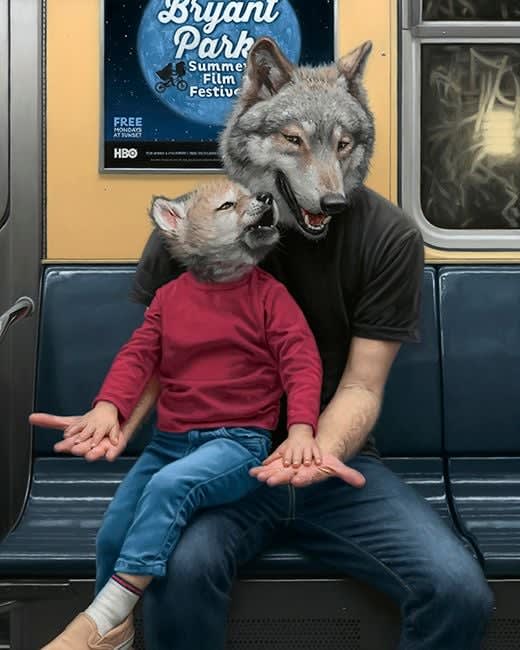
This painting (shown above) feels very personal to me because it represents me and my dad when I was a kid, said Grabelsky.
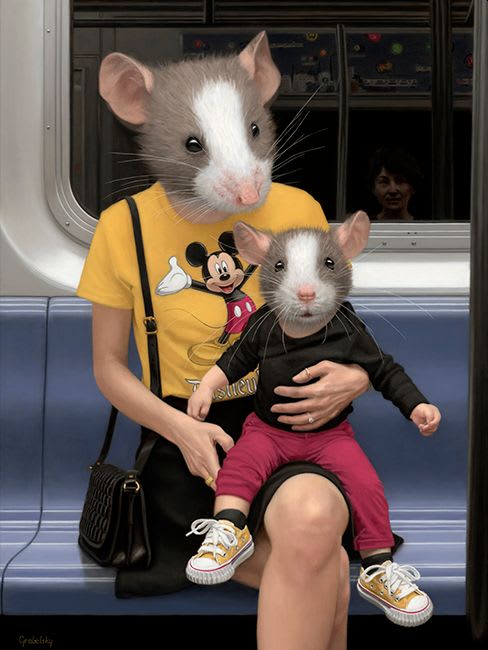
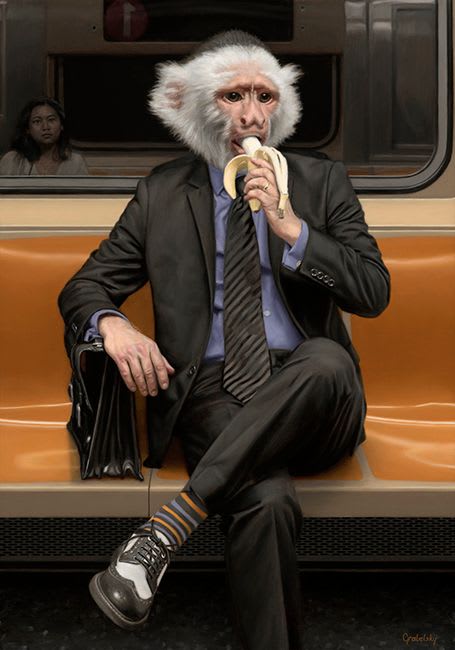
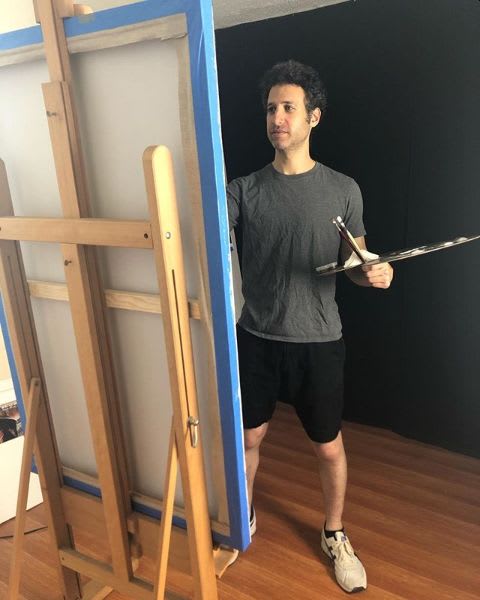
The artist at work.
More Rail

New York MTA Advances Final Contract for Second Avenue Subway Expansion
Contract Four is the largest in the Second Avenue Subway Phase 2 project and includes construction of station infrastructure, tracks, and signals for the subway expansion, MTA officials said. Work on Contract Four will begin in 2027.
Read More →
San Diego MTS Breaks Monthly Trolley Ridership Record
Agency officials said July’s ridership indicates MTS’s continued recovery from the pandemic.
Read More →
Report Examines NJ TRANSIT Reliability, Funding Challenges
The Garden State Initiative analysis examines the roles of Amtrak infrastructure, fleet management, and agency operations while recommending a more performance-based approach to improving reliability.
Read More →
Stadler, CapMetro Sign Long-Term Rail Fleet Support Agreement
Beginning in 2027, Stadler will provide on-site technical expertise, spare parts support, training, and obsolescence management to help extend the reliability and longevity of CapMetro’s GTW fleet.
Read More →
Biz Briefs: Alstom Lands Canadian Contract, LYT to Supply California TSP, and More
In METRO's latest installment, we take a look at recent news from Complete Coach Works, Beep, FlixBus, and more partnerships making headlines across the transportation sector.
Read More →
CATS Gold Line Marks 5 Years of Service, 2.8M Passenger Trips
With a six-mile expansion planned, the Charlotte streetcar is positioned to connect more neighborhoods and major transit hubs across the region.
Read More →
Why Simulating Pedestrian Movement Has Become Essential for Modern Rail Stations
Pedestrian microsimulation is helping rail planners identify bottlenecks, test station designs, and prepare complex transit hubs for growing passenger volumes.
Read More →
Amtrak Begins Major Construction at New York’s Sunnyside Yard
The new maintenance facility will support Amtrak’s Airo trainsets while improving maintenance efficiency and turnaround times in New York.
Read More →
Chicago Leaders Unveil Plans for O’Hare Airport Express Train
The privately developed project would offer a 15-minute trip between downtown and O’Hare’s Terminal 2, with trains operating every 15 minutes on a dedicated track. The service would use battery-electric trains and three existing freight rail rights-of-way.
Read More →
OCTA Maps Out 30-Year Strategy to Protect Coastal Rail Corridor
The draft feasibility report identifies strategies to protect the coastal rail line for decades as the agency continues near-term stabilization and sand placement efforts.
Read More →