



Texas agency showcases new station, buses
El Paso, Texas' Sun Metro showcased its new low-floor Brio vehicles from New Flyer, which will run on CNG, have three doors for faster boarding, free Wi-Fi, two TV monitors for passenger information, three interior bicycle racks, two wheelchair positions and signal prioritization.

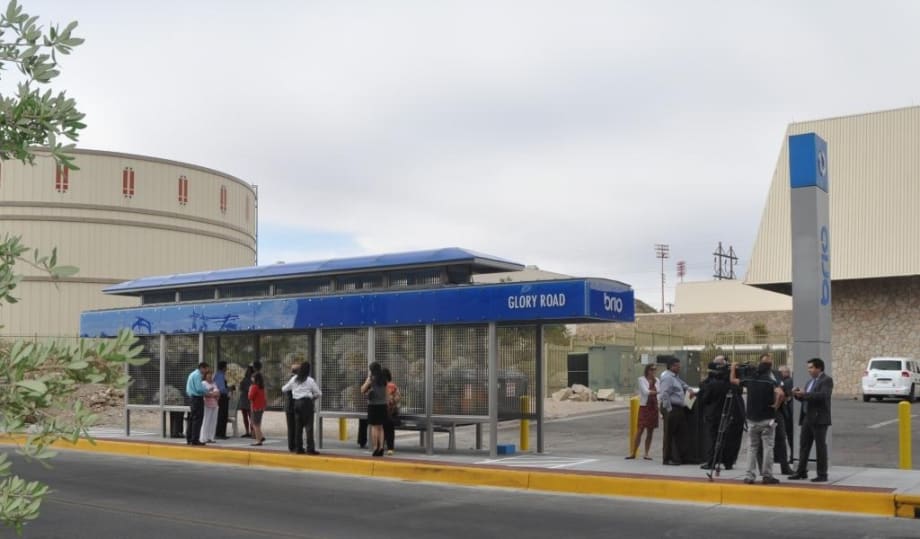
El Paso, Texas’ Sun Metro and city officials introduced the first completed Rapid Transit System (RTS) station and showcased eight of the 60-foot articulated vehicles that will be used for the new upcoming RTS service, known as the Sun Metro Brio.
Sun Metro Brio will introduce El Pasoans to a high-quality transit service that offers similar benefits to light rail transit, such as improved speed and reliability, but at a much lower implementation cost.
Construction along the Mesa Street corridor — the first of four corridors — began in June 2013 and is ongoing. The construction consists of the installment of 22 Brio stations from the Downtown Transfer Center to the Westside Transfer Center.
The Glory Road inbound (southbound) station became the first completed station for the Brio RTS Mesa corridor. The total project cost for the Brio Mesa corridor is $27.1 million, of which $13.5 million is funded by the Federal Transit Administration.
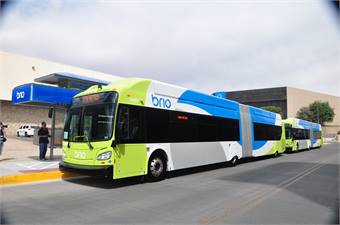
The low-floor New Flyer Brio vehicles will run on compressed natural gas, have three doors for faster boarding, free Wi-Fi, two TV monitors for passenger information, three interior bicycle racks, two wheelchair positions and signal prioritization.
The Sun Metro Brio will use modern, rubber-tire, high capacity New Flyer articulated vehicles. The vehicles will have a frequency of 10 minutes during peak service and 15 minutes during off-peak Monday through Friday, a 20-minute frequency on Saturday and no service on Sunday.
The low-floor Brio vehicles will run on compressed natural gas, have three doors for faster boarding, free Wi-Fi, two TV monitors for passenger information, three interior bicycle racks, two wheelchair positions and signal prioritization.
The Glory Road Brio station, which is distinctly branded, offers shade screens, free Wi-Fi, landscaping, a real-time arrival sign, a 17-foot high pylon, benches, bike racks, a BigBelly solar-powered trash compactor and a 10-inch platform to allow for near-level boarding.
A ticket vending machine will be installed prior to the start of the Brio service in late summer/early fall to allow for an improved and faster fare collection system.
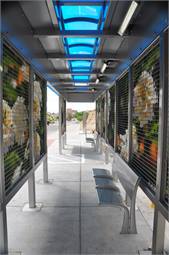
The majority of the stations will feature public artwork that is collectively known as
The majority of the stations, which will be placed about a mile apart, will also feature public artwork that is collectively known as "Leaves of Air," created by Boston-based Artist Catherine Widgery. The elusive artwork, which is set in the perforated shade screens, are images of local flora that can only be perceived as people move past the Brio station.
More Bus

New York MTA Plans Largest Bus Fleet Upgrade in More Than a Decade
The agency is seeking manufacturers for 650 new CNG buses to replace aging vehicles, improve reliability, and advance its broader fleet modernization strategy.
Read More →
Building a Flexible Path to Transit Electrification
John Hroncich discusses BAE Systems’ modular and scalable approach, lessons learned from decades of real-world operations, and how agencies can identify electrification strategies that fit their fleets.
Read More →
Bus Tech Talk: Keeping Transit Technicians Ahead of the Technology Curve
LA Metro’s Obed Mejia discusses technician training, evolving maintenance technology, fleet replacement, and strategies for getting the most out of today’s transit fleets.
Read More →
Biz Briefs: RIPTA Unveils New Frontrunners, Clevland RTA Adds New Siemens, and More
In METRO's latest installment, we take a look at recent news from Siemens, Prevost, Dodge, and more partnerships making headlines across the transportation sector.
Read More →
People Movement: Holly Arnold Joins Transdev and More
In this edition, we also cover recent appointments and announcements at Pace, CamTran, MCI, and more, showcasing the individuals helping to shape the future of transportation.
Read More →
The High Cost of Transit Buses: Industry Leaders Look to Procurement Reform
Transit leaders and policymakers examine how standardized bus designs, streamlined procurement, and predictable funding could help agencies stretch budgets and deliver better service.
Read More →
The Business Voice Behind Public Transportation
As chair of APTA’s Business Members Board of Governors, Ray Melleady explains how more than 850 business members are partnering with transit agencies to advance funding, innovation, and industry-wide collaboration.
Read More →
From Surviving to Thriving: Building Stronger Transportation Organizations
Bus Business Consultants founder Brian Dickson shares lessons on leadership, organizational health, and creating options for long-term success in a changing transportation industry.
Read More →
Finding the ‘Happy Medium’: Optimizing Maintenance Without Sacrificing Reliability
The key to maintenance optimization isn’t doing less work—it’s doing the right work at the right time on the right assets.
Read More →
LA Metro, City of West Hollywood, and Partners Advance Smarter Bus Lane Enforcement
The award-winning partnership combines AI-powered detection with human oversight to improve bus reliability, accessibility, and enforcement efficiency.
Read More →