



Transit leases with private companies in jeopardy
Congress is reviewing a bill that would outlaw the right of transit agencies to lease equipment to private corporations to earn extra cash.

More than a dozen U.S. city and state transit agencies are in limbo pending Senate deliberation on a bill that would block their ability to earn millions of dollars. Under review are deals made when transit systems lease train cars, buses or rail lines to private corporations.
“At a time when these states and localities are strapped for resources — look at California, that’s a good example — it’s unfortunate that this additional resource area looks like it’s going to be shut down,” said Daniel Duff, vice president of government affairs for the American Public Transportation Association (APTA).
Transit systems in Atlanta, Los Angeles, Connecticut and New Jersey are among those affected. Fifteen leasing deals averaging more than $3 billion in assets have come to a halt after the U.S. Treasury Department told the Transportation Department to stop approving them. APTA estimates that the deals would have reaped $250 million for transit agencies.
“You can’t tell people, notwithstanding the fact it was legal when you did it, it’s not legal now,” said House Ways and Means Committee Chairman Bill Thomas, R-Calif., to the Associated Press. “A government should never do that.”
Under these type of leases, the transit system retains control over the equipment and receives payment to cover upgrades, while the corporation gets a tax break for the equipment’s depreciated value. Critics have said the deals should stop because they merely provide a tax loophole for corporations.
“The promoters of these deals had a clear indication that their gig would be up sooner or later,” Senate Finance Committee Chairman Charles Grassley, R-Iowa told the AP in an interview.
More Management
Utilimarc Launches SmartReplace to Optimize Fleet Replacement Decisions
AI-powered SmartReplace helps fleets prioritize vehicle replacements, model budget scenarios, and build more defensible long-term strategies.
Read More →
APTA Honors 2026 Award Winners, Hall of Fame Inductees at TRANSform & EXPO
Innovations in autonomous and zero-emission transportation, standout transit systems, and industry leadership took center stage among this year's honorees.
Read More →
7 Ways to Build a Better Transit Internship Program
Lessons from DRPA/PATCO’s approach to creating a meaningful internship experience—and developing the next generation of transportation professionals.
Read More →
Scenes from APTA TRANSform & EXPO 2026
Transit leaders, manufacturers, and industry professionals gathered in Chicago to explore new technologies, share ideas, and discuss the future of public transportation.
Read More →
Building Stronger Leaders, More Resilient Transit Teams
Dr. Carol Parker Walsh discusses leadership development, employee retention, workplace culture, and preparing transit’s workforce for AI and automation.
Read More →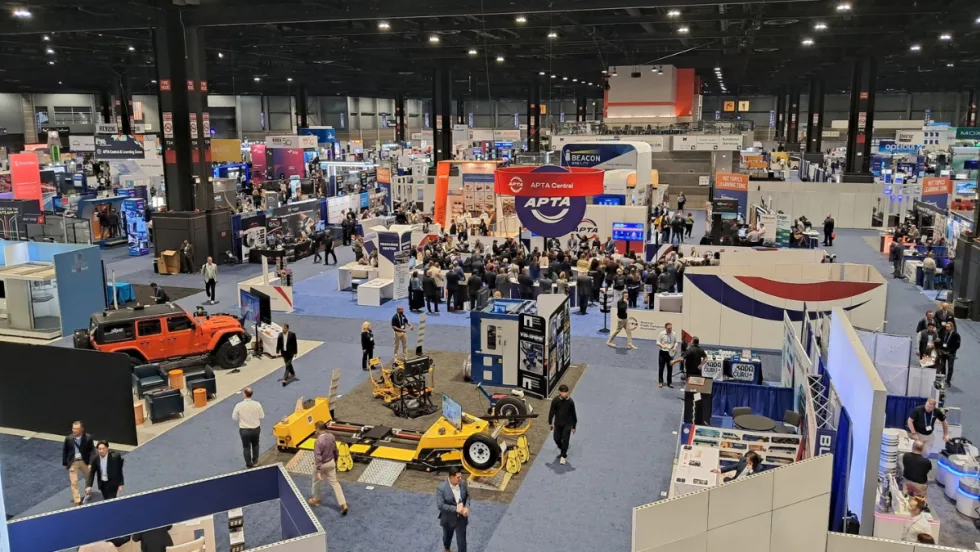
APTA 2026 TRANSform & EXPO Kicks Off in Chicago
After 45 years, APTA returns to Chicago with a focus on next-generation fleets, AI, connected transit networks, and the funding strategies shaping public transportation’s future.
Read More →
New York MTA Warns Federal Tariffs Could Add $1 Billion to Rolling Stock Costs
The agency said tariffs on specialized imported components could reduce the purchasing power of its $23 billion investment in new subway cars, railcars, and buses.
Read More →
From the Show Floor: What Happened at APTA TRANSform & EXPO 2026
See the latest product launches, partnerships, technology updates, and transit industry announcements from APTA TRANSform & EXPO in Chicago.
Read More →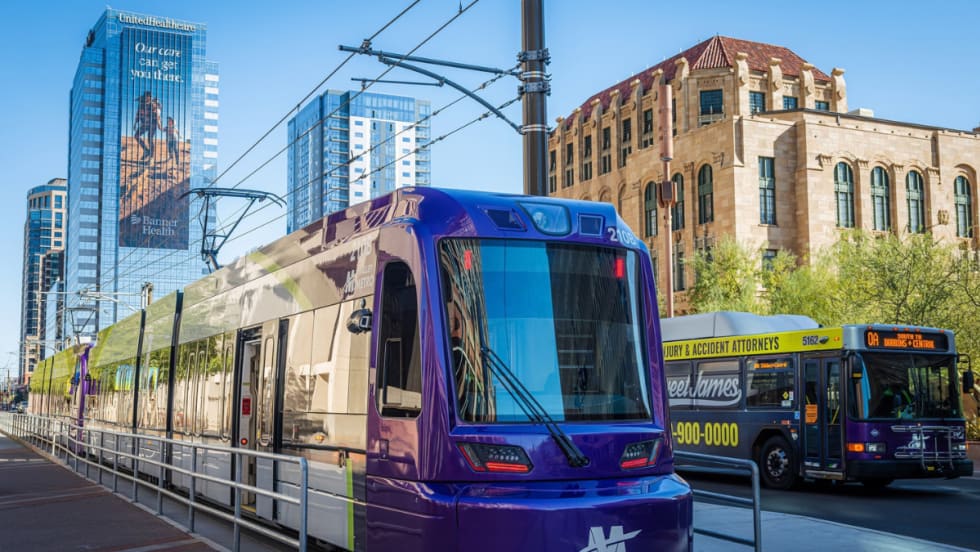
How Valley Metro Is Balancing Transit Growth With the Rider Experience
The APTA award-winning agency is pairing rapid system expansion with investments in workforce, safety, technology, and the fundamentals of transit service.
Read More →
Bus Tech Talk: Keeping Transit Technicians Ahead of the Technology Curve
In this episode of Bus Tech Talk, Complete Coach Works’ Business Development Manager Mark Hollenbeck and METRO’s Executive Editor Alex Roman sit down with Obed Mejia, Senior Technical Trainer for Bus Maintenance, at LA Metro to discuss how rapidly evolving bus technology is changing the maintenance shop — and the skills technicians need to keep pace.
Read More →